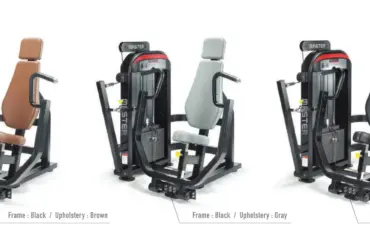
Professional Strength Training Equipment by Light in Fitness

Light in Fitness designs and manufactures professional strength training equipment for facilities that cannot afford downtime. Every machine in the range is engineered for continuous commercial use: fitness clubs, hotel gyms, municipal sports halls, universities, rehabilitation centres, corporate wellness rooms and performance academies. This guide sets out what the range covers, what makes it suitable for heavy daily traffic, and how to move from a shortlist to a costed proposal.
A complete professional strength range
The catalogue spans the full spectrum of commercial resistance training: selectorised machines for guided, high-throughput circuits, plate-loaded machines for strength-focused floors, cable stations for versatility in a small footprint, multi-stations for facilities with limited space, and benches and racks for free-weight areas. Because each family covers the major movement patterns, an operator can build a coherent floor from a single supplier rather than assembling mismatched brands.
Machines target distinct muscle groups and movement patterns, so a full circuit can be specified without duplication. Browse the complete offer under professional strength training machines, or look at a specific family such as the Bodytone SRX line if you are equipping a strength-led floor.
Materials and build quality
Frames are built in steel, sized for intensive use rather than occasional sessions. That matters commercially: a machine on a club floor may see several hundred users a week, and the cost of ownership is decided by how the frame, bearings, cables and upholstery hold up over years, not by the purchase price alone.
Light in Fitness backs that construction with warranties of up to 20 years on steel structures and a lifetime warranty on stainless steel. For a facility manager, that is the practical difference between a capital purchase and a recurring replacement line in the budget.
Adjustability and user safety
Professional machines have to fit every body that walks through the door. The range offers a wide span of adjustments so that seat height, pad position and range of motion can be set for each user, which keeps technique correct and reduces the supervision burden on staff.
Safety systems are integrated rather than added on: guided load paths, controlled ranges of motion and secure weight retention. In a supervised environment these features shorten inductions; in an unsupervised one, such as a hotel or residential gym, they are what makes the room usable without an instructor present.
From beginner circuits to performance floors
The range is not restricted to one profile of user. The same catalogue supports a beginner-friendly circuit in a municipal facility and a performance floor for competitive athletes, because the machines share the same construction standard and differ in loading method and adjustment range rather than in durability.
That flexibility extends to individual pieces. A weight-assisted chin and dip station such as the Forza Bodytone FB13 lets a novice train pull-ups with assistance while an experienced member uses the same frame unassisted, which is exactly the kind of dual use a mixed-membership club needs.
Layouts designed around your space
No two rooms are the same. Ceiling height, column positions, floor loading, circulation routes and emergency exits all shape what can realistically be installed. Light in Fitness works from the actual dimensions of the room to propose a layout, rather than dropping a standard package into an unsuitable space.
More than 2,500 customers have been equipped since 2013, across private clubs, public authorities, hospitality, education and rehabilitation. That installed base is the reference point used when advising on machine mix, spacing and circulation.
Frequently asked questions
Is this equipment suitable for an unsupervised gym?
Yes. Guided load paths and integrated safety systems make the selectorised and multi-station families appropriate for hotel, residential and corporate gyms where no instructor is on site. Plate-loaded and free-weight areas are better placed in supervised rooms.
Can I equip a floor progressively?
Yes. Because the ranges are consistent over time, a facility can start with a core circuit and extend it later without the floor looking mismatched. It is worth agreeing the full target layout at the outset so that spacing and power or anchor points are provided for from day one.
What information do you need to prepare a proposal?
Room dimensions and ceiling height, the type of facility and its expected traffic, the member profile, and any constraints such as floor loading or access routes. Photographs or a floor plan speed the process considerably.
How is delivery and installation handled?
Delivery terms, lead times and installation arrangements depend on the destination country and are confirmed in writing with each proposal.
Request a costed proposal
The fastest route from research to a workable plan is a proposal built around your actual room. Send your dimensions and objectives through the quote request page and you will receive a machine list, a layout suggestion and a price for the complete configuration.