Lexco Professional Gym Equipment: A Specification Guide for Commercial Operators
There are plenty of strength equipment brands on the market, and from a distance the catalogues look interchangeable. Lexco is one of the names that commercial operators keep coming back to, because the equipment is designed from the outset for facilities where machines are used by strangers, all day, for years. This article looks at what that means in practice, and how to specify a Lexco fit-out for your own site.
A brand built for commercial operators
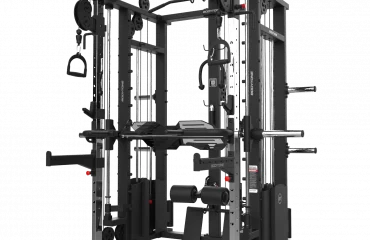
Lexco manufactures strength and cardio equipment for professional use. The range is broad enough to fit a small hotel room or a full club floor, and it can be adapted to the space you actually have rather than the space the catalogue assumes. Custom configurations are available, including for cross-training facilities that need equipment laid out around a rig rather than in rows.
The practical consequence for an operator is service life. Equipment specified for commercial duty does not need replacing every few seasons, and after-sales support and maintenance are available to keep the fleet running rather than standing idle waiting for parts.
What professional equipment does that consumer equipment cannot
Professional machines are not simply heavier versions of what you can buy for a spare room. They are designed to isolate specific muscle groups efficiently, which shortens the time a member needs to spend on the floor to get a result. They hold the user in a defined movement path, which is what keeps training safe when nobody is supervising. And the breadth of the range lets you build varied programmes, which is what stops members plateauing and, eventually, leaving.
That combination of versatility, safety and performance is the argument for the investment. It is not about specification sheets, it is about retention and about not having a machine out of service during peak hour.
Five reasons build quality decides your operating cost
User safety comes first. As the operator you carry the liability for an injury caused by failing equipment. Specifying properly built machines is the cheapest form of risk management available to you.
Durability is the real price. Purchase price is one number; cost per year of service is the number that matters. Equipment built for intensive use absorbs years of daily traffic, and that is where the saving sits.
Comfort brings members back. A machine that is pleasant to use lets a member concentrate on the set rather than on fighting the equipment. Attendance follows comfort more closely than most operators expect.
Customisation covers your member profile. A room serving beginners, older members and competitive lifters needs adjustment ranges that suit all three. Professional ranges offer that; entry-level ranges do not.
Maintenance costs less on better machines. Fewer repairs, fewer parts, fewer days out of service. Over a full equipment cycle this is often the largest single difference between two quotes that looked similar on day one.
The range, category by category
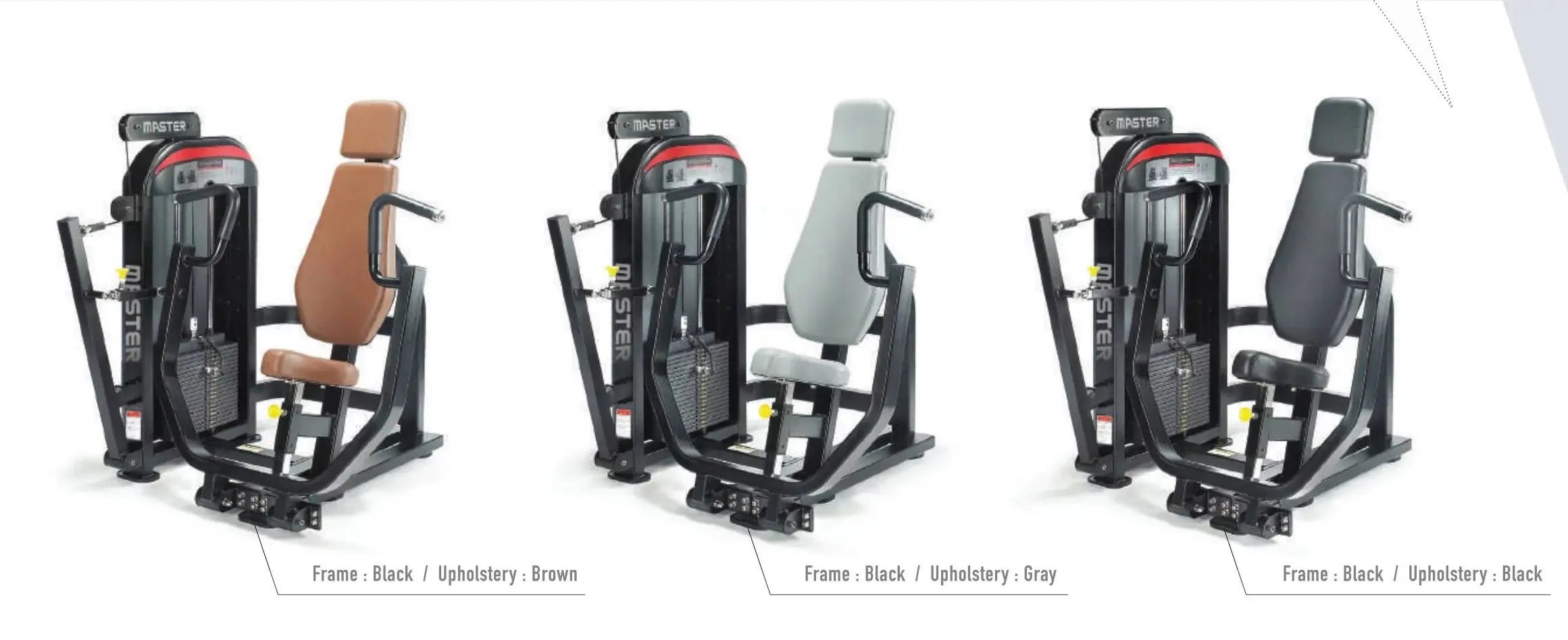
Lexco covers the four blocks a complete facility needs. Stack-loaded strength machines form the core of most fit-outs and are found in the Lexco selectorised range. Cardio sits alongside it, with treadmills, cross trainers and seated bikes grouped in the Lexco cardio range.
Free weights and training accessories extend what a member can do beyond the machines themselves, and dedicated cross-training equipment such as gymnastic rings and Olympic barbells serves functional-format facilities. Operators building that kind of room will want to look at the cross-training and Hyrox cages at the same time, because the rig determines the layout of everything around it.
How to specify: what to settle before you compare quotes
Define the need first. Which exercises do you want to offer, and how many people will be on the floor at peak hour? Those two answers drive almost every later decision, and answering them badly is the most common cause of an unbalanced room.
Then look at build and brand. Cheap machines are cheap for reasons that surface in year two. If a quote is far below the others, the difference is in the steel, the bearings, the upholstery or the warranty, and you will meet it eventually.
Ask what can be adapted. Professional ranges offer configuration options that entry-level ranges do not. Use them: the room you are equipping has constraints the catalogue does not know about.
Take advice before signing. Someone who equips facilities for a living will spot the circulation problem in your floor plan before your members do.
Frequently asked questions
Is Lexco suitable for a small facility?
Yes. The range covers hotel and residence gyms as well as full commercial clubs, and configurations can be adapted to the available floor area rather than forcing you into a standard layout.
What happens if a machine fails?
After-sales support and maintenance are part of the offer. Ask about parts availability and response arrangements for your country before you sign, since these are what actually determine downtime.
Does higher purchase price really pay back?
Over an equipment cycle it usually does, through longer service life and lower maintenance. The comparison to run is cost per year in service, not the figure at the bottom of the quote.
Planning your fit-out
Every facility is a different set of constraints: floor area, ceiling height, access, peak attendance, member profile and budget. Send us those and we will come back with a layout and a costed equipment list built around them: request a quote.