Strength Training Machines: Essential Functions for Gyms
Un appareil de musculation guidé remplit trois fonctions : imposer une trajectoire sûre, permettre un réglage rapide de la charge et rendre le mouvement accessible sans encadrement. Ces qualités le rendent adapté aux débutants, aux publics seniors et aux salles en accès libre. Il décharge en revanche les muscles stabilisateurs, que les charges libres sollicitent.
Equipping a training floor starts with one question: what is each machine actually for? Whether you run a commercial gym, a hotel fitness room, a municipal sports hall, a corporate wellness suite, a club or a rehabilitation centre, the machines you install decide how safely your users train, how many of them can use the floor without supervision, and how long the equipment survives daily commercial traffic. This guide sets out the essential functions of professional strength training machines, the benefits they deliver to your members, the main families available and the criteria that should drive a purchasing decision.
The three essential functions of a guided strength machine
A guided-load machine does three things a free-weight rack cannot. It imposes a safe, fixed movement path, so the user cannot drift into a position that loads the spine or the shoulder joint badly. It allows the load to be changed in seconds, which matters enormously when a circuit has to move a group of twelve people through eight stations. And it makes the movement accessible without an instructor standing next to the user, which is what makes unstaffed opening hours, hotel gyms and open-access municipal facilities possible at all.
The trade-off is worth stating plainly rather than hiding: a guided machine unloads the stabilising muscles that free weights recruit. A balanced floor therefore pairs selectorised machines with a free-weight area instead of replacing one with the other. That is a layout decision, not a brand decision, and it is the first thing to settle before any quotation is drawn up.
The physical benefits your members will feel
Strength training equipment is not only about muscle size. Used regularly, it improves muscular definition and maximal strength, it contributes to fat loss by raising energy expenditure and lean mass, it supports joint mobility when the full range of motion is used, and it stimulates bone density, which is one of the strongest arguments for offering resistance training to older members and to anyone recovering from a sedentary period.
Because the resistance is adjustable on every station, the same machine serves a first-time user and an experienced athlete. For an operator this is the whole economic case for guided equipment: one footprint, one maintenance line, several very different user profiles.
The mental and emotional benefits
Members do not renew a subscription for muscle mass alone. Regular resistance training reduces perceived stress and anxiety, releases endorphins that lift mood, and produces the visible, measurable progress that builds confidence. A well-laid-out strength area, with clear instruction plates and enough circulation space between stations, is what turns a room full of steel into a place people want to come back to. Retention is built on the floor, not in the marketing plan.
The main families of professional equipment
Two broad families share a training floor, and they answer different needs.
| Family | Typical stations | Primary purpose | Best suited to |
|---|---|---|---|
| Resistance equipment | Selectorised machines, plate-loaded machines, benches, cable stations, dumbbells and barbells | Build strength, muscle definition and bone density | Gyms, clubs, rehabilitation, sports teams |
| Cardiovascular equipment | Treadmills, cross trainers, rowing machines, upright and recumbent bikes | Improve cardiovascular capacity, circulation and body composition | All sites, and the entry point for beginners |
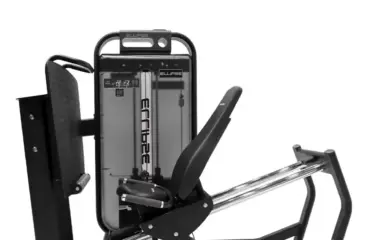
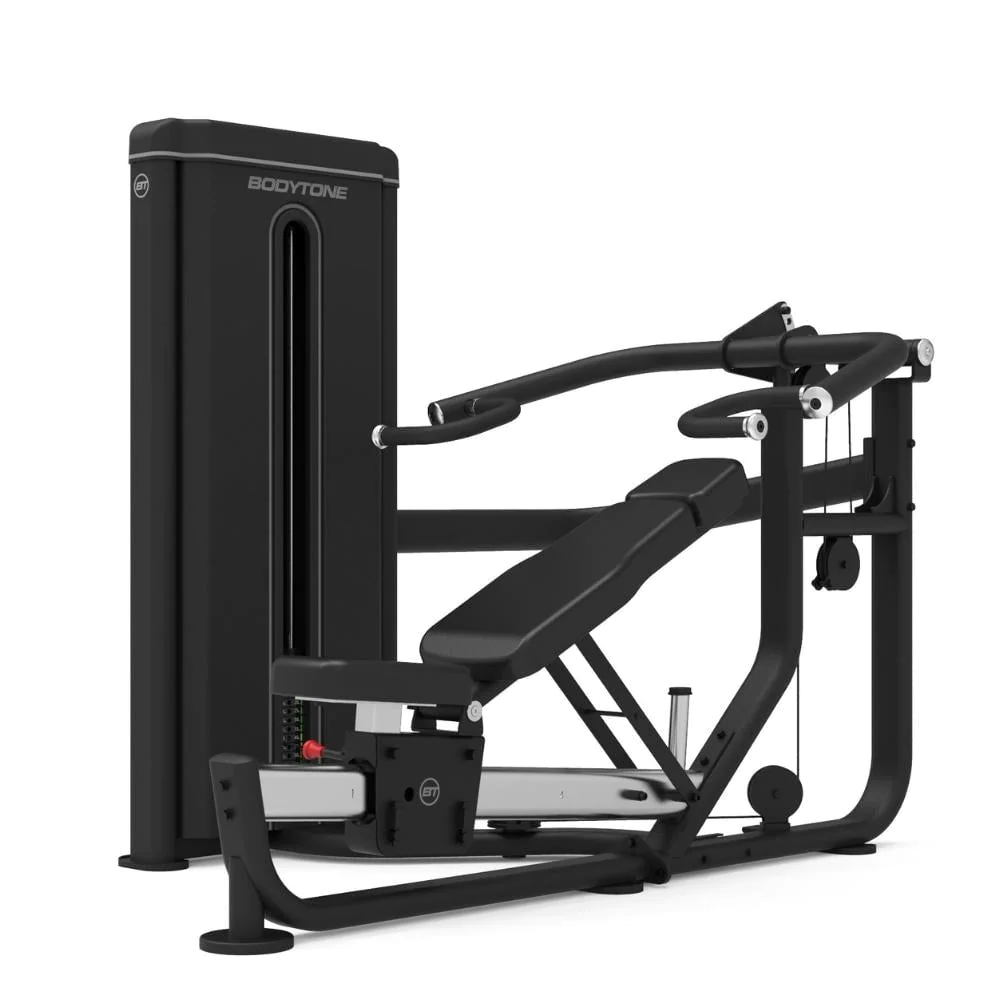
Within resistance equipment, selectorised stations use a weight stack and a pin, which is the fastest and most intuitive format for open-access sites. Plate-loaded machines use Olympic discs, follow a more natural resistance curve and are usually preferred by strength-focused clubs. Cable and pulley stations sit between the two and are the workhorses of rehabilitation rooms because the load can be started very low. On the cardio side, rowing machines are the one station that trains the posterior chain and the cardiovascular system at the same time, which is why they earn their place even on small floors.
What professional use demands from the hardware
Equipment installed in a supervised or open-access facility is not household equipment with a heavier frame. For indoor stationary training equipment the applicable reference is EN ISO 20957-1 class S, the class intended for professional and commercial use. Ask for it in writing at the quotation stage, together with the frame and upholstery warranty terms, the spare-parts availability period and the load rating of each station. A machine that cannot be serviced in five years is not a saving.
Check the practical details too: the footprint including the user envelope, the weight of each unit against the floor loading of the room, the clearance needed to change plates without hitting the next station, and whether the floor covering under the free-weight zone is rated for dropped loads.
Safety, technique and programming
Three rules cover most incidents on a gym floor. Stability and condition first: every station must be level, anchored where the manufacturer requires it, and inspected on a written schedule. Technique second: correct form on fewer repetitions always beats heavy loads on poor posture, and clear pictograms on each machine do more for technique than any poster at the entrance. Variety third: alternating exercises and muscle groups prevents overload and keeps progress moving, with mobility work before and after the session.
How to choose the right equipment for your site
Three questions decide the specification. What is the objective of the room: strength development, general conditioning, rehabilitation, or a mixed offer? How much usable floor area is there once circulation and safety distances are deducted? And what is the budget, not only for purchase but for the ten years of use that follow?
A strength-focused club will invest first in racks, benches and plate-loaded stations. A hotel or corporate room with limited space will get more value from a compact selectorised multi-station and two or three cardio units. A rehabilitation centre will prioritise cable stations with low starting loads and easy seat adjustment. Entry-level ranges do exist, but on a commercial floor the difference in bearings, upholstery and frame section shows up within the first year, so the sensible compromise is fewer stations of the right class rather than more stations of the wrong one. Our team can build that arbitration with you across the full professional strength training machines range.
Frequently asked questions
Are guided machines enough on their own?
For a hotel, a small corporate room or an open-access municipal site, a set of guided stations covers the main muscle groups safely and is often the right answer. For a club with coaching, guided machines should be combined with a free-weight area so that stabilising muscles are trained as well.
Selectorised or plate-loaded?
Selectorised for speed, simplicity and unsupervised use. Plate-loaded for strength-focused clubs, for heavier loads and for a lower cost per station, at the price of slower load changes and the need to store and rack discs safely.
How much space should be planned per station?
Plan the footprint of the machine plus the user envelope given by the manufacturer, plus a circulation aisle. Rather than applying a rule of thumb, send us your floor plan: the layout is drawn station by station and returned with the quotation.
Can the same machines serve beginners and experienced users?
Yes, provided the load increments are small enough at the bottom of the range and the seat and pad adjustments cover a wide range of body sizes. This is a specification point to check before ordering, not after.
Planning your strength area
Choosing the right strength training equipment comes down to defining the objective of the room, measuring the space honestly and matching the budget to the intended service life. Get those three right and the safety, technique and variety of your users follow naturally. Send us your project and floor plan and we will return a specified layout and a costed proposal: request a quote.