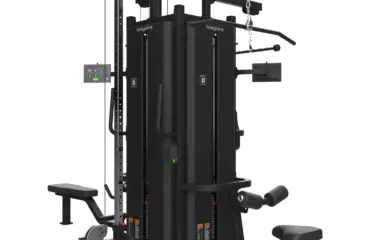
Connected Strength Machines with Muscle OS and Android Screen
Une machine de musculation connectée enregistre les charges, les répétitions et l'historique de chaque utilisateur via un écran intégré. L'intérêt réel tient au suivi de progression et à la réduction du temps de réglage, pas à l'écran lui-même. La panne d'un module électronique ne doit jamais immobiliser une machine mécaniquement saine.
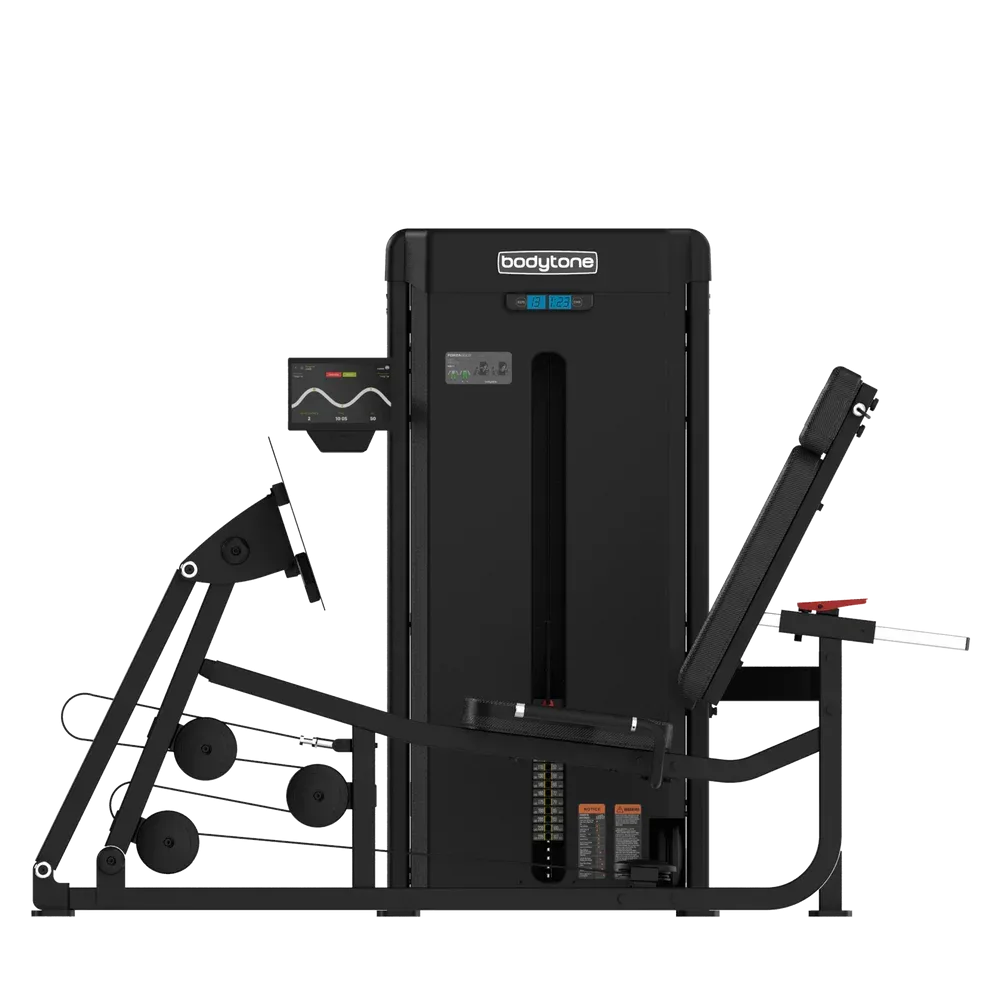
A connected strength machine records the load, the repetitions and the training history of each user through an integrated screen. The real value is progress tracking and reduced setup time, not the screen itself. And one rule should sit above every specification decision: the failure of an electronic module must never take a mechanically sound machine out of service. That single criterion separates a durable investment from an expensive one.
What a connected strength machine actually is
A connected machine combines conventional mechanics, resistance, guided path and adjustment, with an embedded software layer: an Android touchscreen, performance tracking, session guidance and a channel between coach and member. With a system such as Muscle OS, the station stops being a passive frame and becomes a training position that can structure the effort, guide a first-time user and give a club a consistent record of what is happening on the floor.
What it is not is a different kind of strength training. The biomechanics, the load path and the build quality remain exactly what they were. The screen adds a layer. It does not compensate for a poor movement path, an awkward seat adjustment or a light frame.
Why an integrated interface earns its place in a club
For an operator, the case is not the initial impression it makes. It is operational.
- Setup time. A machine that remembers a member’s settings removes the fiddling at the start of every set. Across a busy evening, that is throughput.
- Autonomy. On-screen guidance lets an unsupervised member use a station correctly without waiting for a staff member, which is decisive in hotel, corporate and residential facilities.
- Consistency of coaching. Programmes delivered through the machine are the same programme every time, which standardises what your team delivers rather than leaving it to whoever is on shift.
- Retention evidence. Progress history is the single most persuasive argument at renewal, because it is the member’s own data rather than a marketing claim.
- Positioning. A connected strength zone supports a premium proposition and helps a club justify its pricing against a discount competitor down the road.
The business objective is straightforward: turn the strength area into an interactive, measurable environment oriented towards durable performance rather than a row of frames.
Where to deploy connected stations first
Few clubs equip an entire floor at once, and they should not. Prioritise:
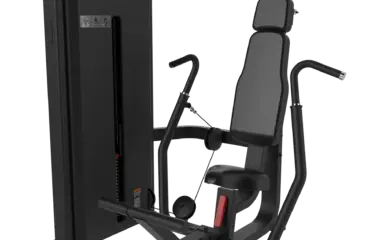
- Upper-body positions: chest press, pulldowns and rows, shoulders and arms, where setup adjustments are frequent and members benefit most from stored settings. Our chest press machines sit at the centre of that zone.
- Lower-body positions: leg press, quadriceps, hamstrings and glutes, where load progression is the main motivator.
- Guided circuits: a defined sequence of stations that a beginner can follow without supervision.
- Premium spaces: coaching studios and members-only zones, where the interface is part of what the higher subscription buys.
Mixing connected and conventional stations in the same room is normal and often sensible. What matters is that the two share the same adjustment logic and the same look, so the floor reads as one coherent installation rather than two purchases.
How to select connected strength machines
- Biomechanics first. Natural movement path, effective range of motion, joint comfort. If the mechanics are wrong, no interface will rescue the station.
- Ergonomics. Adjustments that are fast and legible for every user profile, including members who will never read an instruction.
- Interface quality. An Android screen that is responsive, readable under gym lighting and genuinely intuitive, not a menu tree.
- Software substance. Muscle OS functions that are used daily rather than demonstrated once. Ask which functions members actually use in an existing installation.
- Professional durability. Frame and components specified for continuous commercial use, to EN ISO 20957-1 class S for indoor equipment. Class I is a separate professional class covering inclusive access, not a higher intensity tier.
- Maintenance and support. Clear technical support, defined response arrangements, spare parts availability for both the mechanical and the electronic side.
- Fleet coherence. Consistent design, consistent adjustment logic and consistent station layout across the whole strength line.
The question to ask before you sign
Ask what happens when the screen fails. A well-designed connected machine keeps working mechanically when its electronics do not: the load still moves, the station stays in service, and the module is replaced when the part arrives. A poorly designed one becomes unusable, and a station out of service during a renewal period costs far more than the module.
Ask the same question of the software. How long is the operating system supported, what happens to stored member history if a machine is replaced, and can the data be exported. The mechanical life of a well-built strength machine is measured in many years. Software support is not automatically measured in the same units, and that gap is the real risk in a connected purchase.
Finally, member training data is personal data. How it is stored, who can access it and how long it is kept has to be checked against the data protection rules applicable in your country before the first machine is switched on, not afterwards.
Specifying the rest of the line
A connected zone still has to sit inside a coherent strength line. The selectorised and plate-loaded stations around it define the member experience just as much as the screens do, which is why the full range of professional strength machines should be specified together, and why ranges such as the Etenon R8 selectorised machines are worth comparing on mechanics before any interface is discussed.
FAQ
What is a connected strength machine?
A machine that combines a conventional load mechanism with a digital interface, in order to guide the user, record performance and improve the training experience.
What does an Android touchscreen with Muscle OS add?
Better ergonomics, more readable programmes, session tracking and standardised strength protocols in a professional environment. It does not change the mechanics of the exercise.
Are these machines suitable for intensive use?
Yes, provided you select equipment designed for commercial use, with a robust frame, planned maintenance and a coherent range. Connectivity is not a substitute for build quality.
What happens if the electronics fail?
On a properly designed machine, nothing that stops training: the station continues to work mechanically while the module is replaced. Confirm this explicitly with any supplier before ordering.
Do connected machines replace coaching staff?
No. They standardise what coaching delivers and free staff from repetitive setup and explanation. The value of a coach on the floor is unchanged.
Where do I get a quotation for a full installation?
Send your floor area, your membership profile and your objectives, and the specification is built around them rather than around a catalogue.
Building the specification
Connected strength equipment is worth specifying when the interface solves an operational problem you actually have: setup time, unsupervised use, inconsistent coaching or a weak retention argument. It is not worth specifying for the screen alone. Judge the mechanics first, the software second, and the failure behaviour before either.
Tell us the surface area, the membership you serve and what you want the strength zone to achieve, and we will build the corresponding equipment specification: request a quote.