Back Extension Machines for Professional Gyms
La machine à lombaires travaille l'extension du tronc contre une résistance guidée, sur une amplitude contrôlée. Le renforcement des extenseurs du rachis contribue à la prévention des lombalgies communes. Le réglage du point de pivot au niveau des hanches conditionne la sécurité du mouvement.
Lower back complaints are one of the most common reasons a member stops turning up. A dedicated back extension machine gives your team a safe, guided way to strengthen the spinal extensors, and it turns a frequent cause of drop-out into a reason to stay. This guide is written for the people who sign the purchase order: gym operators, hotel and resort wellness managers, corporate fitness managers, sports clubs, rehabilitation centres and public buyers.
What a back extension machine actually trains
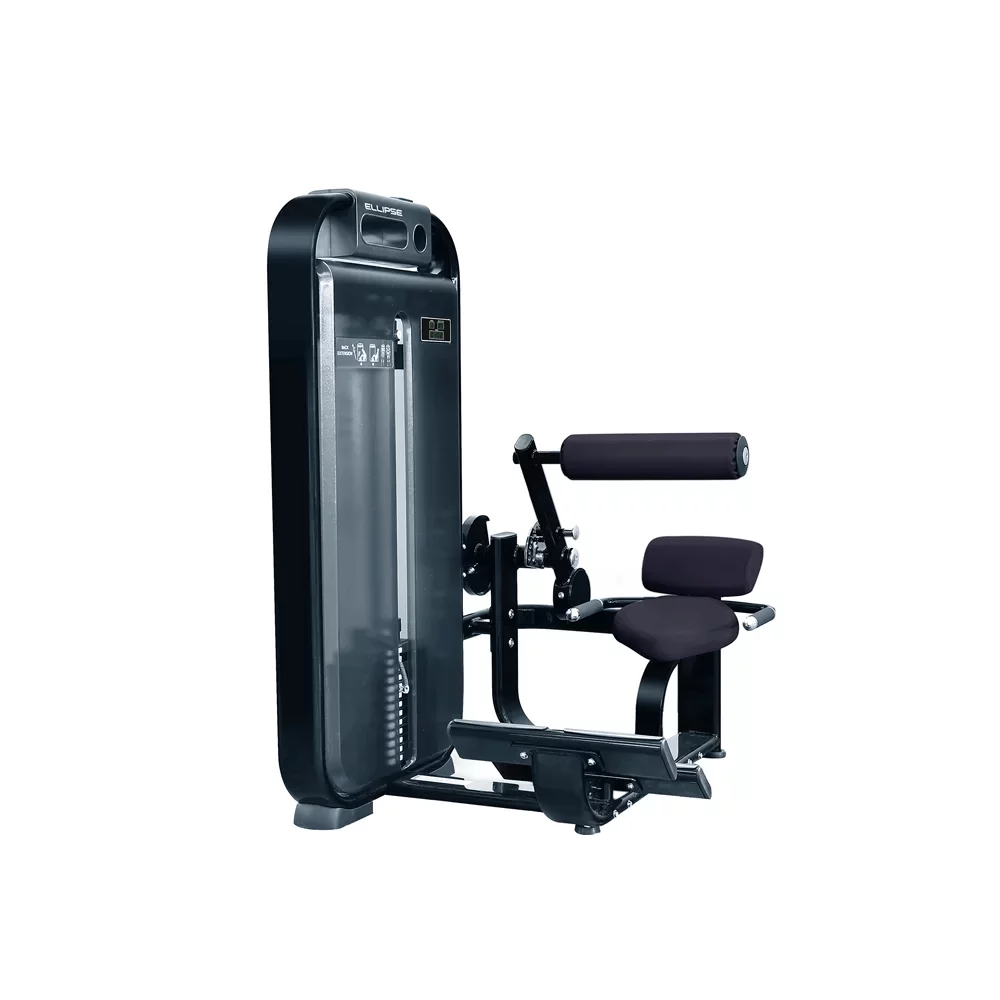
The machine loads trunk extension against guided resistance over a controlled range of motion. The user is secured at the thighs and ankles, the pelvis is blocked, and the movement happens where it should: at the hip and through the lumbar spine, rather than through compensation elsewhere. Because the resistance is guided, the load path is repeatable from one user to the next, which is exactly what a supervised facility needs.
Setting the pivot point at hip level is the single most important adjustment. Get it wrong and the exercise loses its target. Get it right and the extensors work through their full useful range, without the improvised set-up that a plain bench invites.
More than a straight extension
A good commercial unit is not limited to the classic extension. Rotational extension, routinely skipped in standard programming, brings the obliques and the deep stabilisers into the pattern and is worth having on the floor. Adjustment range matters more than the number of listed exercises: pad height, back pad depth, footplate position, and a starting angle that lets a deconditioned member begin inside a short, comfortable range.
Pads should be firm, generous and replaceable. In a commercial setting upholstery is a consumable, and a machine whose pads can still be reordered years after purchase is a very different asset from one that cannot.
Why lumbar strengthening belongs in your programme
Sedentary work and long hours seated are the background to most of the lower back complaints your instructors hear about. Age, disc problems, scoliosis and sports injuries all play their part, and the cause is not something a fitness professional diagnoses. What a well-programmed strengthening block delivers is well established: better mobility, better posture, more trunk strength, a wider usable range of motion, and fewer injuries across the rest of the programme.
Free-weight alternatives belong in the same programme: hip bridges, deadlifts, T-bar rows, side planks and the Superman. The machine is what makes the pattern accessible to a member who cannot yet load a barbell safely, and it gives your instructors a station they can supervise from across the floor.
Choosing the right unit for your facility
Three questions decide the purchase.
- Footprint. Measure the free area including the user envelope, not only the frame. A lumbar station usually sits in the core and abdominal zone, next to the crunch machine, and needs clear access on the entry side.
- Duty rating. Indoor equipment for a facility open to the public should be built and certified to EN ISO 20957-1 class S. That is the professional grade. Ask for it in writing before you compare prices.
- Cost of ownership. Frame gauge, weld quality, bearing type, and long-term availability of cables and upholstery. A cheaper machine that stands out of service waiting for a part costs more than the difference on the invoice.
In our catalogue the guided-load option is the Gold SPG012 back extension machine, part of the Gold Line selectorised machines, while sites with a rehabilitation or clinical brief usually specify the Lexco LPS-110 lumbar machine.
Putting the machine to work
A short warm-up comes first: hip rotations, press-ups and lunges are enough to prepare the pattern. The session then starts with the basics, guided extension and, where the member is ready, the deadlift. Extension on the machine is the foundation of any back programme because it loads the extensors in relative isolation, which is precisely what a member with a weak posterior chain needs before anything heavier.
Set the machine before the first repetition: legs firmly secured, pelvis stabilised, pivot at the hips. Frequency then matters more than load. The usual recommendation is a session of 15 to 20 minutes, three to five times a week, and results come from consistency rather than from stack weight.
One rule your instructors should enforce without exception: the exercise must not hurt. A member reporting chronic pain is referred to a health professional, not progressed to a heavier stack.
Frequently asked questions
Is a back extension machine worth the floor space in a small facility?
In a compact gym it is usually specified alongside an abdominal machine so that the two share one core zone. If space is genuinely tight, a bench-style lumbar station covers the same pattern with a smaller envelope, at the cost of the guided load and the finer adjustment.
Which standard applies to indoor equipment?
EN ISO 20957-1 class S is the reference for equipment installed in a facility open to the public and supervised by qualified staff. Class I is also a professional class, intended for inclusive access; it is a different scope, not a higher intensity tier above class S.
Can the machine be used in a rehabilitation setting?
Yes, with clinical supervision and a unit whose starting angle and resistance increments suit low loads. Specify the intended patient profile at quotation stage so that the right model and options are proposed.
Who trains on it, and how often?
Members of any level once the set-up has been shown to them. Three to five short sessions a week is the pattern that works, with progression handled by your coaching team rather than by the member.
Specifying your lumbar station
A back extension machine is a low-cost, high-return line on a fit-out budget: it protects your members, widens the range of people your programme can serve, and keeps the core zone busy at peak hours. Tell us the room, the number of daily users and the profile of your clientele, and we will size the station and the surrounding zone with you. Request a quote and our team will come back with a costed proposal.