Fitness, strength and cross-training accessories: the professional buyer guide
Accessories are the part of a fit-out that is specified last and used most. A rack of dumbbells, a wall of kettlebells or a set of plyo boxes costs a fraction of a machine line, yet it carries a large share of the sessions on any floor and it is the first thing members notice when it is missing, worn or badly stored. This guide goes through the accessory families a professional facility actually needs, family by family, with what matters when you specify them for continuous club use rather than for occasional use at home.
What we mean by fitness, strength and cross-training accessories
The term covers everything that is not a machine or a structure: mats, bands, free weights, grip and support items, suspension trainers, kettlebells, boxes, ropes, rings and small implements. They serve three purposes on a commercial floor. They extend what a room can do without adding footprint, they let one coach run a class of very mixed abilities, and they absorb overflow when the machine lines are busy. Our full range is here: fitness accessories.
Fitness accessories: the everyday layer
Mats. Exercise and yoga mats support floor work, cushion impact and reduce the risk of injury. In a club they are also a hygiene and turnover item: specify a surface that can be wiped down between users and a storage solution that keeps them off the floor, or they will be replaced far sooner than they should be.
Resistance bands. Bands are the most versatile item per euro on any floor. They cover squats, lunges, assisted pull-ups and stretching, they suit deconditioned users and strong ones, and they take almost no space. Buy them in graded sets so a coach can move a user up a level without changing exercise.
Dumbbells. The classic strength accessory: a wide range of exercises and precise targeting of every muscle group. The specification question is never the dumbbells themselves but the racking and the increments, which decide whether the set stays complete after six months.
Skipping ropes. Simple and effective for conditioning, coordination and warm-ups, and a staple of high-intensity sessions. They cost little and they wear out, so treat them as a consumable in the budget rather than a one-off purchase.
Stability balls. Used for balance, posture and core stability, and equally at home in a rehabilitation setting and a group studio. Storage is the constraint: plan the wall or cage for them before they arrive.
Strength accessories: support, grip and safety
Lifting belts. A belt supports the trunk and helps maintain posture under heavy loads. In a club context it is usually a personal item, but keeping a few sizes available is what allows a coach to introduce heavy lifting safely to a new user.
Training gloves. Gloves improve grip and protect the hands from calluses and blisters during lifting work. Their real value for an operator is retention: hand discomfort is a common reason casual members stop using the free weight area.
Lifting straps. Straps reinforce the grip on pulling movements and deadlifts, which lets a user load the target muscle without the forearms failing first. They belong in any facility that runs structured strength programmes.
Suspension trainers. A suspension trainer turns a wall, a rig or a beam into a full bodyweight station. It is the single most space-efficient way to add functional and strength work to a small room, and it scales from rehabilitation to athletic training with no change of equipment.
Benches. The bench sits between accessory and equipment. It supports pressing, curling and extension work and gives the stability that makes free weight training safe. Adjustable models cover the widest range of exercises per square metre: see our weight benches.
Cross-training accessories
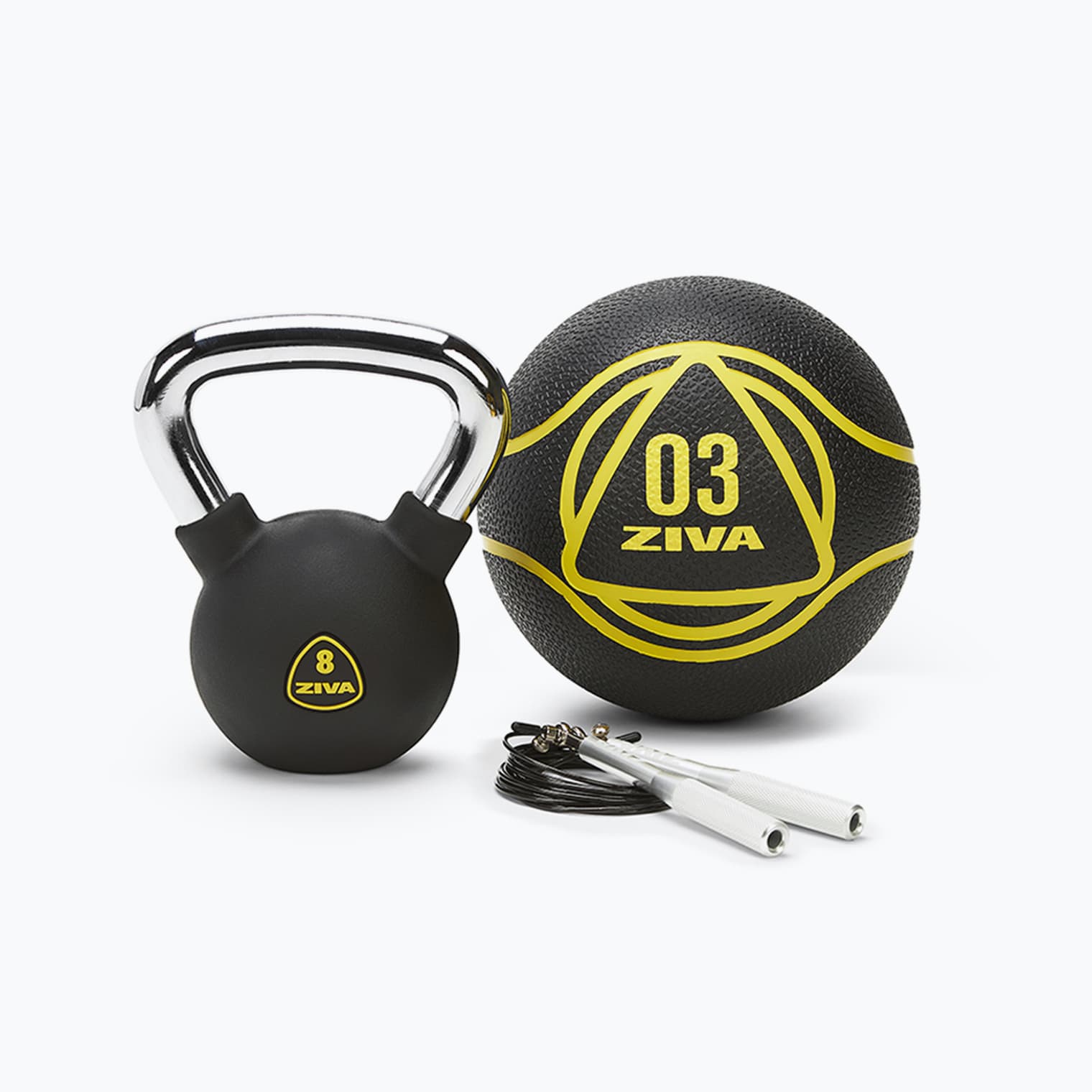
Kettlebells. The most versatile implement in a cross-training room: swings, squats, deadlifts and carries all come from one object. Specify the increments across the whole set rather than buying individual weights, and plan the storage at the same time. See our kettlebells.
Plyo boxes. Used for jump and explosive work, developing power, agility and coordination. Box height and stability under a failed jump are what separate a professional box from a light one, and this is not the place to save money.
Climbing ropes. A cross-training classic that builds grip, upper body strength and coordination. The rope is the cheap part; the anchor point, the ceiling height and the landing surface underneath are the specification.
Gymnastic rings. Ideal for suspension work, pull-ups and dips, building upper body strength and stability. They mount on a rig and cost very little relative to the training they unlock.
Ab wheels. A simple and effective way to load the core harder than a plank does. A handful of them covers a whole class.
How many of each, and where they live
Quantities follow the largest class you intend to run, not the size of the room. If a coach leads twelve people through a circuit, twelve mats, twelve bands and six kettlebell pairs are the minimum, and anything less turns the session into queuing. The second decision is storage: accessories that have no assigned place migrate, get damaged and disappear, and the replacement budget quietly becomes larger than the storage would have been. Specify racks, shelving and wall mounts in the same order as the accessories themselves.
The floor underneath matters just as much. Dropped kettlebells, boxes and free weights are what destroy a surface that was chosen for a machine area, so match the flooring to the zone rather than to the room: see our rubber gym flooring tiles.
Frequently asked questions
What do accessories add to a professional facility?
They widen the training offer without adding footprint, they support group sessions with mixed abilities, and they take pressure off the machine lines at peak hours.
Which accessories should a new facility buy first?
Mats, graded resistance bands and a dumbbell set with racking. That base covers beginners and experienced users alike and lets a coach run a full session on day one.
Which accessories suit conditioning and weight management programmes?
Skipping ropes, resistance bands and kettlebells are the usual core of a conditioning circuit: they raise the heart rate, they load the muscles and they need very little space per user.
How do we choose accessories against our own goals?
Start from the programmes you sell. A facility built around strength needs dumbbells, straps and benches; one built around explosive and functional work needs kettlebells, plyo boxes and rings. Most clubs need a defined proportion of both rather than a bit of everything.
Which accessories support mobility and flexibility work?
Stability balls, mats and suspension trainers cover stretching and mobility sessions, and the same items serve rehabilitation programmes without a separate purchase.
Where should a professional buyer source accessories?
From a supplier who specifies for continuous professional use, holds the range in depth so a set can be completed later, and can quote the storage and the flooring alongside the accessories. Consumer retail sets are cheaper per unit and are not built for the number of users a club puts through them.
Build your accessory list with us
Tell us the size of your largest class, the type of facility and the programmes you run, and we will come back with a costed accessory list including racking and storage: request a quote.