Deadlifts from the Floor: What Are the Benefits?
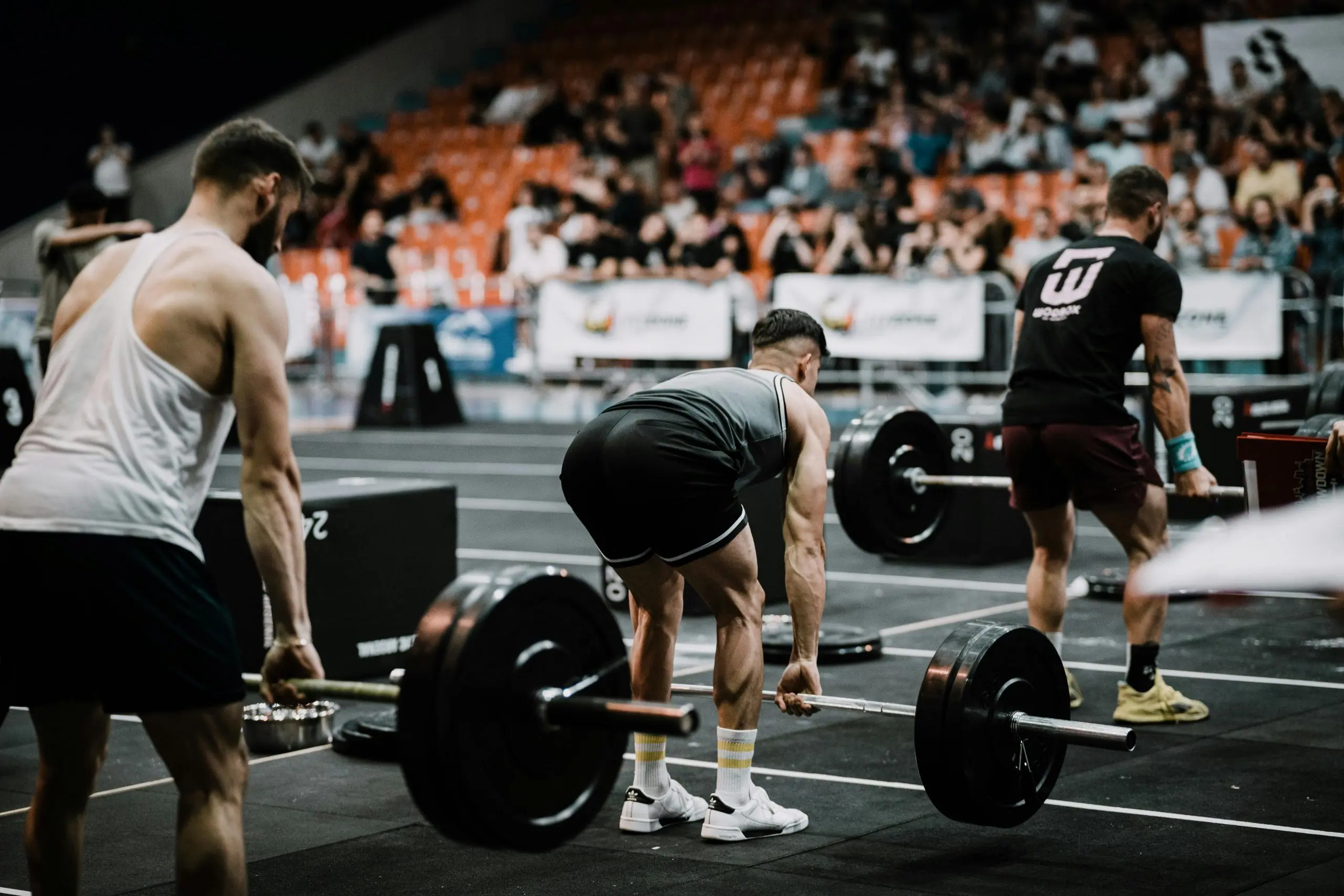
If you are wondering why you should be deadlifting, the answer has to come from the benefits the lift brings to the body when it is executed properly. Sooner or later every strength coach points a client down a path that leads to trying the deadlift, the cornerstone of training for building muscle mass and improving load tolerance. It is a basic lift that delivers a long list of benefits, because it recruits a large share of the musculature, and not only that: it works the cardiovascular system too, and stimulates muscle growth through the hormonal response it provokes. For a gym operator the same lift raises a second question, which is what the facility has to provide before members can perform it safely, and we come back to that at the end.
Lifting from the floor: what you gain and what to watch
The main benefits of the deadlift are essentially an increase in base strength and in muscle mass, thanks to a compound movement that activates a great many muscles, certainly all the major ones.
The deadlift also trains the smaller stabilising muscles, but it works mainly on the hamstrings, the glutes, the forearms, the trunk including the abdominals and obliques, the lumbar muscles, the spinal erectors, the trapezius, the quadriceps, the biceps, the lats and the posterior deltoids.
Because of that coverage you can cut redundant exercises out of a programme, that is to say the ones that train similar muscles under heavy load: shrugs alongside a deadlift, or leg curls alongside a deadlift.
The hormonal response
The second item on the list of beneficial effects is hormonal. The deadlift triggers the natural release of testosterone and of growth hormone, two chemical components that are fundamental to increasing muscle mass.
Growth hormone, also known as somatotropin, is a peptide hormone released by the pituitary gland, mostly during sleep, and its level falls when sleep is cut short. On top of that natural release, growth hormone is also stimulated by physical exercise, as a response of the body to the effort.
Stability and strength in the deadlift
Another beneficial factor of this lift is the involvement of the stabilising muscles, which are generally bypassed by exercises performed on isotonic machines. These are the internal oblique, the transversus abdominis, the multifidus and the lumbar transversospinal muscles. Developing them matters, because they increase motor control and static balance and hold correct posture across the pelvic complex and the back.
Weakness in these muscles, including those referred to as the core, can lead to injury and joint problems.
The deadlift is best known for increasing overall strength and grip strength. It is a lift in which several kilos of weight have to be held in the hands, and it is one of the best exercises for strengthening the forearms and the spine.
People with poor posture, lordosis or excessive spinal curvature may benefit from deadlifts through the strengthening of the lumbar muscles. That said, these are risky exercises for anyone with existing back problems, and it is always necessary to consult your coach or instructor beforehand, so that the work lands correctly on the strong spinal erectors that support the spine.
Cardiovascular benefits
The cardio side can improve considerably with deadlifts and squats, in correlation with greater muscle tone. The deadlift is a power exercise that serves the whole body, including from the point of view of improving the cardiovascular system, thanks to a stimulus that is higher than that of other exercises. The deadlift increases cardio capacity and also lowers the risk of osteoporosis by influencing bone density and optimising bone resistance.
Leg and glute development
For the legs in particular, the deadlift is an exercise that calls on every muscle involved in leg function. It works on extension at both the knee and the hip, across different muscles such as the quadriceps femoris.
It then also works the back of the legs, notably the glutes, through extension at the hip, where the hamstring group acts in concert with the gluteal muscles, minimus, medius and maximus.
The glutes are worked especially hard in the Romanian deadlift, where the quadriceps matter far less, since the knee stays fixed and only the hip extends with the help of the glutes.
Load also goes onto the spinal erectors and the back, but the movement remains a fundamental exercise for working the glutes. High definition in the muscles of the glutes and legs is achieved this way, while working other lower body muscles at the same time.
It strengthens the back and the arms
During the deadlift the back uses the trapezius and the lats. The lats come in immediately at the start of the movement, drawing the shoulders back, supported by adduction at the humerus.
The trapezius responds to the force of gravity pulling the shoulders down. The scapular adductors and the scapular muscles come in to lift the weight, then act on the trapezius, which is responsible for holding the shoulders up during the deadlift, together with the deltoids.
Deadlift, bench press and squat compared
In the flat barbell bench press, submaximal loads are used, which is exactly why lifters often feel the danger of being pinned under the weight, and as a result cannot concentrate properly on the lift.
The barbell squat, on the other hand, calls for heavy loads without that sense of being crushed, yet many athletes fail to finish deadlifts out of fear of getting stuck and not coming back up with the weight, with the knee consequences that implies.
Deadlifting also strengthens the tendons and ligaments more than these other lifts do, which makes them more resistant to injury, particularly in the back.
What the lift demands of the facility
Everything above is a training argument. For a gym operator, a box owner or a rehabilitation centre it turns into a specification, because the deadlift is the lift that puts the most stress on the building rather than on the machine.
The bar comes first. A lift performed from the floor at heavy load needs a bar rated for it, with the whip and the sleeve rotation that the movement requires, which is what the Olympic barbells range covers. Loading follows: bumper plates rather than cast iron wherever the bar may be set down under load, since cast iron transmits the impact straight into the slab. The plates and bumpers range separates the two.
Then comes the floor, which is where most deadlift areas fail. A tile specified for a general training floor is not the same product as one specified for dropped loads, and the difference shows within months. Lifting zones use dedicated weightlifting rubber tiles or a full lifting platform, sized to the bar and to the safety clearance around it. Where the building imposes a reaction to fire class for floor coverings, ask for the exact class, including the smoke index, and check it against the building file before ordering. If the deadlift area sits inside a rack, the squat racks and power racks range covers the frames that take the load.
All indoor equipment for a shared or supervised facility must be certified to EN ISO 20957-1 class S. Class I is a professional class covering inclusive access, not a level above class S, so it is specified in addition where the facility has to be accessible, never instead.
Frequently asked questions
Does a deadlift area need a platform, or is flooring enough?
It depends on the load and on how often the bar is set down hard. Flooring rated for dropped loads handles most commercial training floors; a dedicated platform is the answer where heavy singles are pulled regularly or where the slab needs protecting. The choice is made from the structure and the usage, not from a catalogue default.
Can members with back problems deadlift?
Not without clearance. The article above is explicit on this point: the deadlift is a risky exercise for anyone with existing back problems, and a coach or instructor must be consulted first. In a supervised facility this belongs in the induction, not in the member’s own judgement.
Bumper plates or cast iron?
Cast iron is fine where the bar is racked and never dropped. As soon as the bar can be set down under load from any height, bumpers are the correct choice, both for the plates and for the floor beneath them.
Does the deadlift replace other exercises in a programme?
It lets you remove redundant work. Shrugs and leg curls train muscles the deadlift already loads heavily, so keeping all three in the same session adds volume without adding stimulus.
Specifying your lifting area
The training case for the deadlift is settled; the building case is what tends to be missed. Send us the floor area, the slab build-up and the number of lifting stations you need, and we will come back with a bar, plate, platform and flooring specification that matches the loads you actually pull. Request a quote and we will size the lifting zone around your room.