Why Use a Lat Pulldown Machine in a Commercial Gym?
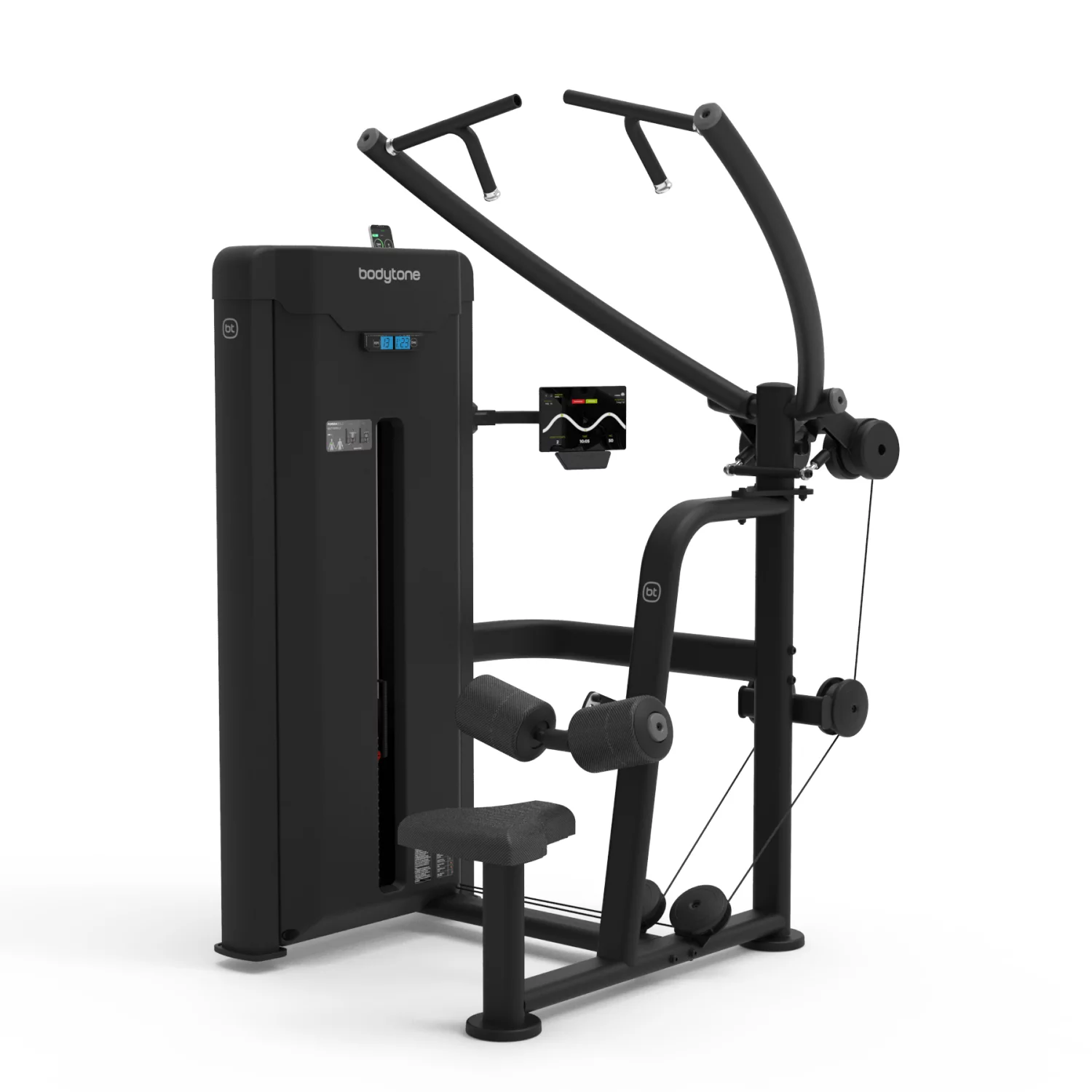
The lat pulldown is one of the most used stations on any commercial floor, and one of the least questioned. It targets the muscles of the back, in particular the latissimus dorsi, the trapezius and the deltoids, and it does so in a seated position that almost anyone can adopt on their first visit. For an operator, the interesting question is not whether it works, but what it does that no other station in the room does as well.
What the machine actually trains
The lat pulldown works the back specifically, without drawing excessively on the other muscle groups. That isolation is the whole point. A member with a painful or weak joint elsewhere can still load the back under control, because the seat and the thigh pads fix the body and remove the compensations that appear in free-weight pulling. Strengthening and building the back becomes something that can be done safely, session after session.
This is why the station appears in rooms with very different memberships: fitness clubs, hotel gyms, sports clubs and rehabilitation settings all use it for the same reason, which is controlled loading of a large muscle group with a low technical entry cost.
One station, several exercises
The second argument is variety. By changing the starting position and the movement, the same machine loads the back muscles from different angles, which is what allows the whole of the back musculature to be trained rather than one slice of it.
| Grip | Emphasis | Typical use |
|---|---|---|
| Pronated grip | Latissimus dorsi | Back width, the default variation |
| Supinated grip | More biceps involvement | Pulling strength, progression towards pull-ups |
Two grips on one frame means two exercises without a second footprint, which is the kind of ratio that decides equipment lists when floor area is the constraint.
The station that works for beginners and advanced users alike
Members who struggle to perform pull-ups, or dumbbell rows, can use the lat pulldown to build back strength progressively. The resistance is adjusted easily on the machine, so the same station serves a first-time member and an experienced lifter within the same hour. On a commercial floor that matters twice over: it widens the number of members a single machine serves, and it shortens the induction because there is little to explain.
Facilities that want the progression to continue beyond the machine usually pair it with an assisted pull-up station, so that a member moving up from pulldowns has somewhere to go. Our selectorised machines range is built around exactly this kind of progression path.
Symmetrical loading, which pull-ups do not guarantee
The lat pulldown also loads the back symmetrically. With pull-ups it is sometimes difficult to obtain a balanced distribution of muscular effort between the two sides; the machine works the muscles on each side of the back equally, which contributes to developing a harmonious and balanced musculature. For a supervising instructor this is a visible, correctable thing: a bar that stays level tells you more about a member than a rep count does.
Posture and back care
Regular use strengthens the back musculature, which improves posture and supports spinal stability, and the stretch of the back muscles at the top of each repetition contributes to the mobility of the movement. This is where a commercial operator should be careful with claims: the machine builds the back, and a stronger, better-balanced back is part of a wider approach to back care alongside core work and coaching. It is not a treatment on its own, and it should not be presented to members as one.
Specifying one for a commercial room
Three points decide the purchase.
- Class: indoor equipment for professional installations is built to EN ISO 20957-1 class S. Nothing below that class belongs on a floor open to members.
- Load system: a selectorised stack changes weight in a second, which is what protects throughput at peak hours. The Gold Line selectorised machines are specified for that pattern of use.
- Ergonomics: adjustable thigh pads and a seat that suits a wide range of heights determine whether the station is usable by your whole membership or only part of it.
The Power Line lat pulldown is the reference configuration we specify most often for club and multi-user rooms.
Frequently asked questions
Does the lat pulldown replace pull-ups?
No, it precedes them. It builds the strength needed to reach the first unassisted pull-up, and it stays useful afterwards as a way to load the back with a precise, repeatable resistance.
Which grip should be recommended to members?
The pronated grip favours the latissimus dorsi and is the sensible default. The supinated grip brings the biceps in and suits members working towards pulling strength. Both belong in a programme; neither is a mistake.
Is it suitable for a room with no instructor on site?
Yes, and that is one of its strengths. The seated position and the guided path make it one of the safest back stations to leave in an unsupervised hotel or residential gym, provided the thigh pad is adjusted before use.
Selectorised or plate loaded?
Selectorised for shared commercial floors, where fast load changes protect throughput. Plate loaded where the room is oriented to strength training and users are comfortable handling discs.
Putting it into your equipment list
The lat pulldown is a versatile station: it targets the back muscles specifically, works different parts of the back, and adapts to every level. Whether your members are beginners or experienced, it earns its floor space. Tell us the surface available and the profile of your users and we will position it correctly in the layout: request a quote.