Converging Strength Machines: The Complete Tool for Full-Body Training
Converging strength machines have become a standard fixture on professional gym floors. Their arms follow a convergent path, so the hands travel closer together as the load is pressed or pulled, reproducing the natural line of a free-weight movement while keeping it guided. For a gym operator, a cross-training box, a hotel wellness area, a sports club or a rehabilitation centre, that combination of guided safety and natural movement is what earns the category its floor space. This guide covers what these machines are, what they bring to a commercial site, how they are used and how to specify them.
What is a converging strength machine?
A converging machine guides the load along a fixed path whose two arms converge towards the centre line of the body. Resistance comes either from weight plates loaded directly on the arms or from a selectorised stack routed through pulleys and levers. Adjustable seats, back pads and foot plates let a single station fit very different body sizes, which matters far more in a shared commercial facility than in any single-user setting.
Indoor machines specified for professional use are built and certified to EN ISO 20957-1 class S, the class intended for equipment installed in supervised commercial facilities. That is the reference to look for on any quotation for a club, a hotel gym, a municipal facility or a rehabilitation centre.
Why converging machines earn their place
Five arguments come up again and again when operators specify them.
Controlled resistance. The path is guided, so a user can work close to failure without a spotter and without the load wandering off line. In a facility with limited supervision, that is a measurable reduction in risk compared with a free-weight area alone.
Short learning curve. Free weights demand technique before they deliver results. A converging machine can be explained in a minute, which shortens member induction and lets a small team supervise a busy floor.
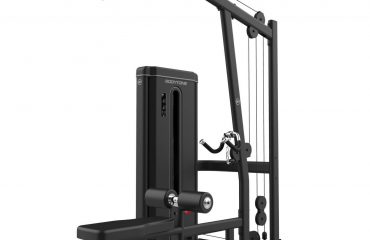
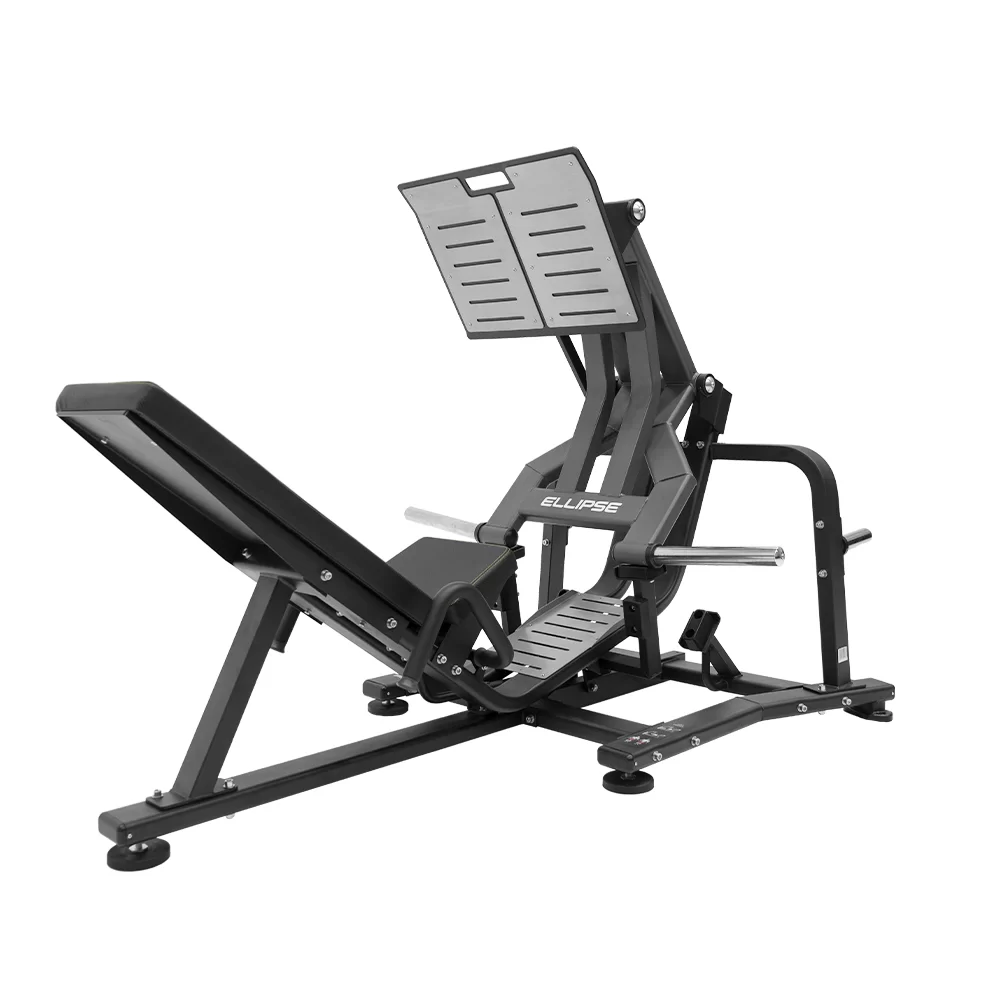
Versatility. Chest press, incline press, shoulder press, row, lat pulldown and triceps work all exist in converging form, so a handful of stations covers the whole upper body while a leg press and a squat station handle the lower body.
Adjustability. Adjustable seats and foot plates make the same machine usable by a 1.55 m member and a 1.95 m member without changing anything else on the floor.
Progress tracking. Selectorised stacks and marked plates give a member a number to beat from one session to the next, which is one of the more reliable retention levers a club has.
How converging machines are used on a commercial floor
Building strength. Arms, legs, back, chest and shoulders can all be loaded on a converging station. Changing the load and the seat setting is enough to shift the emphasis from one muscle group to another, which is why these machines carry so much of the traffic in a busy club.
Toning without heavy mass gain. Lighter resistance and slower, controlled repetitions give a definition-oriented member a safe way to train without a coach standing over every set.
Rehabilitation. Controlled resistance is exactly why these machines appear in rehabilitation programmes after injury or surgery. The load can be raised in small repeatable steps and the joint never leaves the guided path, so a physiotherapist can prescribe a progression and trust that it is being followed.
Sports performance. Athletes use converging stations to load the specific patterns their discipline demands, adding power and stability work without the technical overhead of a barbell session.
On a well planned floor, converging machines sit alongside a free-weight area rather than replacing it. The Titan converging machines and the Gold Line converging plate-loaded range are the two families most often specified for that role, and a single station such as the Gold Line converging triceps machine is often the piece that completes an existing pressing area.
Specifying converging machines for a professional site
Frame gauge, weld quality, bearing type, cable rating, upholstery density and spare-parts availability are what separate a machine that stays in service for a decade from one replaced after three years. Ask for the class S declaration, the frame warranty and the spare-parts policy before comparing prices, because those three answers explain most of the price gap between two machines that look identical in a photograph.
Floor loading, circulation width around each station and the clearance needed behind a pulldown or in front of a leg press decide how many stations actually fit. A layout drawn before purchase is what prevents a floor that is technically well equipped and practically unusable.
Light in Fitness steel structures carry a warranty of up to 20 years, and stainless steel components are covered for life.
Frequently asked questions
What do converging machines offer that free weights do not?
Guided, controlled resistance, a short learning curve and adjustability across body sizes. They lower the supervision burden on a commercial floor. They do not replace free weights, which recruit stabilising muscles more heavily.
Are they suitable for beginners?
Yes. The guided path and the clear load selection let a new member train safely and progress at their own pace, which is why they are usually placed at the entrance of the strength area rather than at the back.
How often should a member use them?
That depends on the member and their goals. Two to three sessions a week with at least 48 hours between sessions on the same muscle group is the usual starting frame recommended by coaches.
Can converging machines replace a free-weight area?
No. They are an effective complement, but free weights train movement patterns more functionally and load the stabilising muscles that a guided path deliberately takes out of the equation. A complete commercial floor carries both.
What precautions should be posted on the machine?
Follow the manufacturer instructions, start at a light load and increase progressively, keep the back supported and the posture set, and never force a joint through the end of its range. Clear instruction plates on each station do more for safety than any briefing.
Do these machines suit rehabilitation and older users?
Yes, and that is one of their strongest arguments in care homes, sports clubs and rehabilitation centres. The controlled path and fine load increments make progressive, supervised loading straightforward.
Conclusion
Converging strength machines are a versatile, low-risk way to cover full-body training on a professional floor. Controlled resistance, ease of use and adjustability make them work for beginners and experienced athletes alike, and for goals ranging from strength building and toning to rehabilitation and sports performance. Specify them to EN ISO 20957-1 class S, plan the clearances before you buy, and check the spare-parts policy. Send us your floor plan and your member profile and we will come back with a layout and a costed proposal: request a quote.
À lire aussi sur le même thème
- Outdoor Leg Press OG: S235 Steel, Powder Coating and Galvanised Fixings
- Lat Pulldown Machine: Front, Behind-the-Neck and Reverse Grips
- Lat Pulldown: The Complete Technique and Coaching Guide
- How to Choose Outdoor Strength Training Equipment
- The OG Series: the outdoor guided bench press for public spaces