Bodytone CrossFit Rig: How to Configure, Anchor and Operate It Safely
Une cage CrossFit Bodytone s'exploite correctement à trois conditions : un ancrage conforme au support, un sol de réception adapté sous les zones de levée et un contrôle périodique des fixations. La configuration se définit sur le nombre d'athlètes simultanés et la hauteur sous plafond disponible. Les accessoires se montent ensuite selon les mouvements pratiqués.

A Bodytone CrossFit rig only performs as intended under three conditions: an anchoring method matched to the substrate, an impact floor under every lifting zone, and a scheduled check of the fixings. The configuration itself is driven by two numbers: how many athletes train on the structure at the same time, and the clear ceiling height available. Accessories come afterwards, chosen from the movements actually programmed.
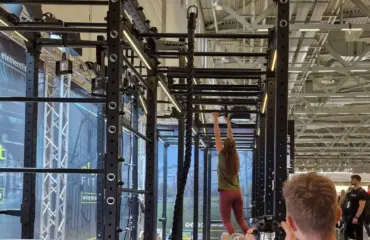
Bodytone has built a strong reputation in CrossFit and cross training with structures that are robust, modular and designed for high-frequency commercial use. In a box or a functional training area, the rig is the backbone of the session: pull-ups, squats, weightlifting, gymnastics and full-body movements all run off it. That makes careful installation, precise settings and compatible accessories a safety matter, not a detail of finish.
How do you configure a Bodytone CrossFit rig?
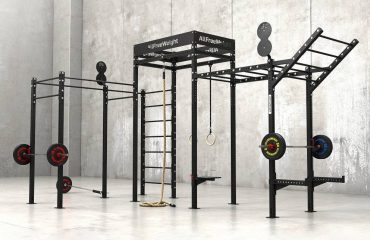
The core components
- High-strength steel uprights, 3 mm wall thickness minimum.
- Modular horizontal bars: pull-up bars and dip bars.
- Adjustable barbell hooks (J-cups).
- Plate and accessory storage racks.
- Integration points for wall ball targets, monkey bars and storage modules.
Three configuration steps
- Measure the space. Clear ceiling height of 2.50 m or more, plus lateral clearance for dynamic movements around each station.
- Define the primary use. Squat, bench press, pull-ups, muscle-ups: the dominant movement decides the number of squat bays and the bar heights.
- Customise the layout. Add specific bars, integrate wall ball targets, and separate the weightlifting zone from the bodyweight zone.
Think in terms of modularity from day one. Most Bodytone rigs accept additional modules later, so a first structure sized for today can be extended when membership grows.
How do you anchor a Bodytone rig to the floor?
Why anchoring is not optional
- User safety during explosive pull-ups and muscle-ups.
- Vibration control during weightlifting.
- Compliance with the national rules that apply to buildings open to the public in your country, which generally require fixed equipment to be secured to the structure.
Anchoring method
- Drill the slab with a suitable drill, diameter set by the Bodytone fastener supplied.
- Insert heavy-duty expansion metal anchors.
- Bolt down with M12 or M16 bolts depending on the Bodytone model.
- Re-check the torque after 48 hours of use, then on a periodic maintenance schedule.
Recommended anchoring by substrate
| Floor type | Recommended fixing |
|---|---|
| Concrete slab, 12 cm or more | M12 metal expansion anchor |
| Timber floor or suspended boards | Not recommended |
Place the rig on a rubber tile of at least 20 mm before anchoring. The tile absorbs vibration and protects the slab from the shock transmitted through the uprights.
Indoor strength equipment is covered by EN ISO 20957-1 class S, the professional class for equipment installed in supervised commercial facilities. That is the reference to specify in a tender or an insurance file.
Which accessories are compatible with a Bodytone rig?
The main accessories
- J-cups: barbell supports, several versions by maximum load.
- Safety arms: spotting for squats.
- Plate holders: on-structure disc storage.
- Landmine row: multi-exercise pivot.
- Dip bars: removable parallel bars.
- Wall ball target: target for medicine ball shots.
- Battle rope anchor: fixing point for wave ropes.
What to check before ordering
Check the hole pattern. Bodytone generally uses a standard 50 mm hole spacing, which keeps the whole accessory range compatible with the uprights. Then check the rated load of each accessory: safety arms are rated at 300 kg, and J-cups up to 400 kg depending on the model. An accessory bought outside the range rarely matches both the spacing and the rating.
How do you use a Bodytone weightlifting platform?
What the platform does
It protects the slab from repeated drops, marks out the working zone, and cuts the noise generated when a loaded bar is released. Depending on tile density, it absorbs a large share of the vibration that would otherwise travel through the building.
Build-up
- Steel or timber frame.
- Timber or rubber centre section.
- High-density rubber side zones, 20 to 40 mm.
Operating advice
Require weightlifting shoes, verify that the platform sits flat and stable before each session, and match the load to the technical level of the athlete rather than to the programmed weight on the board.
How do you build a WOD around Bodytone equipment?
The range works for CrossFit because it combines heavy-load tolerance, modularity and an accessory set that covers cardio, strength and agility on a single footprint.
An example, AMRAP 20 minutes: 10 pull-ups on the rig, 10 squats on the platform, 15 wall ball shots on the target, 10 landmine rows. Adjust the loads and the pull-up variation to the group, using the multiple bar heights the rig already offers.
How do you choose a Bodytone sled for your surface?
| Surface | Recommended sled |
|---|---|
| Artificial turf | Sled with nylon skids |
| Rubber, 20 mm | Sled with smooth rounded skis |
| Bare concrete | Not recommended without a protective track |
The Bodytone sled weighs approximately 35 kg empty and takes up to 200 kg of added load. On bare concrete the skids wear quickly, so a synthetic push track is the practical answer. Our artificial turf CrossFit track is dimensioned for exactly that use.
How do you protect the floor under a Bodytone rig?
What happens without protection
- Cracking in the concrete slab.
- Permanent deformation of soft floor coverings.
- Structure-borne noise from dropped weights, and neighbour complaints that follow.
Recommended thickness
| Use | Recommended thickness |
|---|---|
| Light training | 20 mm |
| Weightlifting | 30 to 40 mm |
| Sled work or heavy loads | 40 mm or more |
Specify high-density rubber tiles with a slip rating of R10 or better. Our weightlifting rubber tiles and the 40 mm CrossFit rubber tile are the two references most often specified under a rig and its lifting bays.
How do you plan a cross training circuit with Bodytone equipment?
The range covers the three families a circuit needs: cardio with the sled and battle ropes, strength with squats and deadlifts, gymnastics with pull-ups and dips. A three-round circuit might run 10 pull-ups on the rig, 15 wall ball shots, 10 landmine rows per arm, a 20 m sled push, then 10 box jumps.
Keep a clear zone around each station. The most common incident in a circuit is not equipment failure, it is an athlete moving into the working envelope of the next station.
Compliance and buyer assurances
- Equipment conforming to EN ISO 20957-1 class S for professional indoor strength equipment.
- ISO 9001 quality and ISO 14001 environmental certification.
- Bodytone accessories engineered for Bodytone rigs, so compatibility is guaranteed.
- REACH-compliant products, free of the substances listed as of very high concern.
- Technical installation instructions supplied with every module.
FAQ
Can a Bodytone rig be installed in a small studio?
Yes, provided the clear ceiling height reaches 2.50 m and the slab is strong enough to take expansion anchors. Below that height, the pull-up bar and any overhead movement become the limiting factor.
Can a Bodytone rig be used outdoors?
Some models carry an anti-corrosion treatment, but permanent exposure to weather is best avoided. For a genuinely outdoor installation, specify equipment designed and certified for outdoor use rather than adapting an indoor rig.
Can a Bodytone rig be used without anchoring it?
No. Unanchored use is not acceptable in a supervised facility, particularly for pull-ups and muscle-ups where the athlete generates significant horizontal force at the top of the structure.
Does Bodytone offer custom configurations?
Yes. The brand builds tailored configurations for specific footprints, which is usually the right route when ceiling height, columns or an existing platform constrain the layout.
Conclusion
A Bodytone CrossFit rig is a long-life asset: the purchase decision is really a decision about anchoring, flooring and maintenance. Get those three right and the structure will absorb years of daily group sessions. Browse the full freestanding CrossFit rigs range, or send us your floor plan and ceiling height and we will size the structure with you. Request a quote.
Réalisations documentées
- Dalles et sols sportifs : livraisons documentées – plusieurs chantiers
- Sol sportif extérieur, square Georges-Vallerey – Taverny (95)