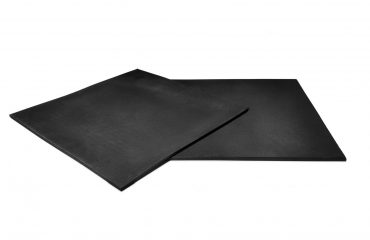
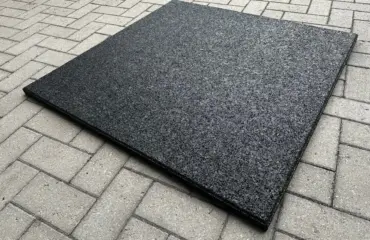
100 mm Rubber Gym Flooring Tiles: Maximum Impact Absorption
In a professional training facility, floor thickness is not a detail: it decides how much of a dropped barbell the structure absorbs, how much noise reaches the floor below, and how safe a fall is. 100 mm rubber tiles sit at the top of that range. They are specified where impact energy is highest: weightlifting platforms, drop zones, functional training areas and impact-attenuating surfacing under play equipment.
Why specify 100 mm rubber tiles
Thin gym mats protect the screed. A 100 mm tile does something different: it dissipates the energy of a heavy load before it reaches the slab. Light In Fitness supplies these tiles to gym operators, cross-training boxes, hotels, municipalities and rehabilitation centres across Europe.
- Very high impact absorption – measured above 80%, protecting joints, bars and the building structure.
- Extreme durability – built for heavy loads and repeated impact in continuous commercial use.
- Slip resistant – reliable grip, including in damp conditions.
- Acoustic performance – a decisive argument for gyms in mixed-use buildings and for public facilities.
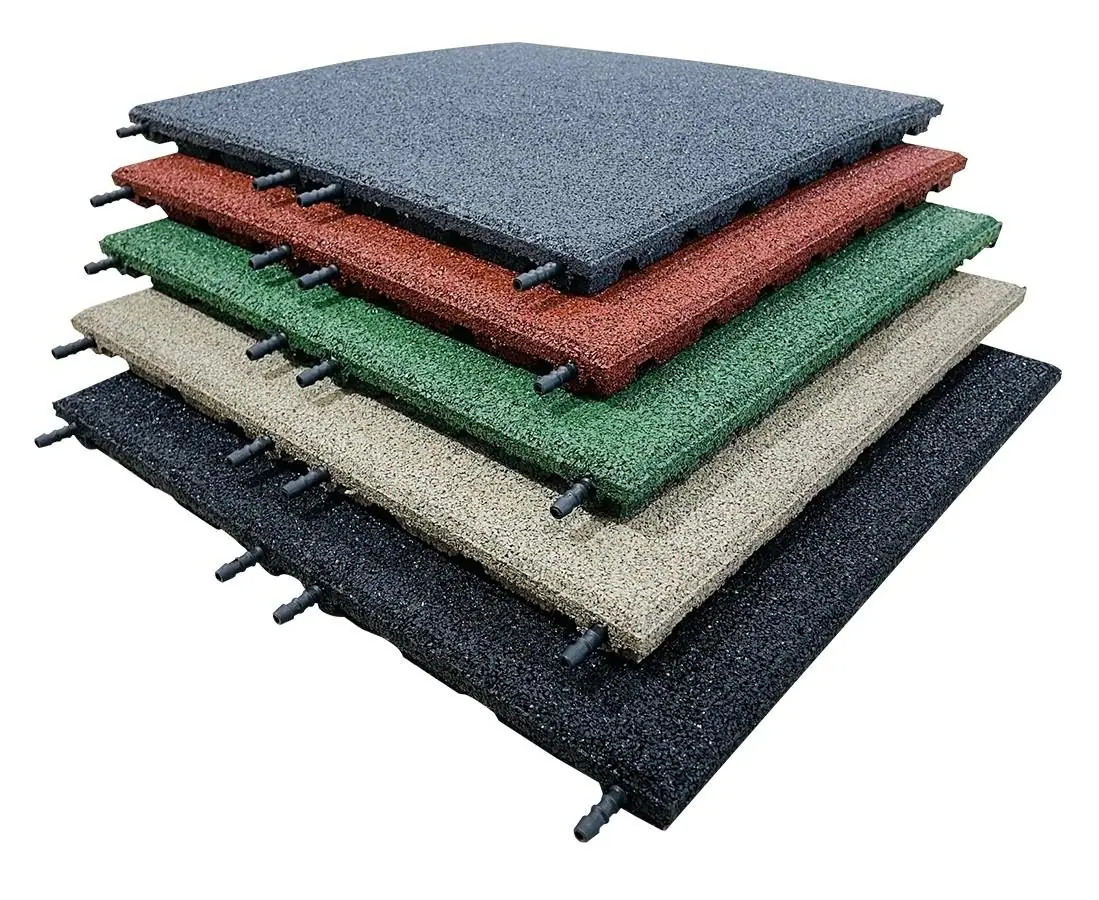
- Colour options – black, red, green, blue and anthracite grey.
Technical specification
| Characteristic | Light In Fitness 100 mm tile |
|---|---|
| Thickness | 100 mm |
| Density | Very high |
| Impact absorption | Above 80% |
| Material | Recycled rubber granulate, polyurethane bound |
| Slip resistance | Yes, including on wet surfaces |
| Service temperature | -40 C to +80 C |
| Weather resistance | Yes, suitable for outdoor installation |
| Fire classification | Bfl-s1 |
| Critical fall height | 3 m HIC |
| Colours | Black, red, green, blue, anthracite grey |
Standards that apply to a 100 mm floor
Two different frameworks govern this product depending on where it is laid, and they should never be mixed.
- Indoor sports floors – the reaction-to-fire classification is the figure a fire safety officer will ask for. These tiles carry a Bfl-s1 classification, in which the s1 index describes smoke production and is part of the class.
- Children play areas – impact-attenuating surfacing is covered by EN 1177, while the play equipment itself falls under EN 1176-1. The critical fall height of 3 m stated above is the value that must be matched against the free height of fall of the equipment installed on top.
Fire behaviour and fall attenuation are separate requirements. A tender that names one does not exempt you from the other, and national building regulations in your country determine which classification is acceptable in a given room.
Where 100 mm tiles are the right choice
- Heavy strength training rooms and drop zones
- Weightlifting and powerlifting areas – see our weightlifting rubber tiles
- Cross-training and functional training floors
- Children play areas, as impact-attenuating surfacing
- Outdoor fitness trails and calisthenics parks
For lighter zones – cardio rows, free weight aisles, studio floors – a thinner tile is usually the correct and more economical specification. The full thickness range is set out in our rubber gym flooring tiles section, and the 100 mm reference itself is the Extreme 100 mm rubber tile in 500 x 500 mm format.
Material and manufacturing
The tiles are produced from high-density recycled rubber granulate bound with a polyurethane resin. That construction is what allows a 100 mm tile to stay dimensionally stable under repeated heavy impact instead of compacting, and it makes the product a credible answer when a public tender includes recycled-content criteria.
Frequently asked questions
Is 100 mm always better than 40 mm?
No. Thickness should be matched to the load actually dropped and to the fall height to be protected. Over-specifying raises cost and step height at doorways for no benefit. Under-specifying transfers impact into the slab.
Can these tiles be laid outdoors?
Yes. They are weather resistant and rated for service between -40 C and +80 C, which covers outdoor fitness areas and play areas in most European climates.
What fall height do they protect?
The stated critical fall height is 3 m HIC. That value must be compared with the free height of fall of the equipment installed above the surfacing, as assessed under EN 1177.
Are they suitable for a gym above occupied floors?
This is one of the main reasons operators move to 100 mm. The thickness substantially reduces structure-borne noise, though the final result also depends on the slab and on any acoustic underlay used beneath the tiles.
Getting a quotation
Tile quantity, colour split and edge treatment depend on your exact layout. Send us the room dimensions and the intended use and we will return a costed specification: request a quote.
Réalisations documentées
- Dalles et sols sportifs : livraisons documentées – plusieurs chantiers
- Sol sportif extérieur, square Georges-Vallerey – Taverny (95)
Sources et références
- Décret n° 96-1136 du 18 décembre 1996 – prescriptions de sécurité relatives aux aires collectives de jeux (Légifrance)
- NF EN 1176-1 – Équipements et sols d’aires de jeux, partie 1 : exigences de sécurité et méthodes d’essai générales (AFNOR)
- NF EN 1177 – revêtements de surface amortissants : détermination de la hauteur de chute critique (AFNOR)