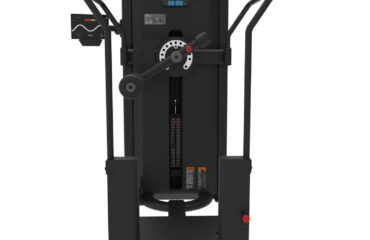
Types of gym machines explained
Les appareils de musculation se répartissent en trois familles : machines sélectorisées à colonne de poids, machines plate-loaded à disques et postes à charges libres. Chacune répond à un besoin distinct : rapidité de réglage, sensation de charge, transfert vers le geste sportif. Un plateau complet combine les trois.

Commercial gym machines fall into three families: guided strength stations, free weight support equipment and cardio ergometers. Each family answers a different need on the training floor, and the mix you choose drives throughput, supervision workload and maintenance cost far more than any single purchase does. This guide sets out what each machine type actually does, which muscle groups it loads, and what a professional buyer should check on a specification sheet before signing an order.
How gym machines are classified
Three criteria matter when you build an equipment list, and they are independent of brand.
The first is the resistance system. Selectorised machines use a weight stack and a selector pin, so the load changes in one movement and a beginner can progress in small increments without help. Plate loaded machines take olympic discs on loading pins: they cost less per station, have no cables or pulleys to replace, and tolerate heavy users well. Converging machines guide the handles along a path that closes in as the press progresses, reproducing the natural arc of a barbell movement without the balance demand. Cable stations and functional trainers use height adjustable pulleys and leave the load path under the user’s control, which is why they are the most space efficient stations on most floors.
The second criterion is the movement pattern: horizontal push, vertical push, horizontal pull, vertical pull, hip hinge, knee dominant, rotation. A balanced floor covers every pattern before it duplicates any single one. Buying a third chest station while the floor has no row is the most common specification error we see.
The third criterion is the intended duty cycle. Equipment for a commercial site must be rated for continuous multi user operation. The EN ISO 20957 series separates class S, professional and studio use, from class H, domestic use only. Class H frames, bearings and upholstery fail quickly under club traffic, and the warranty usually excludes commercial installation.
Upper and lower body strength stations, station by station
The table below lists the stations that make up the core of a commercial strength floor, with the movement each one trains and the point that most often decides whether a given model is suitable.
| Station | Body region | Movement pattern | Primary muscles loaded | What to check before buying |
|---|---|---|---|---|
| Lat pulldown | Upper | Vertical pull | Latissimus dorsi, trapezius, rhomboids, biceps as assistants | Thigh pad adjustment range, so tall and short users are both restrained |
| Seated row | Upper | Horizontal pull | Mid back, rear deltoid, biceps | Chest pad adjustment and cable travel length |
| Chest press | Upper | Horizontal push | Pectoralis major, anterior deltoid, triceps | Converging path and seat height increments |
| Shoulder press | Upper | Vertical push | Deltoids, triceps | Backrest rigidity and starting load, often too high for deconditioned users |
| Pec deck and rear delt | Upper | Isolation | Pectoralis major, posterior deltoid | Dual function models save floor area but slow rotation at peak times |
| Leg press | Lower | Knee dominant | Quadriceps, glutes, hamstrings | Footplate size, back angle, and the footprint including plate storage |
| Leg curl and leg extension | Lower | Isolation | Hamstrings, quadriceps | Pivot alignment with the knee joint, adjustable range stops |
| Abductor and adductor | Lower | Frontal plane | Gluteus medius, hip adductors | Entry and exit clearance, a frequent complaint from older members |
| Functional trainer | Both | All patterns | Full body, user defined | Number of pulley heights and free area required in front |
| Power rack and weight bench | Both | Squat, press, hinge | Full body | Rated combined load, safety arm depth, floor protection underneath |
Free weight equipment sits alongside these stations rather than replacing them. A power rack, a flat bench, an adjustable bench and an olympic bench cover the movements that no guided machine reproduces exactly, and they need shock absorbing tiles underneath and clear access on three sides.
Cardio machines and their resistance systems
Cardio equipment is classified by the resistance system and by the impact it places on the joints. Air resistance rises with the effort applied, which suits interval work; magnetic resistance is quiet and precisely adjustable; water and hydraulic systems give a distinctive feel but a narrower load range. Footprint and rated user weight are the two figures that most often disqualify a model at the planning stage.
| Machine | Resistance | Impact level | Indicative space required | Typical suitability |
|---|---|---|---|---|
| Treadmill | Motorised belt, adjustable incline | High | 2 to 3 m long, 1 to 1.5 m wide | Walking and running, highest maintenance requirement of the range |
| Cross trainer | Magnetic | Low | 1.5 to 2 m long, about 1 m wide | General membership, returning and older users |
| Indoor cycling bike | Magnetic or friction | Low | 1.5 to 2 m long, about 1 m wide | Group cycling studios, power based training when watts are displayed |
| Recumbent bike | Magnetic | Very low | 1.5 to 2 m long, about 1 m wide | Rehabilitation, seniors, users with balance limitations |
| Rower | Air, magnetic or hydraulic | Low | 2 to 3 m long, about 1 m wide | Full body conditioning, needs coaching to be used correctly |
| Ski ergometer and air bike | Air | Low | Compact, allow clearance for the arms | Interval and conditioning zones |
| Stair climber | Motorised step chain | Moderate | Check ceiling height above the top step | High intensity without running impact |
Rated user weight is typically 150 to 200 kg on commercial treadmills and 130 to 180 kg on cross trainers and bikes. Always confirm the figure on the manufacturer data sheet rather than assuming a range wide value.
Reading a specification sheet without being misled
Five figures decide whether a machine will survive commercial service: the frame steel section, the rated maximum user weight, the starting load of the stack, the warranty split between frame, moving parts and upholstery, and the availability of spare parts. A low starting load matters more than most buyers expect. Many commercial stacks begin at 10 kg, which is unusable for a deconditioned member, so ask whether half increment or quarter increment adaptors exist for the range.
Upholstery is the first component to fail. Foam density of 80 to 100 kg per cubic metre with a 6 to 8 cm thickness and a heavy gauge vinyl cover outlasts entry level padding by years, and in a public building the covering should carry a reaction to fire classification you can produce on request.
Frequently asked questions
How many strength stations does a commercial gym need?
Size the floor from peak hour attendance rather than from surface area. Count the movement patterns first, then duplicate only the stations that create queues, typically chest press, leg press and lat pulldown.
Are plate loaded machines better than selectorised machines?
Neither is better in the abstract. Selectorised stations suit mixed membership sites where fast, small load changes matter. Plate loaded stations suit performance floors, heavier users and sites that want lower long term maintenance, since there are no cables to inspect or replace.
What standard applies to commercial gym machines in Europe?
EN ISO 20957-1 covers stationary training equipment. Class S designates equipment suitable for professional and supervised use. Ask for the declaration of conformity in writing, not a claim on a brochure.
What flooring should go under strength machines?
Rubber gym flooring tiles protect the slab, reduce structure borne noise and stabilise the machines. Thickness is chosen by impact intensity, with thicker shock absorbing tiles reserved for drop zones and lifting platforms.
How long should commercial equipment last?
With planned preventive maintenance, a professional cardio machine typically gives 7 to 15 years of commercial service. Strength frames last considerably longer, and the practical limit is usually spare part availability rather than the frame itself.
Specify your equipment list with Light In Fitness
Light In Fitness has manufactured and supplied professional fitness equipment from Tours, France since 2013, with more than 2 000 references in the catalogue and stock shipping in 5 to 10 working days. We build the station list, the layout and the budget around your peak hour traffic rather than around a catalogue page.
Browse our strength training machines and cardio equipment ranges, or request a quote and receive a costed proposal within 24 working hours.