Sauna After Training: How Long Should You Wait Before the Heat?
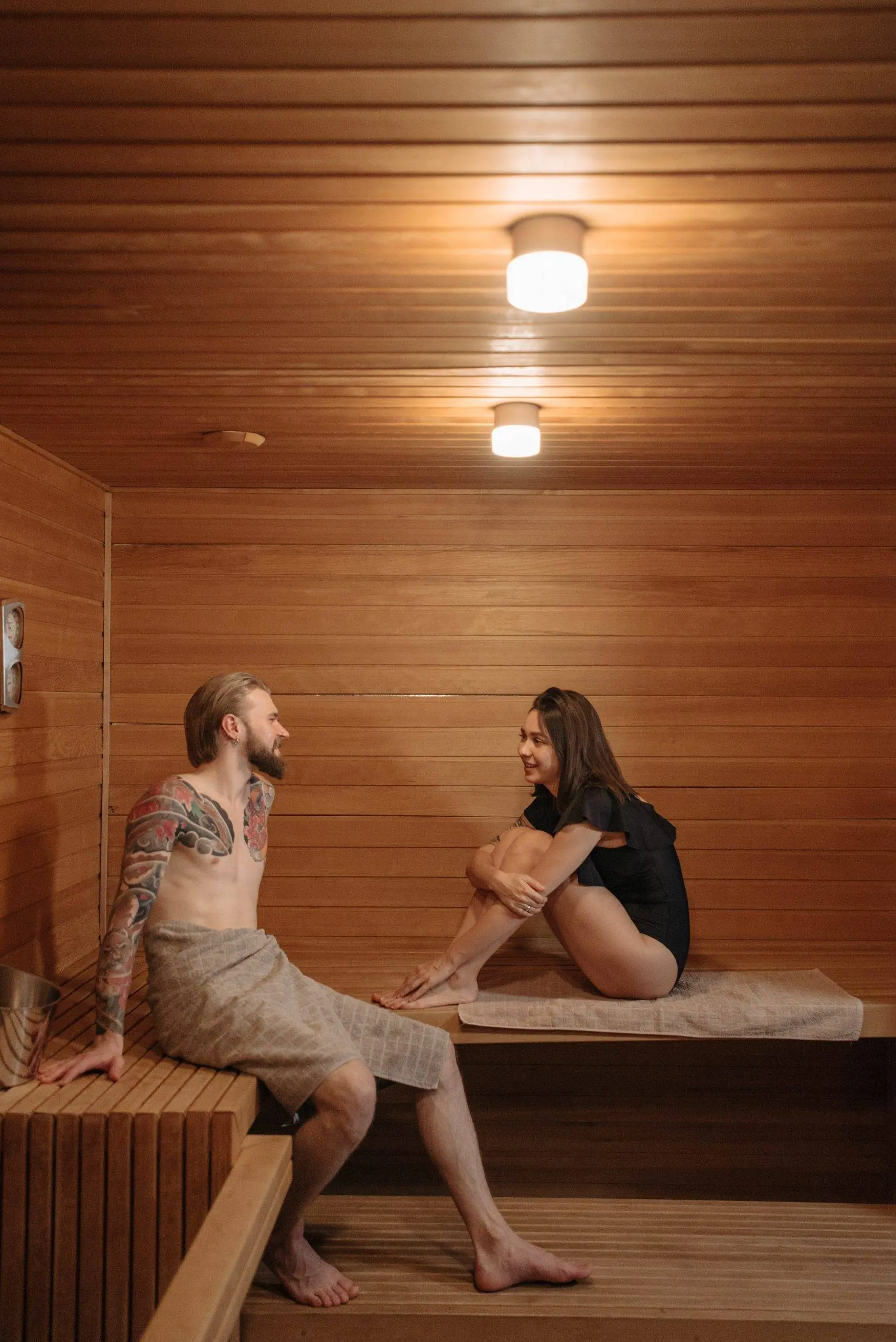
Adding a sauna to a gym, a hotel wellness area or a sports club is one thing; telling members how to use it safely after a workout is another. The question comes up constantly at the front desk: can you walk straight from the weights room into the heat, or should you wait? This guide sets out what heat does to a body that has just finished training, how long to wait, how long to stay, and which rules an operator should display on the cabin door.
In most clubs you will see members finish a strength session, step into the sauna and then shower. Heat relaxes muscles, widens blood vessels and releases muscular and nervous tension. A high temperature immediately after intense exercise is, however, not the best sequence. To get the benefit without overloading an already tired body, timing and session length matter far more than the temperature on the dial.
Sauna after training: is it recommended?
The benefits of a post-exercise sauna
- Faster recovery of muscles and joints – heat increases blood flow, so tissue is better oxygenated and better supplied.
- Better endurance – research carried out on a group of runners found that sauna use after cardio work extended the time they could hold exercise intensity by up to 32 percent.
- Cardiovascular conditioning – the circulatory system works more efficiently and blood pressure falls.
- Heavy sweating and vascular response – intense perspiration and the circulatory reaction that goes with it are the mechanism the heat works through.
- Immune conditioning – regular, controlled heat exposure conditions the body and supports the immune system.
The drawbacks of going straight in
- Higher risk of dehydration, because fluid is lost quickly on top of the fluid already lost during the session.
- Risk of heat exhaustion and, in extreme cases, heat stroke or a cardiac event in people with an undiagnosed condition.
When the sauna should be avoided
A short list of house rules covers almost every incident an operator is likely to see:
- Do not enter the cabin immediately after exercise; wait until the body has settled.
- If a member feels drained after training, a cool shower and rehydration with an isotonic drink come first, and the sauna decision comes after.
- Do not enter the sauna on an empty stomach.
- Several short entries of a few minutes are better, for both effect and safety, than one long stay.
- People with cardiovascular disease should not use the sauna without medical clearance.
- Alcohol and the sauna do not mix, and this belongs on the door sign.
What a sauna does after a gym session
Strength work and cardio training both contribute to fat burning, and the heat adds a further metabolic load on top. Muscles relax; whether that is a good idea on any given day depends on the individual and on any contraindications.
Does a sauna after strength training relax the muscles?
Heat has a genuine relaxing effect on muscle tissue, and in that respect a sauna after training is a good idea. Several factors decide whether it is beneficial overall.
During a sauna session blood vessels dilate and circulation improves, which speeds up the recovery process. The high temperature promotes relaxation and eases muscle soreness, so delayed onset muscle soreness in the days after a hard session tends to be less pronounced.
Timing: the part that actually matters
Whether the sauna can be used directly after training depends on the intensity of the session, on individual contraindications and on general health. As a default answer it is not recommended. It is worth waiting for the body to settle, for the heart rate to come down and for core temperature to fall. Around 30 minutes is a sensible minimum before starting a session.
- Inside the cabin the temperature is high and the body sweats heavily, losing electrolytes.
- Heart rate climbs and breathing becomes shallow.
- In those conditions, straight after intense cardio, the body is being worked rather than rested.
- The same applies after an exhausting strength session: the cabin is not the next stop.
How long after training can you use the sauna?
There is no single answer, and listening to the body is the practical rule. It depends on fitness level, on health, and on how long and how hard the session before it was.
Put simply: the sauna can be used often, but not immediately after effort and not for long. Most coaches and doctors suggest at least 30 minutes after training, and a few hours is better. In that time the body recovers, fluids are replaced and the heat is far less taxing. The ideal is to use the sauna on a rest day and treat it as recovery rather than as an extension of the workout.
Used that way, a sauna session will burn some additional calories, reduce mental stress, relax the body, and – in a club setting – give members a reason to stay on site and socialise, which is not a trivial commercial argument for a wellness area.
How long should a single session last?
If a member does go in soon after training, the entry should not exceed 10 minutes. That is enough to reduce muscle tension and relax. In every other case, a single entry should not run beyond 15 minutes.
On non-training days, two to three entries of up to 15 minutes work well, with breaks between them at least as long as the time spent in the cabin. During those breaks the body must be cooled and fluids replaced – which is why a cold plunge bath or a cool shower belongs next to any sauna installation rather than as an afterthought.
Dry sauna or steam room?
After strength training a dry sauna, the Finnish type, is the better choice. Temperature there runs from 90 to 100 degrees Celsius at 5 to 10 percent humidity. Sweating is intense, muscles release, and the conditioning effect on the immune system is at its strongest.
After cardio training a steam room suits better. Humid heat lowers stress effectively and clears the airways, which makes it a comfortable form of recovery after endurance work. Most operators who can fit both end up specifying a combined sauna and steam room setup for exactly this reason, and an outdoor sauna where the site allows it.
Frequently asked questions
Can you go to the sauna straight after the gym?
It is not recommended. Wait for the heart rate to normalise and the body to cool – around 30 minutes as a minimum, longer after a hard session.
How long should you stay in the sauna after a workout?
No more than 10 minutes if the session follows training closely, and no more than 15 minutes in normal use.
Dry sauna or steam room after training?
Dry sauna after strength work, steam room after cardio.
Who should not use the sauna?
Anyone with cardiovascular disease without medical clearance, anyone who has been drinking alcohol, and anyone training on an empty stomach.
Does the sauna help with muscle soreness?
Heat improves circulation and eases muscle tension, so soreness in the days after a hard session is usually less pronounced.
Specifying a wellness area that members actually use
A sauna is a commercial asset as much as a recovery tool: it lengthens the average visit, supports higher membership tiers and gives hotels, clubs and residential developments something to show. What makes it work is the layout around it – a cooling point, a rest area, clear signage on timing and a cabin sized for the real number of users at peak hour. Light In Fitness supplies and installs sauna, steam room, spa and cold plunge equipment for professional operators. Send us the room dimensions and the expected footfall and we will come back with a specification: request a quote.
Réalisations documentées
- Dalles et sols sportifs : livraisons documentées – plusieurs chantiers
- Sol sportif extérieur, square Georges-Vallerey – Taverny (95)