How to Improve Posture with Wall Bars: Complete Guide
Posture is not a cosmetic detail. It is the single habit that most quietly shapes how the people in your facility feel, move and recover. Whether they sit at a desk all day or curve over a phone, everyday habits leave a measurable mark on the spine. Wall bars are one of the simplest and most effective pieces of equipment for correcting that, and they occupy almost no floor area.
Wall bars are often filed away as gymnastics apparatus, or as something a climbing club installs. In practice they are far more versatile than that. Anyone can use them to improve posture and to prevent the pain that comes from a poor body position, from a trained athlete to a member who spends most of the day in front of a screen. This guide covers what wall bars do for posture, which exercises work, and what to look for when you specify them for a club, a school, a rehabilitation centre or a hotel wellness area.
Why posture matters for the people you train
Posture plays a decisive role in general wellbeing. Poor posture leads to a range of health problems: back pain, headaches, reduced mobility and even impaired breathing. Good posture works the other way, easing muscular tension, supporting better blood circulation and letting the internal organs function without compression.
When a poor position is held for long periods, muscles weaken and fall out of balance. Some become excessively tight while others become too weak. That imbalance affects whole body alignment and is what turns a habit into chronic pain.
Good posture keeps the spine in its natural alignment and distributes body weight evenly across the joints. That prevents excessive load on particular areas and, with it, a large share of avoidable injuries.
What a wall bar is and how it changes posture
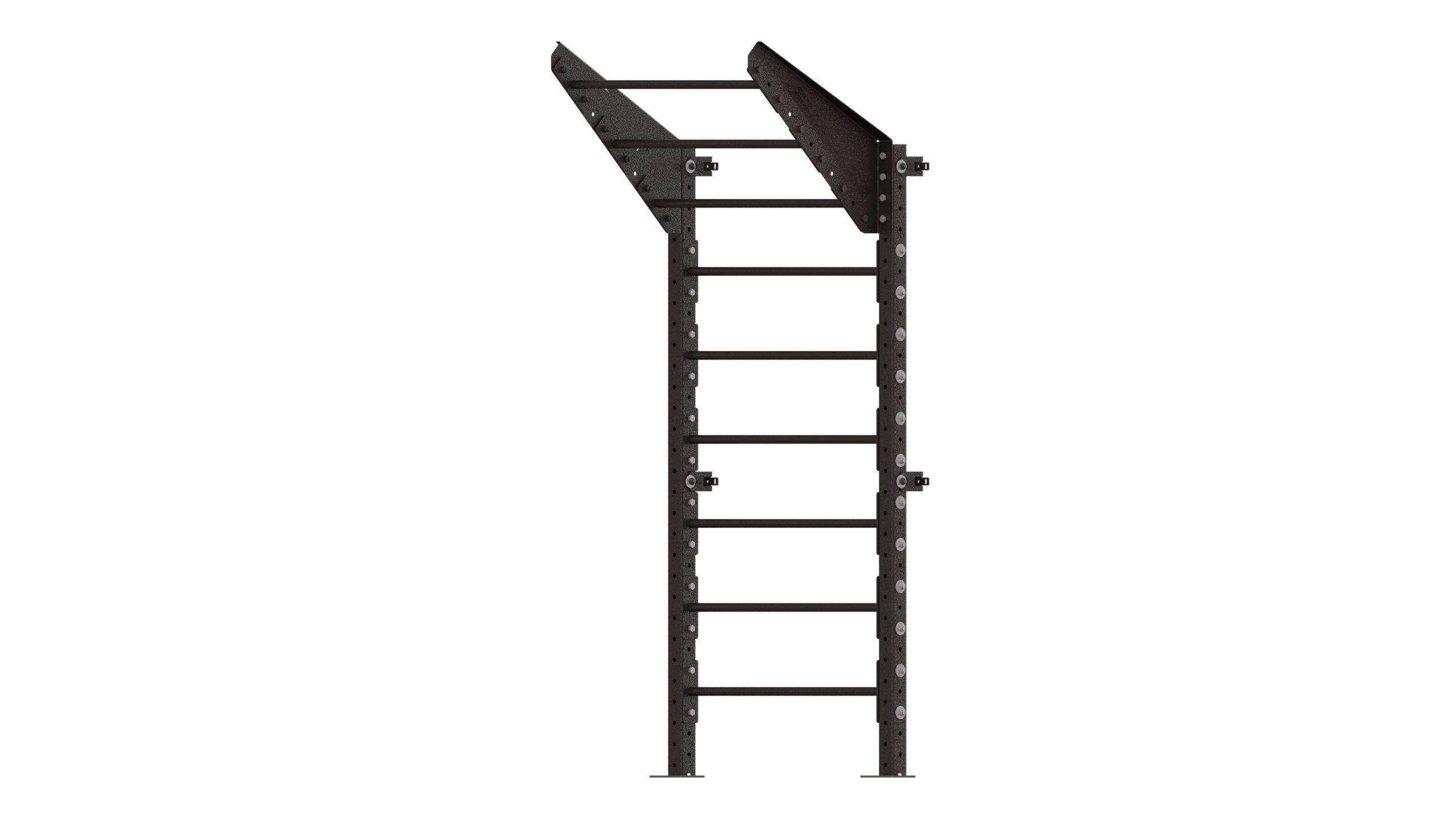
A wall bar is a versatile frame used to strengthen the muscles of the body and improve flexibility. It consists of a structure fitted with horizontal or vertical bars that the user can hang from, brace against or stretch on.
Used regularly, it helps realign the spine, strengthens the muscles of the back and the abdominals, and corrects muscular imbalance. Holding the bars correctly lets the user stretch tight muscles and strengthen weak ones at the same time, which is what moves overall posture in the right direction.
A wall bar also develops balance and coordination, both of which are needed to hold a stable position. Because the frame supports the user during the exercise, they can concentrate on the correct body position without any risk of falling.
The benefits of wall bar work
Spinal realignment
Hanging from the bars lets the user stretch and settle the spine back towards its natural position. This helps correct excessive or reversed spinal curvature and supports better posture over time.
Stronger back muscles
The frame allows precise targeting of back muscles such as the latissimus dorsi and the trapezius. Strengthening them keeps the shoulders from collapsing forward and holds the back straight.
Stronger abdominals
Good posture also depends on strong abdominal muscles. Hanging leg raises performed on the bars strengthen the core and support a better standing position.
Correction of muscular imbalance
Wall bar work addresses imbalance directly, strengthening the weak muscles and stretching the tight ones, which restores the muscular balance a good posture depends on.
Simple, effective posture exercises
Vertical pull
Grip the vertical bar with both hands and pull upward, keeping the back straight. This strengthens the muscles of the back and arms, which supports posture directly.
Inverted press up
Stand facing the frame, place the hands on a horizontal bar and lean the body backwards. Bend the elbows to lower towards the floor, then push back up. The exercise works the back, shoulders and arms while reinforcing posture.
Reverse plank
Lie on the floor, place the feet on a horizontal bar and lift the body by contracting the abdominals and glutes. Hold for a few seconds, then release. This strengthens the abdominal and dorsal muscles and supports a better standing position.
Using wall bars against back pain
Regular wall bar work can relieve back pain caused by poor posture. Strengthening the back and improving spinal alignment reduces the pressure carried by the intervertebral discs and prevents muscular tension from building up.
Progression should be slow and gradual, and the user should always listen to their body. If pain or discomfort appears during an exercise, they should stop immediately and consult a health professional. In a supervised facility this is a straightforward instruction to give at induction.
Confidence and presence follow posture
The benefits of good posture are not only physical. Standing upright makes a person look taller, leaner and more self assured, and that changes how they carry themselves outside the gym as well.
Good posture also improves breathing, which means better oxygenation and more available energy through the day. Members notice that long before they notice anything on a scale.
Specifying wall bars for a professional site
Wall bars are among the least demanding items to install and among the most used, which makes them a strong addition to a small studio, a school hall, a rehabilitation room or a hotel wellness area. Two points decide the specification.
The first is the standard. Equipment installed indoors in a supervised facility should be specified to EN ISO 20957-1 class S, the class intended for professional use. Wall bars installed outdoors, in a park or on an exercise trail, fall under EN 16630 for permanently installed outdoor fitness equipment for adults. Our outdoor wall bars are built for that second case, in finishes that survive permanent exposure.
The second is the user profile. A rehabilitation room, a school and a municipal fitness trail do not need the same bar spacing, the same heights or the same anchoring. Where accessibility matters, look at rehabilitation and accessible outdoor equipment alongside the wall bars rather than treating the two as separate projects.
Frequently asked questions
How often should wall bars be used to change posture?
Regularity is the whole point. A few minutes each day produces visible results on posture and general wellbeing far faster than an occasional long session. The source of the problem is a daily habit, so the correction has to be a daily habit too.
Are wall bars suitable for people with existing back pain?
Often yes, but a health professional should be consulted before starting any exercise programme, particularly where there is a pre existing condition. They can advise on correct use of the frame and recommend exercises adapted to the specific case.
Do wall bars require much space?
No. A wall bar frame occupies a wall rather than a floor area, which is precisely why it fits into rooms where a machine could never be justified: a physiotherapy room, a school corridor bay, a compact studio or the free area beside a functional training zone.
Transform posture with a wall bar
Strengthening the back and abdominals and realigning the spine prevents chronic pain, corrects muscular imbalance and improves how people carry themselves. For a facility, it is one of the lowest cost interventions available per user reached. Tell us the room, the users and the setting, indoor or outdoor, and we will specify the right frame. Request a quote and we will come back with a costed proposal.
Réalisations documentées
- Dalles et sols sportifs : livraisons documentées – plusieurs chantiers
- Sol sportif extérieur, square Georges-Vallerey – Taverny (95)