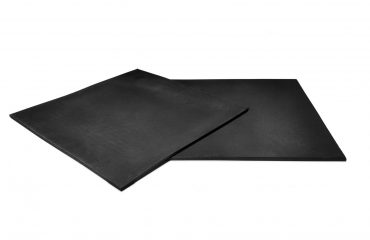
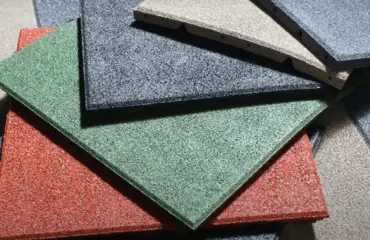
Rubber Shock-Absorbing Tiles: Choosing the Right Gym Floor
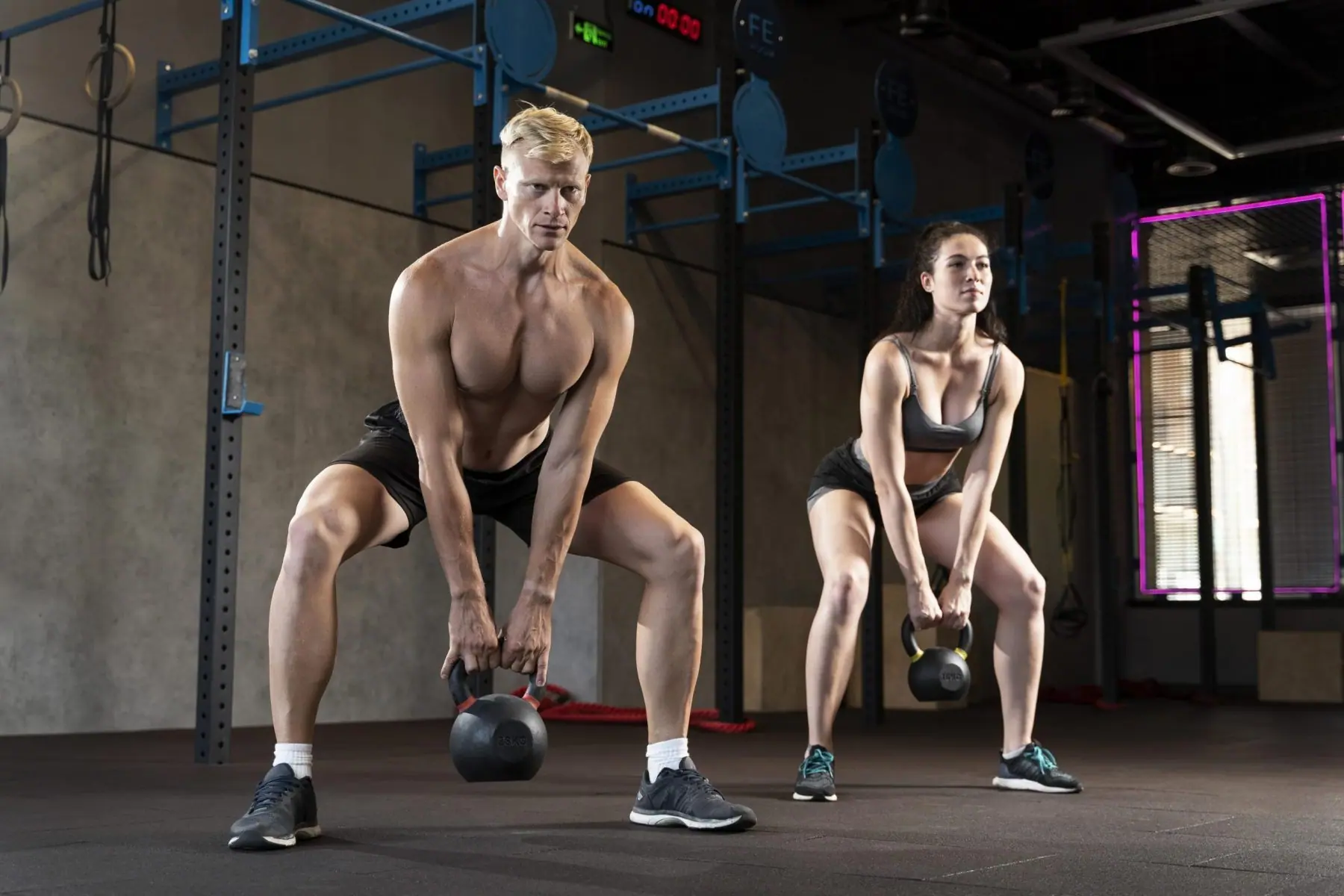
If you need a floor that protects joints, controls noise between levels and protects the slab or the existing covering underneath, rubber shock-absorbing tiles are the simplest and most durable answer. They are also the line of a fit-out budget that operators most often get wrong, because the decision looks trivial until the first heavy bar lands.
This guide sets out who these tiles are for, what they actually deliver, how to choose a thickness and the mistakes that come up again and again on real projects.
Who rubber shock-absorbing tiles are for
Shock-absorbing tiles suit any space where equipment is dropped, where machines vibrate or where a floor has to stay comfortable and stable under load. In practice that means:
- Commercial gyms and clubs, particularly free-weight zones and functional areas.
- Cross-training boxes, where dropped barbells and repeated impacts are part of normal use.
- Hotel and residential fitness rooms, where a training space usually sits above or beside occupied accommodation.
- Schools, clubs and municipal sports halls, where a multipurpose floor has to handle mixed use.
- Rehabilitation and physiotherapy spaces, where comfort and stability matter more than impact resistance.
- Outdoor training zones, with a specification suited to weather exposure and drainage.
The full range is in our rubber gym flooring tiles category.
What you get from the first session onwards
Less noise and fewer vibrations
A shock-absorbing tile takes part of the impact energy instead of returning it to the structure. The result is less noise when weights are set down and less vibration transmitted through the building. In a facility with occupied space below, this is often the difference between a viable location and a complaint file.
More comfort for joints
Training on a hard slab is uncomfortable on knees, ankles and hips over a long session. A resilient floor gives immediate comfort: it feels more stable underfoot and it reads as a professional space rather than a converted room.
The structure underneath is protected
The tiles protect the slab or the existing covering from impacts, scratches, marks and micro-cracking. This matters commercially as well as technically: on a leased site, damage to the base floor is a cost that lands at the end of the tenancy.
Better grip and stability
A stable training zone reduces slips and increases the sense of control, particularly on dynamic movements such as lunges, burpees and kettlebell swings. Grip is a safety specification, not a finish detail.
How to choose the right tile
The choice depends on what happens on the floor and on what sits under it. Four questions settle most of it:
- Is load set down or dropped on the floor? Dumbbells, barbells and kettlebells all behave differently.
- Is there occupied space below? Another floor, an apartment, an office or a treatment room changes the acoustic priority entirely.
- What is the existing floor? A protected covering, a screed or a structural slab lead to different build-ups.
- Is the whole area covered, or just a defined heavy zone? Both are valid, and they cost very differently.
Thickness against use: a quick comparison
| Use | Objective | Indicative thickness | Typical setting |
|---|---|---|---|
| Cardio and light fitness | Comfort and grip | 15 to 25 mm | Cardio zones, studios, light circuits |
| General strength training | Protect the floor, reduce noise | 25 to 40 mm | Machine and free-weight areas |
| Heavy loads and occasional drops | Impact absorption and durability | 40 to 60 mm or more | Lifting zones, cross-training boxes |
| Publicly accessible facilities | Compliance and safety | As required by the project | Municipal, school and institutional sites |
For lifting platforms and drop zones specifically, see our weightlifting rubber tiles. Where the acoustic requirement is the driving constraint, an acoustic underlay beneath the tiles does more than simply adding thickness on top.
Three project situations
A training room above occupied space
The problem is noise and vibration reaching the levels below, and the anxiety that comes with it. The answer is a defined heavy zone under the loaded area, specified for impact rather than for comfort, usually combined with an acoustic layer. The result is a room that can be used at full intensity without a running dispute about it.
A concrete floor converted into a training area
Bare concrete damages easily, is cold and is uncomfortable to train on. Full-surface tiling turns the space into a proper training room, protects the slab and changes how the space is perceived by the people using it.
A multipurpose space that must stay clean and presentable
Loose mats move, hard floors get slippery when wet and cleaning is awkward. A fixed tile floor is stable, straightforward to clean and finishes the room properly.
Common mistakes
- Choosing too thin to save money, then paying for noise, impact damage and an early replacement.
- Covering the whole area when a defined zone would do, or the reverse: under-specifying a zone that is used far more than expected.
- Ignoring what is below. A room over occupied space has an acoustic priority that no thickness table alone can settle.
- Forgetting the cut pieces. Corners, thresholds, columns and wall junctions all generate cuts and waste, and they need to be in the quantity from the start.
- Ordering without a plan. Measure the area, define the heavy zone, then choose the thickness. Doing it the other way round produces either a shortfall or a surplus.
Frequently asked questions
Do these tiles really reduce noise?
Yes. A shock-absorbing tile absorbs part of the impact energy instead of transmitting it to the structure. The heavier the impact, the more the thickness and the quality of the tile decide the outcome.
What thickness for a general strength area?
For training with dumbbells and kettlebells, 25 to 40 mm is a logical starting point. For heavy barbell work or dropped loads, the specification increases.
Is installation complicated?
Interlocking and free-laid tile systems are designed for straightforward installation, depending on the configuration and the substrate. Larger and bonded installations are usually best handled by an installer, particularly where levelling or an underlay is involved.
What matters most in a facility above occupied space?
Noise and vibration reduction first, protection of the substrate second. Creating a dedicated zone under the loaded area is often more effective, and more economical, than covering the whole room at a lower specification.
Specifying your floor with Light In Fitness
Light In Fitness manufactures and supplies rubber sports flooring for gyms, clubs, boxes, hotels, local authorities and schools, and has been equipping professional facilities since 2013. For a quick answer, tell us the area in square metres, the type of training, what sits below the room and any acoustic constraint. Request a quote and we will come back with a specification and a costed quantity.
Réalisations documentées
- Dalles et sols sportifs : livraisons documentées – plusieurs chantiers
- Sol sportif extérieur, square Georges-Vallerey – Taverny (95)
Sources et références
- Arrêté du 19 avril 2011 – étiquetage des produits de construction ou de revêtement de mur ou de sol sur leurs émissions de polluants volatils (Légifrance)
- Ministère de la Transition écologique – étiquetage des produits de construction : classes d’émission A+ à C