Professional Weight Bench: What to Look For Before You Buy
Un banc d'entraînement professionnel se distingue d'un modèle domestique par la densité de sa mousse, la section de son châssis et son système de réglage. Il encaisse plusieurs centaines de cycles par semaine sans écrasement ni jeu. C'est l'équipement le plus utilisé d'un plateau, donc celui dont l'usure se voit le plus vite.
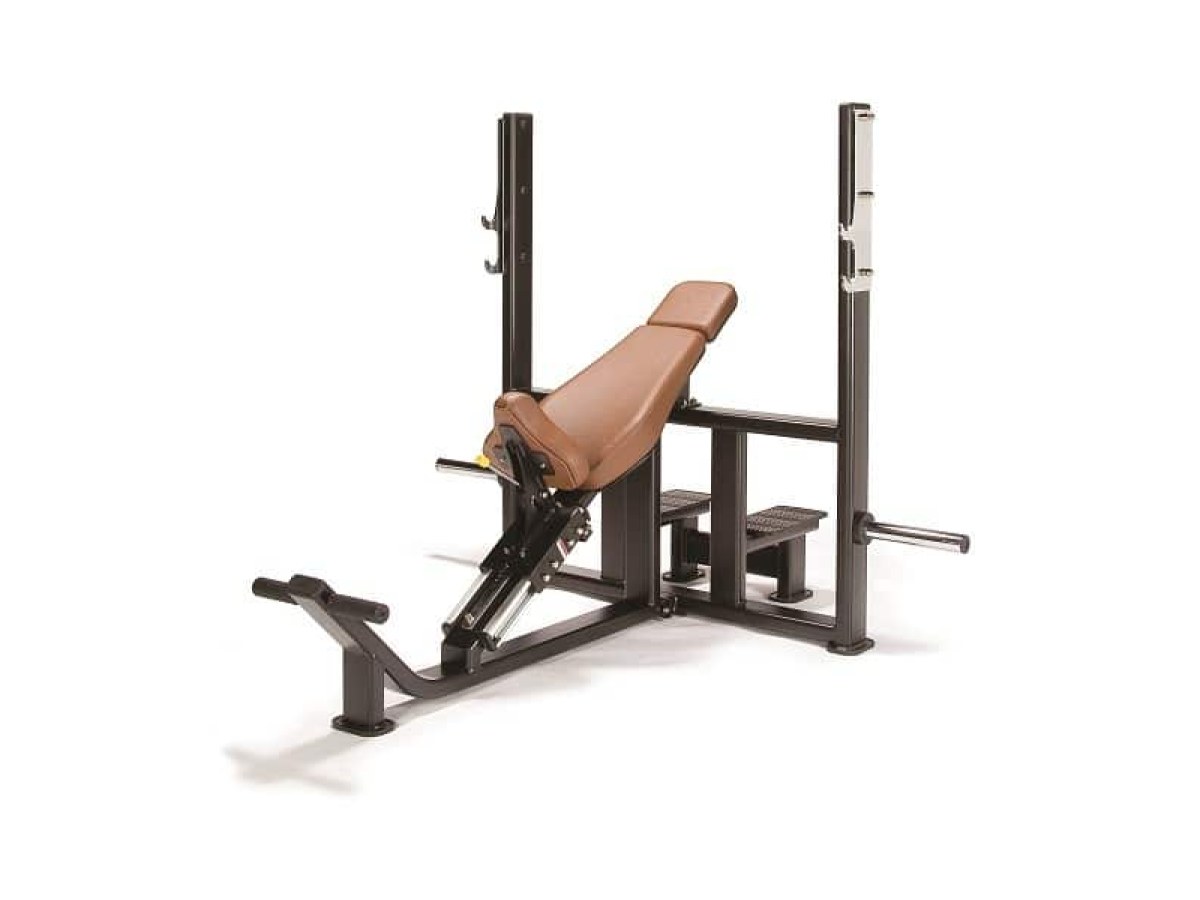
The training bench is one of the pieces of equipment a gym floor cannot do without. It carries pressing, rowing and seated work, it is used by nearly every member who touches free weights, and for that reason it is also the item on which wear becomes visible first. A professional bench is separated from a light-duty one by three things: the density of its upholstery foam, the section of its frame, and the adjustment mechanism. It has to absorb several hundred cycles a week without the padding crushing or the frame developing play.
What to look at when specifying a training bench
Correct execution depends less on repetition count than on how the user is supported. A bench that flexes under load, or whose pad is too soft at the shoulder line, changes the movement before the member notices. That is why build quality is the first specification item and not a finishing touch.
The second is versatility. A well-designed bench covers a wide range of exercises, so a single purchase serves chest, back, shoulder and hip work rather than one movement pattern. The third is footprint: benches take very little floor area for the number of exercises they unlock, which makes them the most efficient square metre on most gym floors and a realistic option for compact studios, hotel gyms and corporate facilities.
Which bench types to choose
Our range covers the main formats used on commercial floors, and most facilities end up with a mix rather than one type:
- Incline bench – upper chest and shoulder pressing, and the base for most dumbbell work at an angle.
- Upright or seated bench – seated pressing and shoulder work with back support.
- Bench with barbell rack – the bench press station itself, where the rack geometry matters as much as the bench.
- Flat bench – the versatile workhorse for pressing, rowing and step or support work.
Benches differ in size and construction as well as in shape, and adjustable models let a single unit fit users of very different builds. If you are equipping a full free-weight area, look at the weight bench range alongside the racks and cages that will sit next to them, since the two are specified together.
What a professional bench should look like
Once the decision to buy is made, the selection criteria are solidity, stability and durable materials, then the quality of the finish, which is what determines comfort under load. Look at the weld quality at the frame joints, at how the adjustment pin or ratchet engages, and at the upholstery seams, which are where a heavily used bench fails first. Equipment intended for a supervised commercial facility is designed and tested to EN ISO 20957-1 class S. Ask for the certification for each reference you specify, and check that the whole floor is consistent rather than assuming it.
The rest of the plate-loaded and selectorised equipment on the floor should follow the same standard: our strength training machines are specified on that basis.
Frequently asked questions
How many benches does a gym floor need?
It follows from the number of racks, the free-weight area and the peak occupancy you expect, not from a fixed ratio. Send us the floor plan and the membership profile and we will size the free-weight area against it.
Are adjustable benches worth the extra cost?
On a commercial floor, usually yes. One adjustable unit covers flat, incline and decline work and adapts to users of different heights, which reduces queueing at peak hours and the total number of benches you have to buy.
How long should a professional bench last?
Frames on properly specified commercial equipment outlast upholstery by a wide margin. Plan for reupholstery as routine maintenance rather than as a failure, and check that pads are available as spare parts before you commit to a range.
Which bench suits a small facility?
An adjustable bench next to a rack gives the widest exercise coverage per square metre. It is the standard answer for hotel gyms, corporate facilities and studios where floor area is the binding constraint.
Specifying your free-weight area
A bench is a long-life asset that is judged on frame, padding and adjustment, not on its price line. Tell us the size of your floor, the profile of your members and the racks you already have, and we will come back with a bench specification that matches them. Request a quote to start.