Professional Indoor Cycling and Exercise Bikes: Buying Guide
Indoor cycling fills classes, and exercise bikes fill the floor between the treadmills and the strength area. Both earn their space, but they are bought for different reasons and judged on different criteria. This guide is written for operators specifying bikes for a commercial site: a gym, a boutique studio, a hotel wellness room, a rehabilitation centre or a municipal facility. Equipment intended for continuous use by a changing public is specified to EN ISO 20957-1 class S, the professional class.
What professional cycling equipment brings to a commercial floor
Cycling is a low-impact cardiovascular activity that spares the joints, which is why it works for such a wide membership: beginners, older members, people returning from injury, and athletes doing interval work on the same machine at a different setting. On a commercial floor that breadth matters more than peak performance, because one machine has to serve every profile that walks in.
The professional build is what makes that possible. A class S frame, bearings and drive are dimensioned for many hours of use per day by riders of very different weights and techniques, not for a few sessions a week by one owner. That is the whole difference between a machine that stays on the floor for years and one that starts generating service calls in its first season. See the full cardio equipment range.
Choosing between indoor cycling bikes, upright bikes and recumbents
Three families answer three different briefs, and mixing them up is the most common specification error.
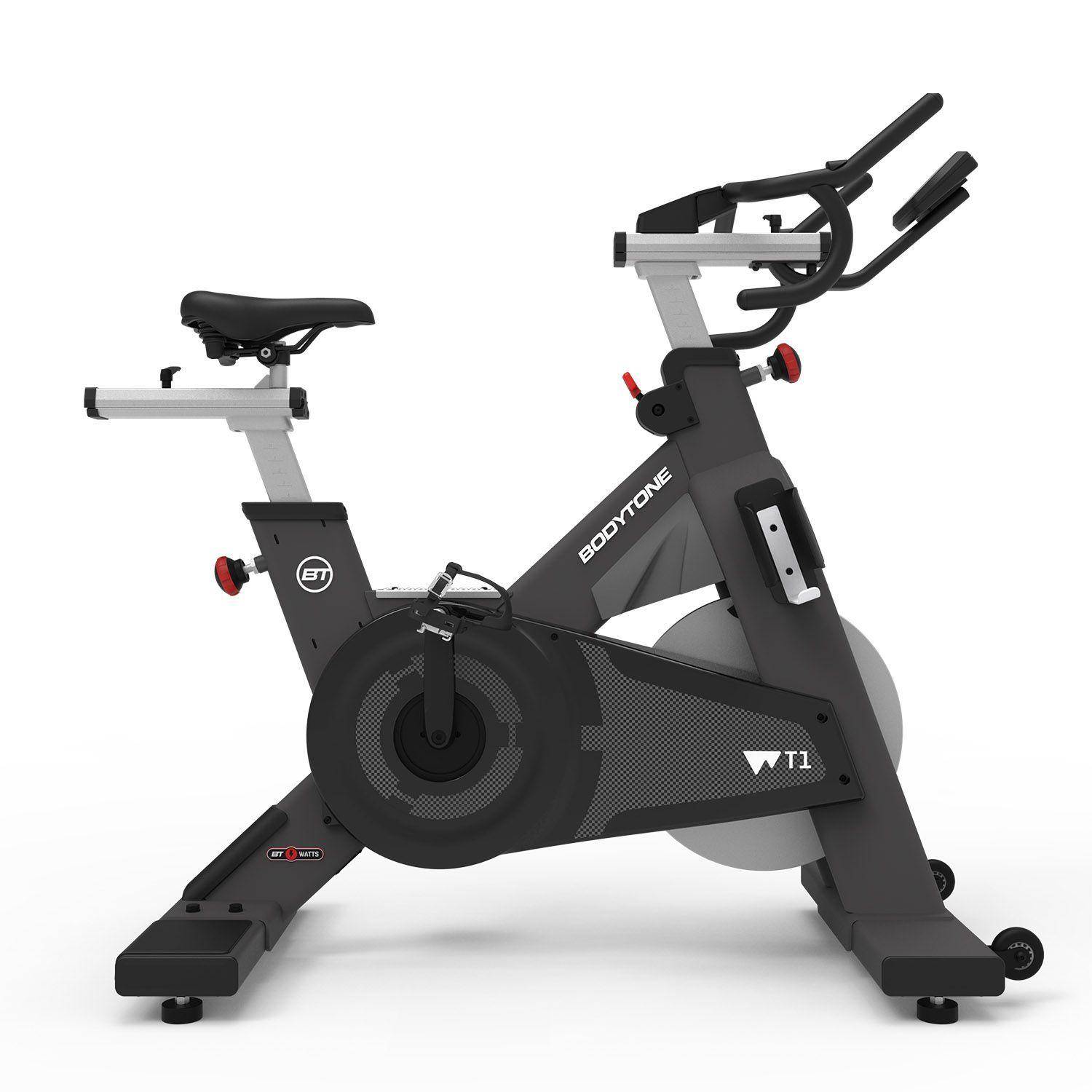
Indoor cycling bikes are built for group classes and high-intensity work: a heavy flywheel, a race-style riding position, fast and repeatable adjustment so a rider can set up in seconds between classes. This is the family to look at for a studio or a dedicated cycling room. Our indoor cycling bikes are designed around that class use.
Upright exercise bikes sit on the open cardio floor, with a console, programmes and a comfortable seat for steady-state riding. They are the default choice for hotel gyms and general fitness floors where members ride unsupervised. See the exercise bikes range.
Recumbent bikes support the back and allow a seated entry with no need to swing a leg over a high frame. They are the right specification for senior populations, rehabilitation and accessible facilities, and they widen the audience of any cardio floor.
The criteria that actually decide the purchase
Budget comes first, and it should be set as a total for the cardio zone rather than a unit price, because the mix between families is what determines the service you can offer. Floor space comes next: measure the machine footprint plus the circulation and use envelope around it, not just the machine.
Then look at adjustment and comfort, which on a commercial site is a throughput question rather than a comfort question. Adjustable resistance levels, handlebar height and reach, and fore-aft and vertical saddle adjustment decide how quickly a new rider can be set up correctly and how many body sizes one machine serves. In a class environment, tool-free adjustment that holds under load is worth more than any console feature.
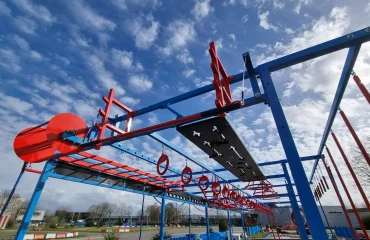
Finally, decide indoor or outdoor. An indoor machine is available every day of the year regardless of weather and is specified to class S. Outdoor equipment answers a different brief entirely, is installed permanently in the open air, and falls under EN 16630 rather than the indoor standard. The two are not alternatives to each other on the same site.
Group classes or individual riding: what the site needs
The choice is not really about which is better, it is about what your site is selling. A class programme creates a fixed schedule, an instructor cost and a room that is empty between sessions, but it delivers motivation, retention and a full-body session that members will not create for themselves. Individual riding on the open floor has no staffing cost, is available all opening hours and lets members work at their own pace, but it depends on the member turning up motivated.
Most commercial sites end up doing both, and the equipment decision follows: dedicated cycling bikes in the studio, upright and recumbent bikes on the open floor. Sizing each pool correctly is what stops queues in one zone and idle machines in the other.
Maintenance: protecting the asset
Commercial cardio equipment is an asset with a service life, and that life is decided by maintenance far more than by brand. Sweat and dust are the main enemies. Wiping machines down after use is the single most effective habit on any floor, and it needs to be built into the cleaning round rather than left to members.
Beyond cleaning, lubrication keeps the drive running properly, and regular inspection catches problems while they are still cheap. A short periodic check of fasteners, adjustment mechanisms and stability finds the loose bolt before it becomes a broken part and, more importantly, before it becomes an incident. Unusual noise or jerky movement is a signal to inspect, not to keep the machine in service.
Two rules apply on every commercial site: never use abrasive cleaners or solvents on the machines, and never operate equipment beyond the capacity it was designed for. Following the manufacturer instructions is not a formality, it is what keeps the warranty and the machine alive.
Frequently asked questions
Which standard applies to bikes in a commercial gym?
Indoor equipment for professional use is specified to EN ISO 20957-1 class S. Equipment outside that class is not intended for a facility open to the public.
How many bikes does a cycling studio need?
That depends on room dimensions, circulation and the class size you intend to sell. It is decided on the layout drawing, not from a general rule, and we size it with you.
Are recumbent bikes only for rehabilitation?
No. They suit any member who wants back support or a low entry, which includes a large part of a general membership as well as senior and rehabilitation users.
What maintenance should be planned?
Cleaning after use, periodic lubrication of moving parts, and a scheduled inspection of fasteners, adjustment mechanisms and stability, following the manufacturer instructions.
Specifying your cycling zone
The right answer is a mix, not a single model: class bikes, upright bikes and recumbents in the proportion your membership actually needs. Send us the room dimensions, the profile of your users and the class programme you plan to run, and we will come back with an equipment list and a price. Start with a request a quote.