Professional Equipment for Functional Training
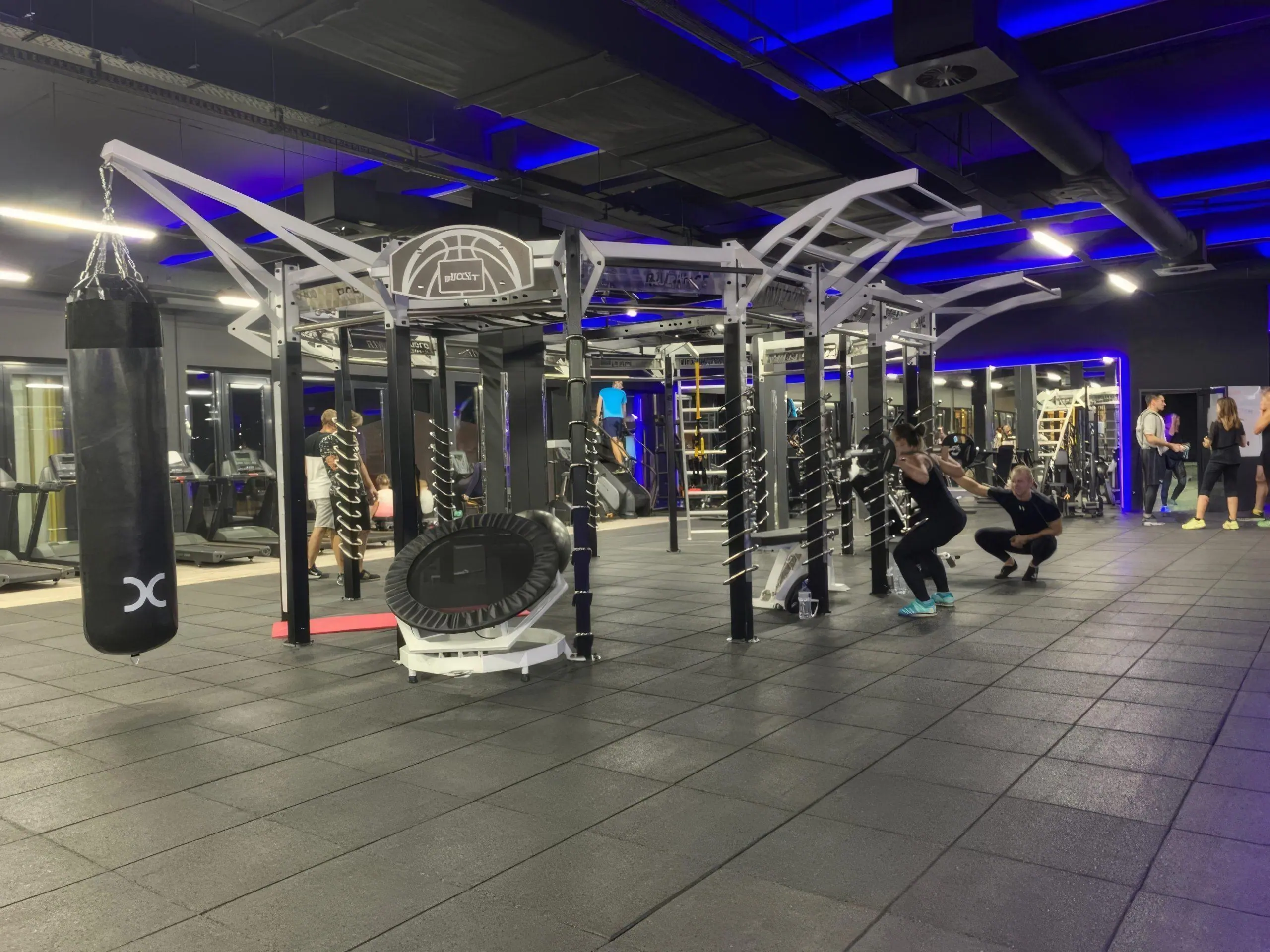
Functional training has moved from a class format to a permanent zone in most commercial facilities. It is built on natural movement patterns rather than isolated muscles, it develops strength, balance and coordination together, and it loads several muscle groups at once. For an operator, its great advantage is density: a functional zone serves far more people per square metre than a row of single-station machines.
The catch is that a functional zone is only as good as its equipment specification. Free movement means less guidance, which means the frame, the fixings and the accessories carry more of the safety burden. This guide sets out the five pieces of equipment a professional functional zone is built from and what to specify for each.
Why functional equipment suits a commercial floor
Equipment designed for functional training is chosen for three reasons.
It maximises movement efficiency, because the exercises mimic everyday actions and build usable strength rather than isolated capacity. It improves stability, because it constantly loads the stabilising muscles that guided machines take out of the equation. And it adapts to every level, which is what makes it viable in a room where beginners and experienced athletes share the same floor.
Key characteristics of functional training equipment
| Characteristic | Benefit |
|---|---|
| Freedom of movement | Allows varied and complex exercises. |
| Versatility | Adapts to many exercises and ability levels. |
| Durability | Built for intensive use in a commercial gym. |
| Safety and ergonomics | Reduces the risk of injury. |
One specification point applies across all of it: indoor equipment installed in a supervised commercial or public facility falls under EN ISO 20957-1 class S, the class written for professional use with unrestricted access. Ask for the declaration of conformity in writing before ordering.
1. Multifunction cross-training rig: the backbone of the zone
The rig is the central structure of a functional zone. Everything else arranges itself around it.
What to look for: a reinforced steel frame that carries heavy loads and survives intensive use; integrated stations including pull-up bars, ring mounts and dip stations; and multiple adjustment points so the same structure serves different heights and different exercises.
Exercises it covers: pull-ups and muscle-ups for the back, arms and trunk; dips and inverted rows for the chest, triceps and shoulders; assisted squats for leg strength and balance.
| Specification | Light In Fitness multifunction rig |
|---|---|
| Adjustable height | Yes, up to 3 metres |
| Material | Reinforced steel, anti-corrosion coating |
| Load capacity | Up to 1000 kg |
See the functional training rig range and the cross-training cage selection for the configurations available.
2. Functional cable station: versatility and free movement
A cable station is the piece that turns a rig into a zone. It allows free, multidirectional movement while keeping the load controlled, which is the combination coaches want and beginners need.
What to look for: precise resistance adjustment so the load can be matched to the exercise and the user; multidirectional movement, which is what allows exercises that mimic everyday actions; and a range of accessories, from handles to bars and ropes, that expand what a single station can do.
Exercises it covers: woodchoppers for trunk strength and rotation; squats with a pull for legs, back and arms; single-arm curls for the biceps and coordination.
| Characteristic | Light In Fitness cable station |
|---|---|
| Load adjustment | Precise, from 2 to 100 kg |
| Accessories included | Handles, triceps rope, pull-down bar |
| Recommended use | All levels, rehabilitation, intensive training |
The fine bottom end of the load range is what makes a cable station useful in rehabilitation as well as in performance work. See the professional cable station range.
3. Suspension system: whole-body work from bodyweight
A suspension trainer is the cheapest way to add a complete training modality to a zone, and the easiest to programme for groups.
What to look for: light and portable, so it can be installed almost anywhere, indoors or outdoors; adaptable to every level, since intensity is changed simply by altering body angle; and effective for trunk strength, because the stabilising muscles are loaded continuously.
Exercises it covers: suspended press-ups for the chest and trunk; supported squats for leg strength and balance; suspended rows to tone the back and improve posture.
| Specification | Light In Fitness suspension system |
|---|---|
| Adjustable length | Yes, from 1 to 3 metres |
| Material | Heavy-duty nylon, non-slip handles |
| Load capacity | Up to 150 kg |
On a commercial floor the anchoring point matters as much as the trainer itself. Anchor it to the rig or to a designed fixing, never to a fitting that was not specified for it.
4. Professional kettlebells: power and explosiveness
Kettlebells are a pillar of functional training and one of the highest-value purchases per square metre a facility can make. They build strength, power and general conditioning, and they need nothing but floor space.
What to look for: a rubber coating that protects the floor and extends the life of the bell; ergonomic handles that give a comfortable, secure grip through high-repetition work; and a progressive range of weights so the same rack serves beginners and advanced users.
Exercises they cover: the kettlebell swing for hip and leg power; the Turkish get-up for stability and coordination; the clean and press for shoulders and trunk.
| Characteristic | Light In Fitness kettlebells |
|---|---|
| Weights available | 4 kg to 48 kg |
| Material | Steel with rubber coating |
| Ergonomic grip | Yes, textured handles |
See the professional kettlebell range. Plan storage at the same time: loose kettlebells on an open floor are the fastest way to turn a functional zone into a hazard.
5. Battle rope: conditioning and functional strength
A battle rope covers high-intensity conditioning with no load to rack and almost no maintenance, which is why it earns its place even in small zones.
What to look for: rope that builds power and explosiveness in short, intense efforts; whole-body work loading arms, back, trunk and legs; and a small footprint that fits into limited space.
Exercises it covers: waves for arms and trunk; slams for power output; side-to-side waves for coordination and balance.
| Specification | Light In Fitness battle rope |
|---|---|
| Length | 10 to 20 metres |
| Material | Reinforced nylon, abrasion resistant |
| Diameter | 3.8 cm for a solid grip |
The rope needs an anchor point and a length of floor that stays clear, so it belongs in the layout from the start rather than in a corner as an afterthought.
Frequently asked questions
How much space does a functional zone need?
That depends on the rig configuration and how many people you want training at once, so it is sized against your own floor plan rather than a general figure. Send us the plan and we will lay it out.
Which standard applies?
EN ISO 20957-1 class S for indoor equipment in professional use with unrestricted access. Ask for the declaration of conformity in writing before ordering.
What flooring does a functional zone need?
Dense rubber flooring under the whole zone. It protects the slab from dropped kettlebells, cuts structure-borne noise and keeps the rig from moving under load.
Can one rig serve a whole facility?
A rig plus a cable station, kettlebells, a suspension trainer and a rope covers the great majority of functional programming. The limit is usually the number of people who can train at once, not the number of exercises available.
Planning your functional zone
Tell us the surface area, the ceiling height, the expected traffic and how you intend to programme the space, and we will come back with a rig configuration, an equipment list and a costed proposal: request a quote.
Light In Fitness has equipped professional sites since 2013, from clubs and boxes to hotels, municipal facilities and training centres.
À lire aussi sur le même thème
- Chest Press Machine vs Bench Press: The Complete Guide
- Buying Guide: How to Choose a Professional Chest Press Machine for Your Gym
- Les Avantages Scientifiques de la Musculation pour la Santé et la Longévité : Découvrez les Bienfaits par Light In Fitness
- Musculation et Nutrition : Que Manger Avant et Après l’Entraînement pour des Résultats Optimaux