Buying Guide: How to Choose a Professional Chest Press Machine for Your Gym

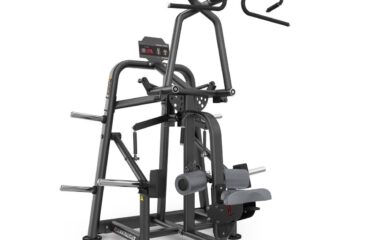
Investing in a professional chest press machine is a strategic decision for any gym that wants to put credible equipment in front of its members. The chest press is a core station for chest development, but not every machine is built to the same standard. The right choice raises the quality of every session on that station while keeping users safe. This guide sets out how to specify a chest press machine for commercial use, criterion by criterion.
Why specify a professional chest press machine
A well-built chest press machine delivers three things a general-purpose bench cannot:
- Safety and comfort: the guided path lets users train without the injury risk that comes with stabilising a free bar.
- Efficiency: it isolates the pectoral muscles, so the work stays where the programme intends it.
- Versatility: adjustments make it usable by beginners and experienced athletes alike, on the same station.
The five criteria that decide the purchase
| Criterion | Why it matters |
|---|---|
| Resistance type | Determines the feel and the intensity of the exercise. |
| Ergonomics and design | Delivers comfort and prevents injury. |
| Available adjustments | Allows the station to be fitted to each user. |
| Durability and material quality | Determines service life under intensive use. |
| Compliance | Confirms the machine meets the professional safety specification. |
1. Resistance type: plate loaded or selectorised
Resistance is the first decision, and it shapes everything downstream. Two families are available.
Plate loaded chest press. The movement feels closer to a barbell bench press, and loading discs one at a time supports continuous progression at any level of strength. The trade-off is that very heavy loads may call for a spotter, and the machine is less suited to complete beginners because stabilising the movement is harder. The full family is set out under plate loaded machines.
Selectorised chest press. Pin-loaded stations are the natural answer for beginners and for busy gyms: the guided path and the integrated safety mechanism reduce injury risk, and changing the load takes seconds. The trade-offs are a less free feel than plate loading and a hard ceiling at the maximum weight on the stack. See the Gold Line selectorised range for the pin-loaded option.
| Resistance type | Best suited to | Characteristics |
|---|---|---|
| Plate loaded | Advanced athletes, powerlifters | Natural feel, unrestricted progression |
| Selectorised | Beginners, rehabilitation, high-traffic gyms | Higher safety, guided movement |
2. Ergonomics and design: comfort and safety first
Ergonomic design is what makes a station usable by an entire membership rather than by the half of it that happens to fit. Three features carry most of the weight.
- Adjustable seat and backrest: height and angle can be set so the chest lines up precisely with the handles.
- Ergonomic handles: textured and non-slip, for a firm and comfortable grip.
- Adjustable handle position: varies the range of motion to target different parts of the pectorals.
Practical advice: before you buy, sit on the machine. Check that the handles fall into a natural position and that the seat adjusts quickly enough for a member who is mid-circuit.
| Ergonomic feature | What to look for |
|---|---|
| Adjustable seat | Several set positions rather than two extremes |
| Non-slip handles | Textured grip that stays secure when hands are damp |
| Multiple adjustments | Backrest angle and handle position both configurable |
3. Adjustment and versatility: one station, every user
A chest press machine that serves a whole membership has to offer several adjustments, so users of every height and every level get the same movement quality.
- Seat adjustment: essential to align the movement with the chest and avoid loading the shoulders excessively.
- Fast load adjustment: lets the weight be changed quickly, which matters in circuit sessions and short rest intervals.
- Range of motion adjustment: important for athletes who want to vary the exercise or target specific areas of the chest.
Practical advice: favour a machine whose adjustment mechanism moves smoothly and can be operated one-handed in the middle of a set.
| Adjustment | Benefit to the user |
|---|---|
| Seat height | Correct alignment and less joint stress |
| Range of motion | Exercise variation on a single station |
| Load selection | Fast transition between sets |
4. Durability and materials: a long-term investment
On a commercial floor, the chest press is used for hours every day, and material quality is what decides whether the station is still presentable in year five.
- Reinforced steel frame: designed to withstand intensive daily use.
- Anti-corrosion coating: protects the machine in humid or high-traffic environments.
- Thick upholstery: adds comfort and resists wear at the contact points.
A concrete illustration: a premium club that installed these chest press machines more than five years ago still shows minimal wear, thanks to the frame construction and the coating.
| Feature | Professional specification |
|---|---|
| Frame material | Reinforced steel, epoxy coating |
| Wear resistance | High durability under intensive use |
| Upholstery | Thick padding at all contact points |
5. Compliance: the specification that actually applies
Professional strength equipment has to meet a defined safety specification. For a chest press machine installed indoors in a supervised facility, the reference is EN ISO 20957-1 class S, the professional class covering stationary training equipment for commercial use. Class S governs stability, construction and the loads the station is designed to take, and it is what an insurer or a public buyer will expect to see documented.
- EN ISO 20957-1 class S: the professional specification for indoor equipment in supervised facilities.
- Load testing: each machine is tested under extreme loads to verify its structural strength.
- Manufacturer warranty: cover on the frame and on the moving parts, confirmed in writing before the order.
| Point to verify | Why it matters |
|---|---|
| EN ISO 20957-1 class S | Professional class for supervised indoor use |
| Load testing | Confirms strength and durability |
| Written warranty terms | Reassurance for the operator and the user |
Note that class I, which you may also see quoted, is likewise a professional class: it is defined by inclusive access, not by a level of intensity above class S.
Frequently asked questions
Plate loaded or selectorised for a mixed membership?
Selectorised if most of your traffic is general members and supervision is limited; plate loaded if you serve a strength-focused audience. Facilities above a certain size usually install both, and the chest press is one of the stations where the duplication is easiest to justify.
What seat adjustment range should a commercial chest press offer?
Enough set positions for the handles to line up with the mid-chest of both your shortest and your tallest members. Two positions is not enough for a public facility.
Which standard applies to a chest press machine in a gym?
EN ISO 20957-1 class S, for indoor stationary training equipment used in supervised commercial facilities. Ask your supplier to state the class in the quotation.
Choose performance
Investing in a quality professional chest press machine means training sessions that are effective, safe and suitable for every member. Our chest press range is ergonomic, durable and specified for commercial use: see the full chest press machine range, then send us your floor plan and your expected traffic and we will come back with a costed proposal. Request a quote.
À lire aussi sur le même thème
- Comment éviter les blessures lors de l’utilisation de la presse à cuisses verticale
- Which Leg Press Offers the Best Value for Heavy Use?
- What Is a Converging Strength Machine (and Why It Feels More Natural)
- EVA Foam Puzzle Mats for Nurseries and Schools: Safety, Comfort and Maintenance
- How to Choose an Outdoor Fitness Trail for Your Town: The Complete Guide