Gym Strength Machines: A Station-by-Station Guide by Muscle Group
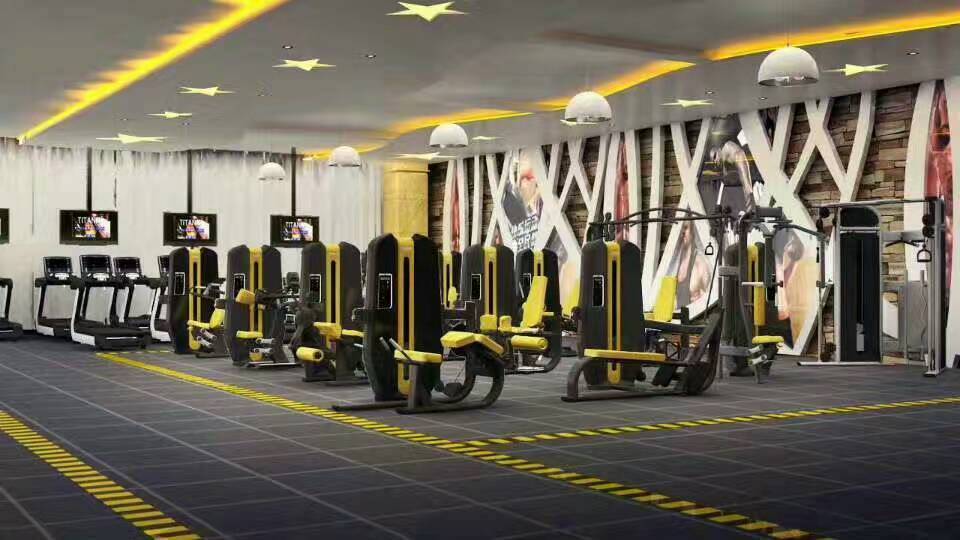
To the uninitiated they look like instruments of torture. Competitive weightlifters tend to dismiss them. Bodybuilders, models and anyone who cares about how they look swear by them. Strength machines let a member isolate one muscle, or work a whole group, along a controlled path of motion. They remove most of the injury risk that comes with free weights, and their cardio counterparts reproduce natural movement patterns closely enough to replace running or cycling outdoors.
This guide is deliberately organised the way a floor plan is organised: family by family, muscle group by muscle group. For a gym operator, a hotel, a sports club, a municipality or a rehabilitation centre, the useful question is not whether machines belong on the floor, but which station covers which movement, what it costs in square metres, and what it can be replaced by when space runs out.
What every professional strength machine has in common
The catalogues are vast, but a handful of criteria separate equipment built for a commercial floor from equipment that will not survive its first year of shared use. Indoor equipment installed in a supervised commercial environment falls under EN ISO 20957-1 class S. That classification is the baseline for any club, hotel gym, municipal facility or rehabilitation centre, and it is the first thing to check on a technical sheet.
Upholstery and padding
Every pad should be made from a dense material that resists tearing, abrasion and puncture. It should absorb neither water nor sweat, which is the one constant of physical effort and the fastest way to destroy cheap upholstery. Seams, staples and the bond between foam and backing board are where budget machines fail first. On a busy floor, the availability of replaceable pad kits is worth more than a slightly lower purchase price.
Frame, welds and materials
The structure has to be stable and durable, with no doubt whatsoever about its behaviour under load. Welds should look, and be, genuinely solid: continuous, ground where they are handled, and protected against corrosion. Steel remains the reference material. It is hard to deform permanently and it is the safe answer for machines that carry tens, and sometimes hundreds, of kilograms every day. The quality of the powder coating and of the surface treatment underneath it decides how the frame looks after five years of cleaning products.
Selectorised weight stack or plate loaded?
Before going through the muscle groups, one arbitration governs all of them. Machines divide into two broad families: those with an integrated weight stack, and those with posts for standard Olympic plates. Neither is objectively better. They answer different operational problems, and most well specified floors carry both.
Selectorised machines: strengths and limits
Strengths:
- Load is adjusted in seconds by moving a single pin, which keeps circuits flowing and suits group instruction.
- It is practically impossible for a user to exceed the machine maximum capacity.
- No loose plates are required, so nothing has to be racked, carried or left on the floor.
Limits:
- Load moves in fixed increments set by the manufacturer, which can be too coarse for fine progression or for rehabilitation work.
- The maximum available load is sometimes not enough for advanced members.
- Higher purchase price per station.
Explore the range of selectorised strength machines if pin loading matches how your floor is used.
Plate loaded machines: strengths and limits
Strengths:
- The load is known exactly, plate by plate, which suits strength programming and testing.
- Resistance is limited only by the structural capacity of the machine itself.
- Lower purchase price per station.
- A more compact footprint for the frame itself.
Limits:
- The facility has to own, store and rack a significant quantity of plates, and that storage needs floor area.
- It is easy for an unsupervised user to overload a machine beyond what the frame was designed for.
The plate loaded machine ranges cover the same movement families as their selectorised equivalents, with a different feel and a different economic profile.
Multi-station gyms: several muscle groups on one frame
The starting point for many smaller facilities is the machine that does everything, usually called a multi-station gym. Depending on configuration it combines a high pulley and a low pulley with a set of handles, an abdominal bench, a pec deck, a preacher curl station, a mid pulley, a pull-up bar or a leg station. The specification exercise is simple to describe and hard to do well: list the movements the membership actually performs, and buy the configuration that covers them, not the one with the longest feature list.
Maximum load matters as much as station count. As a working rule, a multi-station gym intended for a commercial floor should offer at least 120 kg on its main stations. Some models are supplied with stacks that do not exceed 80 kg. Manufacturers occasionally describe cable arrangements that change the resistance felt at the handle relative to the nominal stack weight; where such a claim is made, ask for the pulley ratio in writing and, better still, test the machine, because the load the user feels is the only figure that matters.
Configurations that let several people train simultaneously on different stations, for example a high pulley and a pec deck at once, are rarer but they exist. For clubs, hotels and larger facilities where peak hours are the constraint, they are a genuinely interesting alternative to a conventional single-user multi-gym.
Cable stations and functional trainers
A cable station is not usually called a multi-station gym, but functionally it deserves the name. Strictly speaking it is a device with at least two cables running over height-adjustable pulleys, each served by a weight stack. By combining pulley heights and handle types it allows training of practically every part of the body, which is why it has become the centrepiece of so many refurbished floors. It is also the most space-efficient way to add a large number of distinct exercises without adding a large number of frames. It will reappear in every section below, because it substitutes for a dedicated station in almost every muscle group.
Smith machines
A Smith machine consists of a barbell fitted with two hooks, a frame carrying short catch bars onto which those hooks locate, and vertical or slightly inclined guides for the bar. Almost any barbell exercise can be performed on it. Because the bar can be secured at any point in its travel, a user can attempt heavier loads without a spotter and without worrying about being unable to complete a repetition. For hotels, residential facilities and any site where supervision is intermittent, that safety margin is often the deciding argument.
Chest
These are among the busiest stations on any floor. Say chest machine and most members picture the pec deck, which allows a fly movement to be performed seated. It is an excellent exercise and a sound substitute for dumbbell flyes, which are technically demanding and less forgiving. Bodybuilders use it to finish a chest session, and it is difficult to justify a serious club without one.
The second family is chest press machines. They allow heavy loads to be pressed without a spotter, unlike a traditional barbell bench press, and they control the movement path so the user can concentrate on muscular effort alone. They are used slightly less than the pec deck but they earn their floor space.
Cable substitute: flyes with the pulleys set low, cable crossovers with the pulleys set high, and any number of intermediate hand paths.
Back
The traditional back station is the lat pulldown, designed to stand in for pull-ups on a bar. It is frequently built into cable stations and it is an integral part of most multi-station gyms. It also exists as a standalone machine and as a wall-mounted unit, which is a genuinely useful option when a floor is being reorganised and every square metre counts.
The second reference movement is the seated row on a low pulley, which attacks the back musculature from a different angle. Like the pulldown it is sometimes integrated into a cable station, but it is not always part of a multi-station gym package. A large facility is well advised to install several high and low pulley positions, wall-mounted ones included.
Shoulders
The classic shoulder station presses a load overhead: the shoulder press, in its selectorised and converging forms. It is popular in every kind of facility, partly because the movement path is controlled and partly because the user can set the load down at any point, which allows heavier work than a free-weight equivalent. Few stations produce a comparable training effect on the deltoids with so little technical instruction.
Biceps
Arm size is a durable motivation, and biceps stations are in constant demand. The preacher curl machine is by far the most common. It is worth distinguishing the machine from the preacher bench itself, which is a specialised bench rather than a loaded station.
Cable substitute: curls from a low pulley using a range of bars and handles, which lets both heads of the muscle be trained through a full range.
Triceps
Even members who avoid machines on principle tend to make an exception for triceps stations, because the free-weight alternatives are technically awkward and unforgiving of fatigue. A typical triceps machine has the user extend the arms either vertically or horizontally. Both layouts are common and neither presents a learning problem, even for beginners.
Cable substitute: pushdowns from a high pulley, with a bar, a rope or a single handle.
Core and abdominals
A trained midsection matters to men and women alike, and the right stations make it far easier to reach. The simplest and, oddly, the least common option is the crunch cradle: a frame whose job is to hold the head, neck and spine in a sound position through the movement. It is relatively inexpensive and it is particularly well suited to group classes.
There are also machines built around a seat or a bench, where the user brings the ribcage and the pelvis together against resistance. It is hard to argue that the seated versions are better than the lying versions or the reverse: training effect and technical difficulty are comparable. The sensible approach for a well equipped floor is to install both and let members choose.
Rotary torso machines are widely marketed on the strength of their training effect. Treat those claims with caution and position the equipment carefully: loaded rotation of the lumbar spine deserves supervision, and these stations are better specified for facilities with instruction on hand than as unsupervised self-service equipment.
Cable substitute: rope crunches and cable rotations train the rectus abdominis, the obliques and the deeper stabilisers with very good results, and they cost no additional floor space at all.
Legs and hips
This is the widest family of all, which makes sense: the leg muscles are among the largest in the body and they tolerate, and require, substantial loads.
Quadriceps
The main function of the quadriceps is to extend the knee. Machines exploit that movement in two ways. The first is seated knee extension from roughly ninety degrees, the conventional leg extension machine, which can stress the knee joint if it is set up or used carelessly. The second reproduces the squat pattern by pushing a load upward or forward, which is the safer option for a general membership and the one to favour where supervision is light.
Hamstrings
The hamstrings are the antagonists of the quadriceps: they flex the knee. Machine training reproduces that movement, most often lying prone. These stations are essential in any properly equipped facility, because there is no compound exercise that isolates this muscle group in the same way, and hamstring strength is directly relevant to injury prevention.
Combined and space-saving options
Machines exist that train both groups on one frame. Most commonly the seat and pads reposition so the same station serves seated extension and lying or seated flexion. Bench-mounted leg developer attachments offer the same two movements at very low cost and in a very small footprint, using free weights for resistance and pads to lock the legs in the extension and flexion positions. They will not replace a dedicated station on a busy floor, but they are a sound way to add capacity in a secondary room, a hotel gym or a residential facility, and several of them cost very little.
The leg press, in its horizontal, inclined and vertical forms, is the compound answer for the whole lower body and generally the highest-loaded station in the building. Specify frame capacity and plate storage together: they are the same decision.
Glutes, adductors and abductors
The reference glute exercise is hip extension against resistance, performed on a dedicated glute machine. It is difficult to substitute with anything else, because few movements load the gluteal muscles as directly.
The gluteal muscles also work during hip adduction and abduction. The adductor and abductor machines that train those movements are floor staples, particularly in facilities with a large proportion of female members, and there is no equally efficient alternative for those muscle groups.
Hydraulic circuit machines
Hydraulic equipment is a category of its own and does not map onto a single muscle group. Here the resisting element is a fluid, which is where the name comes from. The machines are supplied as sets designed for group circuit training. They frequently offer quick, convenient resistance adjustment on a touch screen, and some sets allow user settings to be stored on a card, so a member does not have to reset the circuit at every session.
A hydraulic circuit session does not exceed thirty to forty minutes, which makes it easy to fit into a working day. It is not strength training in the conventional sense: the resistance a fluid provides is not the highest available, so members who want to train hard with heavy loads will not be satisfied. For a large part of the market it is an excellent alternative, and that is exactly the audience the offer addresses.
Is it worth investing in? A facility equipped with a hydraulic circuit remains the exception, even in large cities. A set requires an additional fifty to one hundred square metres of floor area. That makes it a sound idea when a club already owns the conventional equipment it needs and is looking for a way to differentiate itself locally, and a poor idea when it is bought instead of that core equipment.
Cardio equipment
A great many machines have been built for cardiovascular training, from conventional treadmills to ergometers and cross trainers. Choosing well starts with defining their function. Are they there to warm members up before strength work, or are they the main event? In the first case, entry-level models are adequate. In the second, it is worth investing considerably more. In both cases the equipment has to be of genuinely commercial quality, because it will be used by several dozen people every single day. The full professional cardio equipment range is organised by discipline for exactly that reason.
Above all, cardio machines must allow intensity and resistance to be adjusted easily. Nothing irritates a user more than having to scroll through dozens of options to find the one setting they want.
It is very often not worth paying for individual programme storage. In practice only a small proportion of members use it. It is difficult to get the same machine every session, and when someone does, the saved settings have usually been cleared by another user. Those functions only make sense as part of a properly implemented member identification system, where results are recorded against an account rather than against a machine.
Quick specification notes by machine type
Treadmill: maximum user weight and speed regulation matter most. The belt must support a user of at least 100 kg and offer a wide, finely adjustable speed range.
Exercise bike: again, maximum user weight and resistance adjustment. A wide resistance range is what allows the same machine to serve beginners and trained members without frustrating either.
Cross trainer: beyond weight capacity and resistance, check the coordination pattern. As the left leg moves forward the right arm should move forward with it, and vice versa. A machine that forces same-side arm and leg movement works against natural coordination and is a poor purchase at any price.
Frequently asked questions
Which muscle groups can share a single station?
A cable station covers chest, back, shoulders, biceps, triceps and core on its own, which is why it is the first machine to specify when floor area is tight. Combined leg stations cover quadriceps and hamstrings. Everything else, and in particular glutes, adductors and abductors, needs a dedicated frame if the movement is to be trained properly.
Should a new facility buy selectorised or plate loaded machines first?
For a general membership, selectorised machines first. They are faster to use, they are safer without supervision and they suit beginners, who make up most of the sign-ups at a new club. Plate loaded stations are then added for the members who outgrow the stacks and for strength-focused programming.
Which standard applies to indoor gym equipment?
Indoor equipment for supervised commercial use falls under EN ISO 20957-1 class S. Ask suppliers for the conformity documentation covering the specific reference you are buying, not a general company statement, and keep it with your facility records.
How much floor area should be allowed per machine?
Allow for the machine footprint plus the user access and exit zones specified by the manufacturer for that reference, and plan circulation between stations on top of that. Manufacturer drawings give the exact figures for each model; for a full floor layout, a supplier can produce a scaled plan from your room dimensions before anything is ordered.
Specifying your floor
Work through the muscle groups in order, cover each one at least once, and only then decide which stations deserve a second unit. That sequence, rather than a catalogue running order, is what produces a floor where nobody queues. Complete equipment quotations including layout drawings are available for any project, from a single hotel room to a full club fit-out.