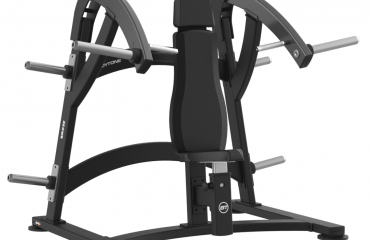
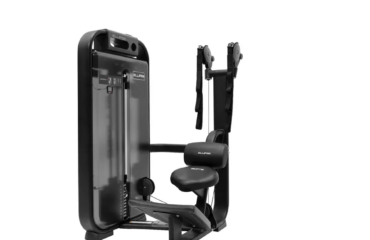
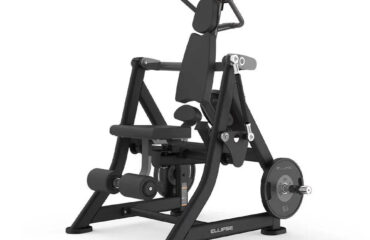
What Is a Converging Strength Machine (and Why It Feels More Natural)
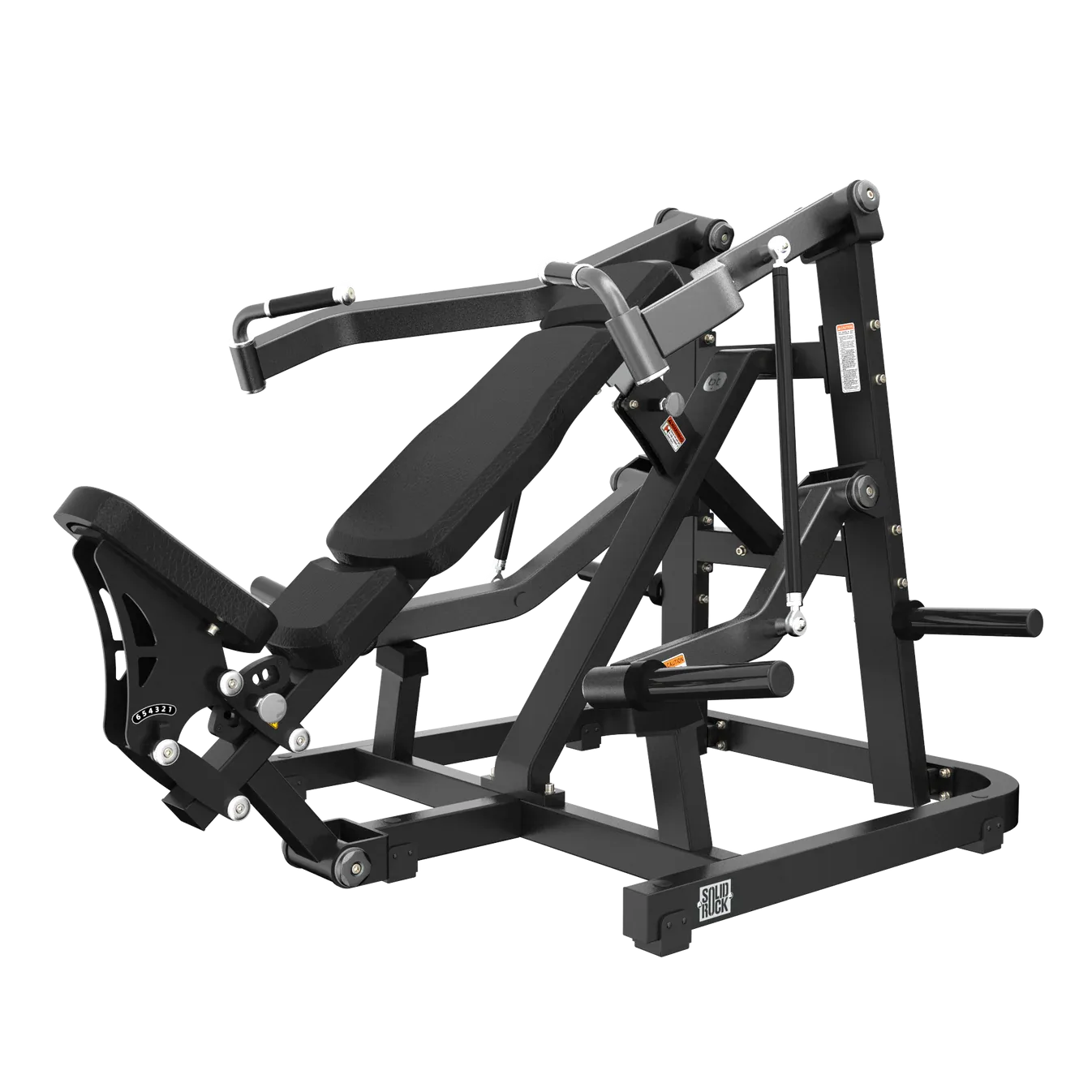
“Converging” sounds like catalogue jargon. In practice, it is often what separates a machine your members enjoy from one they merely tolerate. A converging path follows the logic of the body: the arms do not push in a straight line, like pistons. They come together, open, close again. They move the way a body actually moves.
What a converging trajectory really changes
The movement accompanies the user’s biomechanics rather than fighting it. For many users this improves muscular sensation and reduces the feeling of joint constraint, because the hands travel towards each other as the press or the row reaches its end range, instead of being locked onto a fixed rail.
Converging describes the trajectory, not the load system. You will find converging designs in plate-loaded ranges as well as in guided-weight families, and the choice between the two is a separate decision about how you want your floor to run.
Why gym operators keep asking for it
Because it is intuitive. Fewer complicated settings, fewer awkward positions to explain, more immediate comfort. On a busy floor that matters more than any specification sheet: a member who feels good on a machine comes back to it, and a machine that gets used is a machine that pays for itself.
It also shortens induction time. Staff spend less of their day correcting positions on a converging chest press or converging triceps machine than on equipment that demands precise set-up before the first repetition.
Where the limit is
Everything depends on the adjustments and on the range of body types you serve. A converging arc that suits one morphology can feel short or awkward for another. A well-designed converging machine answers this with genuinely useful amplitude and adjustment options — seat, back pad, starting position — rather than with a single compromise setting.
The professional buying criterion
Stability under load, quality of the guiding system, precision of the adjustments, and the absence of play after months of daily use: this is where equipment that lasts separates itself from equipment that simply looks the part. For a facility open to users, specify professional indoor equipment to EN ISO 20957-1 class S and check that the whole range you are considering is covered, not only the flagship model.
If you want the full treatment of the subject before you shortlist, our buyer’s guide to converging strength machines goes through the families, the load systems and the floor-planning consequences.
Frequently asked questions
Is a converging machine suitable for beginners?
Generally yes. The guided arc limits the number of things a newcomer can get wrong, and the reduced set-up means less hesitation before the first set. It does not remove the need for an induction, but it makes that induction shorter.
Is converging better than a straight-line machine?
It is not better in the abstract; it is different. Converging suits comfort, retention and mixed-ability memberships. Straight-line and free-weight work still have their place in a complete floor, especially for strength-focused clubs.
Does converging equipment cost more to maintain?
Not inherently. Maintenance cost follows build quality, bearing and bushing choice, and the accessibility of wear parts, not the shape of the trajectory. Ask about spare-part availability for the whole life of the range.
Planning your strength floor
Converging machines rarely make sense as a single purchase. They work best as part of a coherent layout where push, pull and lower-body stations sit in a logical sequence. Tell us the surface you have, the profile of your members and the hours you need to cover, and we will map the range against it — request a quote.