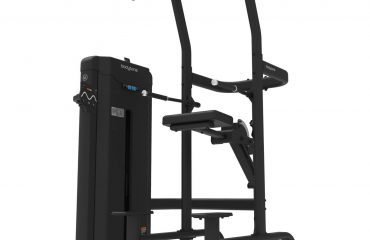
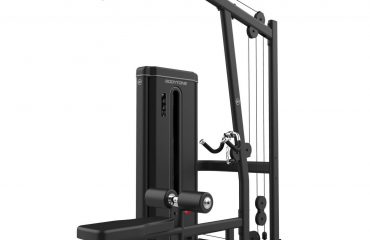
Professional Strength Training Machines: Benefits for Commercial Gyms
Specifying strength equipment for a commercial site is not the same exercise as buying a machine for a spare room. A selectorised station in a busy club is used several hundred times a week, by members whose height, weight, mobility and training experience have nothing in common. It has to hold its geometry, its bearings and its upholstery through all of it, and it has to do so while carrying the operator’s liability. That is the whole difference between professional strength training machines and everything sold below that line.
This guide sets out what commercial-grade strength equipment actually buys you as an operator: predictable biomechanics, a real safety envelope, adjustability wide enough to serve your whole membership, and a service life measured in years of continuous use rather than months.
What makes a strength machine professional
The dividing line is defined, not marketing. Stationary indoor training equipment is covered by EN ISO 20957-1, and the standard sorts machines by intended use class. Class S is the class for equipment placed in supervised commercial environments: gyms, clubs, hotels, sports halls, corporate facilities, rehabilitation centres. Class I is a professional class designed for inclusive access, not a step above class S in intensity. Anything specified for a paying site should sit in class S; equipment intended for unsupervised private use has no place in a facility that receives members.
In practice, class S shows up in the frame section thickness, the load ratings of the pulleys and cables, the quality of the bearings, the density of the upholstery foam and the fatigue testing behind the guards and stops. It also shows up in the parts chain: a professional range is supported with spares for years, which is what allows a floor to stay open rather than losing a station for a season.
Comfort and safety are operator responsibilities
On a commercial floor, comfort is not a luxury feature. Ergonomic, correctly padded seats and back pads put the user in the position the machine was designed around. When the pivot of the machine lines up with the anatomical joint, the load travels where it should, the joint is not asked to absorb shear it was never meant to take, and the movement stays repeatable from one user to the next. A machine that forces users out of position generates complaints, then injuries, then claims.
The second layer is the hardware itself: safety catches and stops that arrest the load, non-slip handles and footplates, guarded weight stacks, and end-of-travel limits that stop a movement before the joint reaches an unsafe range. These are the components an inspector looks at and the components that let unsupervised members train on your floor at seven in the morning without a coach standing next to them.
The third layer is legibility. Clear pictograms, obvious adjustment points and self-explanatory start positions cut the amount of instruction your team has to give and reduce the number of people who load a machine incorrectly. On a floor with a low staff-to-member ratio, that is a real operating saving.
Targeted muscle work and what it does for your floor plan
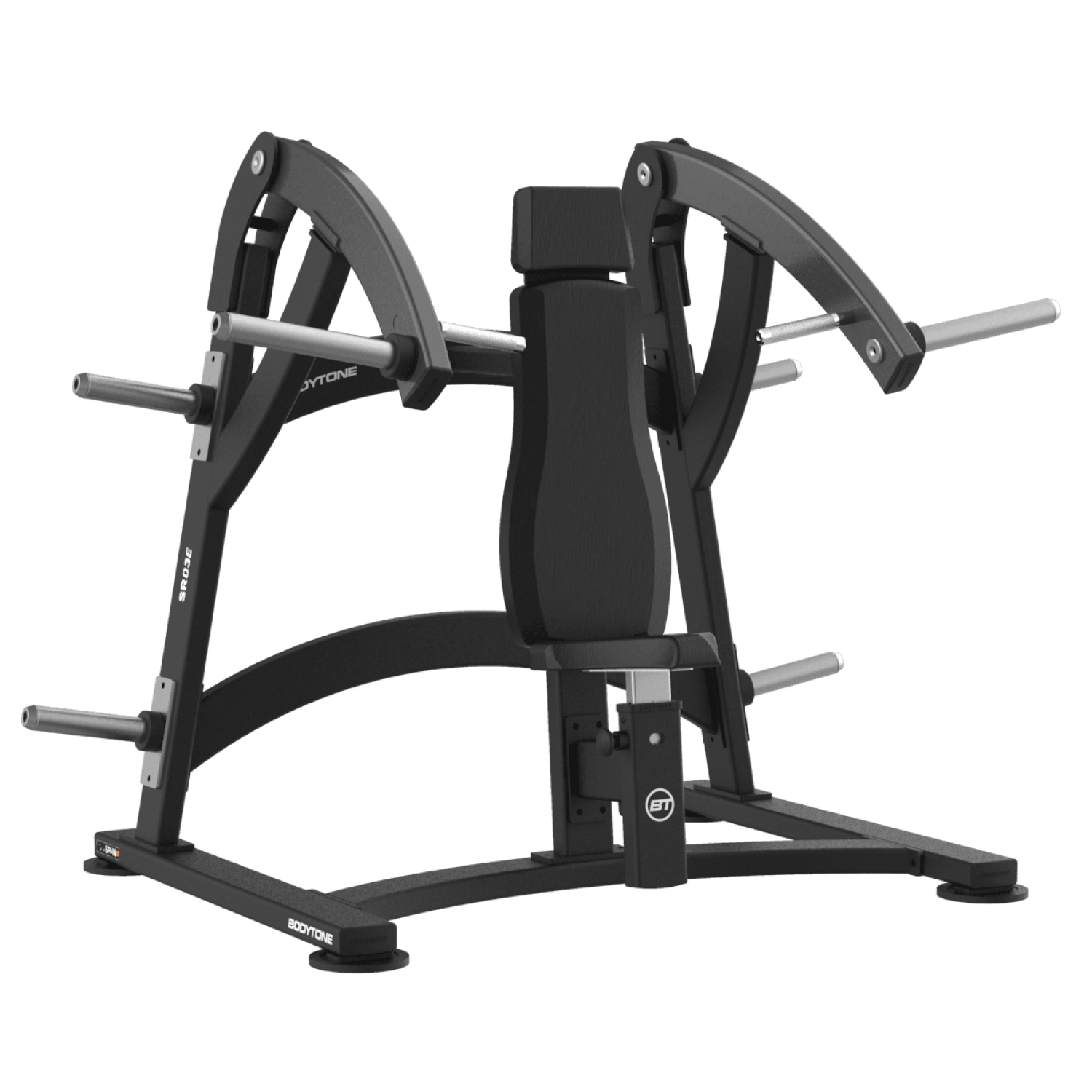
Selectorised and plate-loaded machines exist to isolate. A chest press station puts load on the pectorals through a fixed, guided path; a leg press station does the same for the quadriceps and glutes. The user does not have to stabilise a free load, which means a beginner can train productively on day one and an experienced lifter can push close to failure without a spotter.
For an operator, that isolation is what makes a strength floor programmable. You can lay out a circuit that covers every major muscle group in a defined sequence, hand a new member a card, and know that the equipment itself enforces reasonable technique. It also means each square metre of floor has a defined job, which matters when the strength area is the most expensive part of the building to fit out.
Variety is the other half of the argument. A range that offers several angles and several grips for the same muscle group lets your coaching team rotate stimulus across a training block, which is what keeps members progressing and, in retention terms, what keeps them in the building. Progressive loading in small increments is the mechanism behind that progression, and it is only reliable if the stack increments are consistent and the machine does not change behaviour under load.
Adjustability: one machine, many member profiles
A commercial machine has to fit a 1.55 m member and a 1.95 m member without either of them improvising. That means seat height adjustment, back pad adjustment, range-of-motion limiters and, on the better ranges, adjustable start positions so a user with restricted shoulder mobility can begin the movement where their joint allows rather than where the machine defaults.
Adjustment also has to be fast. If changing a seat takes two hands and thirty seconds, members will not do it, and a machine that is never adjusted is a machine used badly. Pop-pin adjusters, numbered scales and single-hand levers are the details that decide whether adjustability is theoretical or actually used between sets.
Range breadth matters for the same reason. A facility that serves a mixed population, a sports club and a rehabilitation service inside the same building can specify from a single family of machines and keep the interface consistent, which shortens the induction and reduces misuse.
Materials, service life and total cost
Professional strength equipment is built from heavy-gauge steel sections, powder-coated for abrasion and corrosion resistance, running on sealed bearings and aircraft-grade cable with guided nylon-lined pulleys. Upholstery is high-density foam under commercial-grade vinyl, which is the component that ages fastest and the one you should confirm is replaceable before you sign.
The reason this matters financially is straightforward: the purchase price is a fraction of the lifetime cost. A machine that lasts a decade on a busy floor, with replaceable wear parts and available spares, costs far less per year of service than a cheaper station replaced twice in the same period, and it never costs you the revenue of a station out of use. Light In Fitness backs its own structures with warranties of up to twenty years on steel frames and a lifetime warranty on stainless steel, and has equipped more than five hundred facilities since 2013.
Choosing a range for your site
Three families cover most commercial requirements. Selectorised stations, with an enclosed weight stack and a pin, are the safest and fastest option for a mixed membership and the natural backbone of a circuit. Converging plate-loaded machines give a more athletic feel and a natural convergence of the movement path, and suit strength-focused clubs and performance settings. Cable stations and multi-station gyms deliver the widest exercise catalogue per square metre, which is why they dominate in hotels, residences and any site where floor area is the binding constraint.
Our professional strength training machines cover all three families. For a selectorised backbone, the Bodytone Forza FH selectorised range is the reference specification for supervised commercial floors, while the Solid Rock plate-loaded machines answer the strength and performance brief.
Frequently asked questions
Which standard applies to indoor strength machines in a commercial gym?
EN ISO 20957-1 is the reference standard for stationary training equipment. For equipment installed in a supervised commercial facility, specify class S. Do not accept equipment declared for unsupervised private use on a floor open to members.
Are selectorised or plate-loaded machines better for a commercial floor?
Neither is better in absolute terms. Selectorised stations are faster to change load, safer for beginners and better suited to circuits and mixed memberships. Plate-loaded machines give a more athletic loading feel and suit performance-oriented sites. Most commercial floors run both.
How many strength stations does a commercial floor need?
That depends on your peak occupancy, the width of your membership and the surface you have available. It is a layout question rather than a catalogue question, and it is best answered against a floor plan rather than a rule of thumb.
Can the same machines serve a gym and a rehabilitation service?
Yes, provided the range offers low starting loads, fine load increments and wide adjustment. Cable stations in particular are used in both settings, which is why sites combining fitness and rehabilitation frequently standardise on them.
Specify your strength floor
Professional strength equipment is a structural decision for a facility: it defines what your members can do, how much supervision your floor needs, and what your fit-out will cost over ten years rather than over one. The right specification starts from your membership profile, your available surface and your supervision model, not from a product list.
Send us your floor plan and your intended use, and we will put together a costed specification for your site. Request a quote and our team will work through the layout with you.