Which Strength Machines Should You Choose for the Back?
Le travail du dos se répartit entre tirages verticaux, tirages horizontaux et extensions lombaires, chacun couvert par des appareils distincts. Le tirage vertical et le rameur assis sollicitent le grand dorsal et les rhomboïdes, le banc à lombaires la chaîne postérieure basse, la chaise romaine le travail au poids du corps. Un plateau complet couvre les trois familles.
Back training splits into three families of movement: vertical pulls, horizontal pulls and lumbar extension. Each is covered by a distinct piece of equipment, and a strength floor that skips one of them leaves a visible gap in what members can train. When you are specifying machines to develop the back, the most widely used are the power tower, the rowing machine, the incline bench, the pull-up bar and the lat pulldown station.
The power tower
The power tower, sometimes called a Roman chair, is a versatile station that lets users work many of the back muscles: the trapezius, the rhomboids and the latissimus dorsi, along with the abdominals.
On this frame a user can perform pull-ups, wide-grip pull-ups, reverse-grip chin-ups and neutral-grip pull-ups, each of which loads the back differently. That is what makes it valuable on a busy floor: one footprint, several distinct exercises, and no weight stack to queue for. Its limitation is that it starts at body weight, so a facility serving beginners should pair it with an assisted option or a cable station.
The rowing machine
A rowing machine is also an excellent choice for developing the back. It reproduces the rowing stroke and works mainly the back muscles, the trapezius, the rhomboids and the latissimus dorsi.
Its advantage is that it also involves the arms, the shoulders, the legs and the glutes, which makes it a genuinely complete exercise and one of the few machines that bridges the cardio floor and the strength floor. On a commercial floor, our professional rowing machines earn their space twice over, once as conditioning equipment and once as back work.
The incline bench
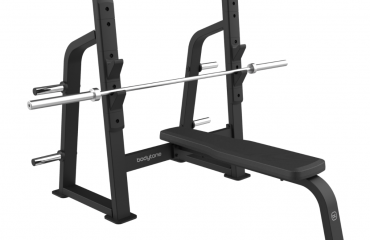
The incline bench is particularly effective for the upper back, notably the trapezius and the rhomboids. It also brings in the arms, the shoulders and the chest, depending on the angle chosen.
On this bench a user can perform rowing movements, lifting dumbbells or a barbell while contracting the back muscles. The chest-supported position removes the lower back from the equation, which is why it suits supervised sessions and users returning from injury. Adjustable professional weight benches are what make that range of angles possible.
The pull-up bar
A pull-up bar is ideal for the upper back, the latissimus dorsi, the trapezius, the biceps and the abdominals. It also involves the forearms, the shoulders and the chest.
The bar can be installed at different heights to vary the exercises and target the muscles more specifically. A lower bar allows inverted rows, which give beginners a horizontal pull they can actually complete, while a full-height bar serves experienced users. Both belong in a well-planned facility.
The lat pulldown and cable station
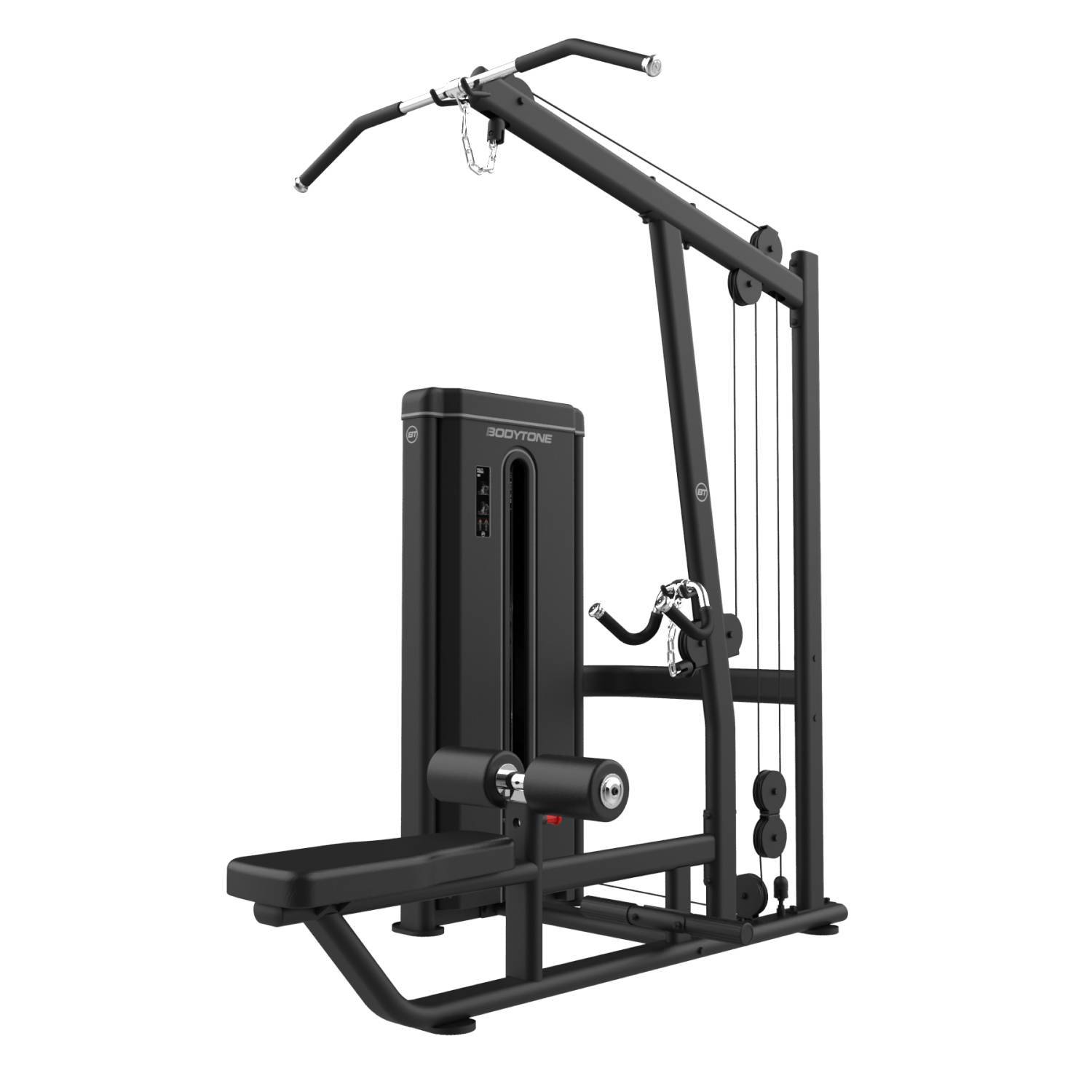
The lat pulldown is a highly versatile machine that trains all the back muscles effectively. It supports a range of exercises: lat pulldowns, seated rows, vertical pulls and reverse-grip variations. It also brings in the arms, the shoulders, the chest and the abdominals.
For an operator, its decisive advantage is the weight stack: unlike body-weight stations, it lets a beginner start below their own weight and progress in controlled increments. That is why a selectorised machine is usually the first back station specified on a floor serving a general membership.
Technique and programming
Whichever machine is chosen, good technique and attention to posture are essential in order to avoid injury. Every session should start with an appropriate warm-up, and stretching after the effort supports recovery. On a commercial floor those points are not left to chance: clear instruction panels on each station and a visible induction routine reduce both injuries and equipment misuse.
Frequently asked questions
How many back stations does a gym need?
At minimum one vertical pull, one horizontal pull and one lumbar extension. Below that, part of the back is simply untrained; above it, additional stations are about throughput at peak times rather than coverage.
Are body-weight stations enough?
Not on their own. A pull-up bar starts at the user’s own body weight, which excludes a large share of beginners. Pairing it with a cable or selectorised station is what makes back training accessible to your whole membership.
Which back equipment suits rehabilitation settings?
Chest-supported rows and cable stations with fine load increments, because both control the trunk position and allow very light starting loads.
Building your back training area
There are several machines that train the back effectively. Whether you choose the power tower, the rowing machine, the incline bench, the pull-up bar or the lat pulldown, each offers varied exercises that load the different muscle groups of the back. The right selection depends on your members’ objectives, their level of conditioning and the space you have.
Tell us your surface area and the profile of your users, and we will propose a back training area covering all three movement families, costed with its flooring. Request a quote and our technical team will work through the layout with you.