Assisted Chin and Dip Machine for Professional Gyms
La machine à dips et tractions assistées compense une partie du poids du corps, ce qui permet de travailler ces mouvements avant de les maîtriser en version stricte. L'assistance se réduit progressivement à mesure que la force augmente. C'est le poste le plus efficace pour faire progresser un débutant vers la traction complète.
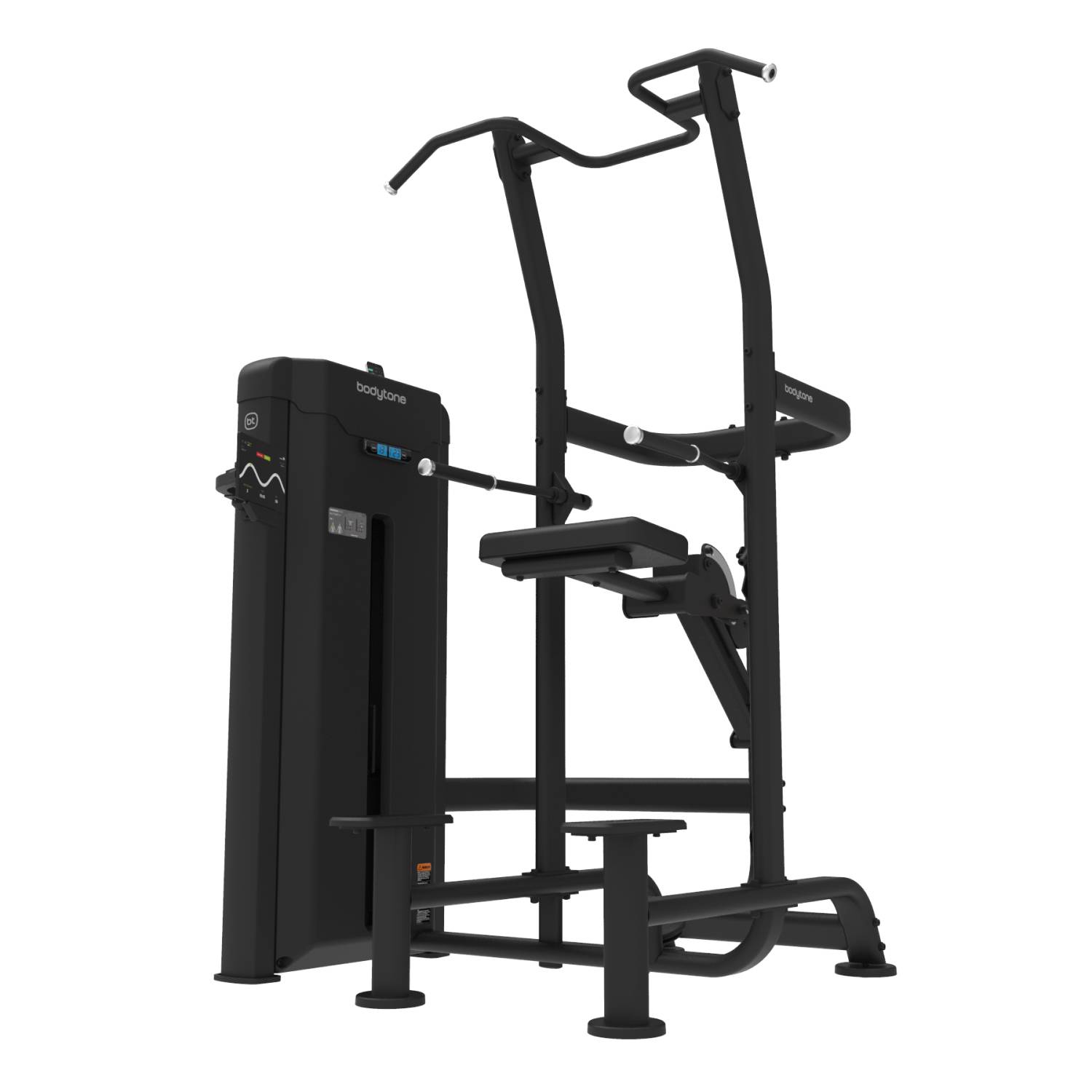
An assisted chin and dip machine offsets part of the user body weight, which makes it possible to train both movements before they can be performed strictly. The assistance is reduced progressively as strength increases. For a commercial gym, a club or a rehabilitation centre, it is the single most effective station for taking a beginner from zero to a full pull-up, and it keeps two of the most valuable upper-body movements available to every member rather than to the strongest ten per cent.
This article looks at what to expect from an assisted chin and dip station specified for professional use: the features that matter, the exercises it genuinely covers, the operational benefits for a facility, and how to brief staff on its use.
Features of an assisted chin and dip machine
The ergonomic design of the machine is what makes the difference between a station members use and one they walk past. The knee or platform pad has to place the user in a correct, comfortable position through the whole range, with the hands directly under the load path, so that the movement pattern being learned is the same one that will be used later without assistance.
Build quality decides the rest. The materials used determine reliability and service life, which is what makes a station a sound long-term investment rather than a recurring cost. On a commercial floor, an assisted chin and dip machine is used dozens of times a day, often by users who drop onto the pad rather than step onto it, and the frame, the guide rails and the pad mountings have to be specified for that.
The assistance system lets each user set the level of support to their own body weight and current strength. A weight stack with a clearly marked selector is the format most operators prefer, because a member can find their setting in a couple of seconds and reduce it week by week without asking for help. The compact footprint saves floor area, and a high load capacity keeps the station usable by heavier members.
Beyond those basics, look at the details that shape day-to-day use: comfortable grips and pads, multiple hand positions on the chin bar, and dip handles positioned for different shoulder widths. Our Bodytone Forza FH range covers this type of station in a commercial specification.
Exercises the machine actually covers
An assisted chin and dip station covers two movement families, and it covers them well. On the dip handles, the user trains the triceps, the chest and the front of the shoulder, with the assistance carrying whatever share of body weight is needed. On the chin bar, the same assistance opens up pull-ups and chin-ups, which train the lats, the mid-back and the biceps, and grip variations change the emphasis between back and arms.
That is the honest scope of the station: vertical pressing on the dip handles and vertical pulling on the bar. Lat pulldowns, lateral raises and chest press work belong on other machines, and specifying them here only leads to disappointed buyers. What this station does that no other does is let a member who cannot yet perform a single strict repetition train the actual movement, under load, with correct posture, from the first session. For everything else, the wider selectorised machine range is where the rest of the programme sits.
Because assistance is adjustable in small increments, the same station serves a beginner needing substantial support and an advanced member using it for high-repetition volume work at the end of a session. That range of users on one footprint is why it earns its place on a busy floor.
Benefits for the facility
Ease of use comes first. The station can be used correctly by beginners with minimal instruction, and the resistance adapts to very different levels, which makes it a natural first stop for new members. It is compact and can be positioned in a small area, so it fits facilities where floor space is the binding constraint: hotel gyms, corporate fitness rooms, club annexes.
On the safety side, an assisted station is a more controlled option for users with joint pain or back problems than an unassisted bar, because the body is supported and the posture is guided. That reduces the risk of the compensations that cause injury when someone attempts a movement they are not yet strong enough for.
It also saves time on the floor. A member can work pressing and pulling patterns in one place, without moving between stations, which shortens sessions and reduces queuing at peak hours. And because the movements are the ones that transfer directly to bodyweight strength, regular use produces visible progress, which is what keeps members renewing.
Briefing your team and your members
Once the station is installed, a short induction protects both the equipment and the user. Set the machine to the user height and body weight before the first repetition, so that the pad position and the assistance level are appropriate rather than inherited from the previous member. The station has to be stable and adjusted to the individual for the movement to be comfortable and effective.
Encourage a structured progression. Realistic targets and a planned reduction of the assistance over the weeks are what turn the station into a route to strict repetitions rather than a permanently supported exercise. Vary grips and hand positions to keep stimulating the whole upper body.
Safety points to cover in the induction: always warm up before the first working set, never exceed the machine load capacity, and stop the set rather than complete a repetition with broken technique. Finally, maintain the station on a schedule. Lubricate the moving parts, check the guide rails and the cable, and clean the pads and grips after use. That maintenance routine is what keeps an assisted station quiet, smooth and available.
What operators report
Feedback from facilities that have installed this type of station is consistent on a few points. The ergonomic design and the effectiveness of the movement pattern come up first, followed by the confidence the adjustable assistance gives to newer members, who will attempt a pull-up on an assisted station when they would never attempt one on a fixed bar. Operators also value the compact footprint and the simplicity of use, since a station that needs no staff explanation is a station that gets used. The reliability of the mechanism, on equipment that runs all day, is the point that decides repeat orders.
Frequently asked questions
Who is this station for in a commercial facility?
New members and returning members building up to bodyweight movements, rehabilitation users working under supervision, and stronger members using it for assisted volume work. It is one of the few stations with genuine value across that whole span.
How much assistance should a beginner start with?
Enough to complete a controlled set with correct posture, and no more. The setting is then reduced as strength improves. A member who can already perform strict repetitions should be on the bar, not on the machine.
How much space does it need?
A compact footprint plus clear access at the rear for stepping on and off, and enough overhead height for the chin bar. Send us your ceiling height and we will confirm the model that fits.
What maintenance does it require?
Periodic lubrication of the moving parts, inspection of the cable and guide rails, and cleaning of pads and grips. On a busy floor this is a short weekly check rather than an annual service.
Specifying the right station
The right assisted chin and dip machine depends on your member profile, your ceiling height and the rest of your strength equipment. Tell us how the floor is used and we will propose a model and a position for it. Request a quote and our team will come back with a costed specification.
Réalisations documentées
- Cage street workout ultime, Carcassonne – armée française
- Cage street workout ultime, Tahiti – armée française, Polynésie
- Cage SP Max, centre EPIDE de Combrée – établissement public d’insertion
- Cage SP Max, lycée Saint-Bénigne de Dijon – établissement scolaire
À lire aussi sur le même thème
- Professional Biceps Curl Machines for Commercial Gyms
- Matériel de musculation professionnel pour collège et lycée avec Light in fitness
- Matériel de musculation pour associations et collectivités avec Light In Fitness
- Matériel de musculation professionnel pour l’armée de terre, les régiments et la marine avec Light In Fitness