Hack Squat, Belt Squat or Leg Press: Which One for Your Gym?
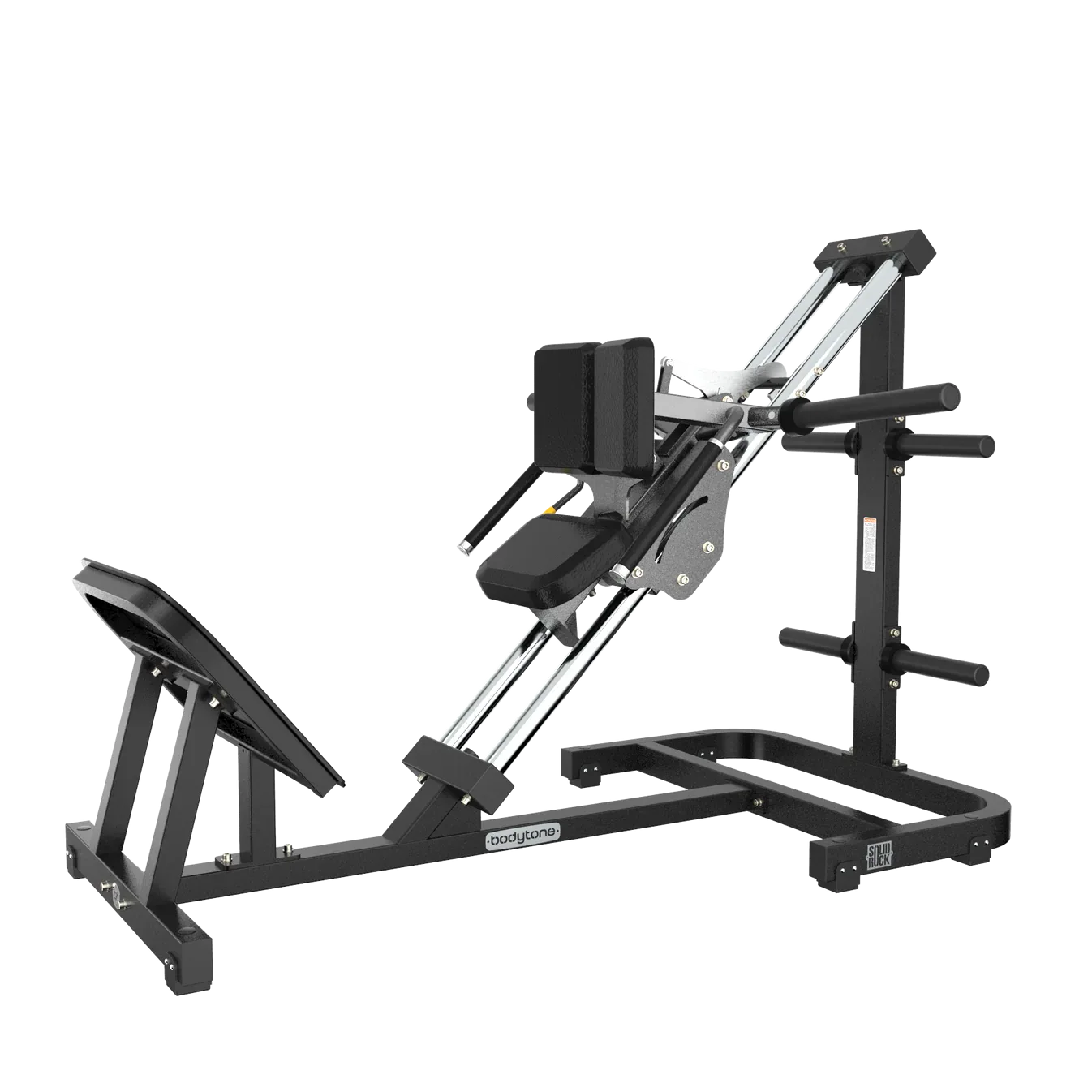
Three machines, one promise: stronger legs. Each of them, however, places the load somewhere different, and that is exactly what makes them strategic in a commercial facility. Together they let you offer alternatives, work around painful joints and add training volume without destroying recovery.
Leg press: the reference machine
Stable, easy to teach and heavily used from a member’s first session. It allows heavy loading with a constraint that is usually better tolerated than a free-weight squat, provided range of motion and foot placement are respected. In a mixed-membership club it takes more sessions per week than almost anything else on the floor, so frame construction and upholstery matter far more than the badge on the machine.
A 45-degree sled such as the SRX60 45-degree leg press gives you the pattern most members already recognise, with a learning curve close to zero for floor staff.
Hack squat: the guided squat that divides opinion
The hack squat is more vertical and closer to a true squat pattern. It is often extremely effective for quadriceps development, and sometimes more demanding on knees and hips depending on individual morphology. That is not a defect: it is the reason it should sit next to, and not instead of, a leg press. Members who are comfortable under the pad load it hard; those who are not simply use another station.
Where a strength area is built around plate-loaded stations, a machine like the SRX57 hack squat covers that guided squat pattern without adding a rack and a coach to supervise it.
Belt squat: the clever option
Here the load travels through a belt at the hips rather than through the shoulders. The result is less compression on the spine, which makes it a strong argument for anyone who wants to keep training the legs heavy while protecting the back: masters members, contact-sport athletes in season, and return-to-sport work supervised by a coach.
A dedicated station such as the SRX51 belt squat also frees up your racks at peak hours, since heavy leg work no longer competes for the same equipment.
The operator’s view
The right choice depends on who trains in your facility. A performance-oriented box will justify the hack squat and the belt squat quickly. A general fitness club will get its return from the leg press first. A rehabilitation or return-to-sport setting will value the belt squat for its spinal profile. A personal training studio will often want the three, because variety is part of what the client is paying for.
Whatever the mix, indoor equipment used by the public has to be built for commercial use: EN ISO 20957-1 class S, professional-grade frames, and a maintenance plan that matches the traffic. Anything specified for lighter use will not survive a full timetable.
Frequently asked questions
Do I really need all three?
No. Most facilities start with the leg press and add a second pattern once the leg area is saturated at peak hours. The point of the other two is coverage: a different loading vector for members the first machine does not suit.
Which one should a new gym buy first?
The leg press, in the vast majority of cases. It serves the widest range of abilities with the least supervision, and it is the machine members look for when they walk in.
Which is best for members with back sensitivity?
The belt squat is the usual answer, because the load bypasses the shoulders and the spinal column. It does not replace medical advice, and members under care should train according to their practitioner’s instructions.
How much floor space should I plan?
Footprints vary significantly between models and between plate-loaded and selectorised versions, so plan from the technical drawing of the exact reference you are considering rather than from a generic figure, and add the loading and circulation clearance around each station.
Building your leg area
The three machines are complementary rather than interchangeable. The useful question is not which one is best, but which combination matches your membership, your floor area and your budget over the next three years. Send us your floor plan and your target audience, and we will put together a configuration and a costed proposal: request a quote.
À lire aussi sur le même thème
- Pourquoi et comment utiliser une machine Presse de Poitrine Convergente IsoLatérale pour sa salle de fitness ?
- Pourquoi et comment utiliser une machine Iso-Lateral Leg Extension pour sa salle de fitness ?
- Leg curl and leg extension machines: specification guide for gym operators
- Vertical Leg Press: Why and How to Use It in Your Gym