Professional Dumbbells: How to Equip a Commercial Gym Floor
Dumbbells remain the most heavily used piece of equipment on any commercial free-weight floor. They train every muscle group in the body, they suit every level of member, and they never queue up the way a single selectorised station does. For a gym operator, a hotel fitness room or a rehabilitation centre, the question is not whether to buy dumbbells but which set, in which finish, and how to lay them out.
Why dumbbells stay central to a professional free-weight area
A dumbbell rack is the highest-return square metre in a commercial gym. Arms, shoulders, chest, back, legs and core can all be trained from the same rack, which means a small footprint serves a large number of members at once. Unlike a fixed machine, a dumbbell adapts to the user rather than the other way round, so the same rack works for a first-time member and for an experienced lifter.
For professional installations the reference standard is EN ISO 20957-1 class S, the class intended for equipment used in supervised commercial environments. Free weights and the benches and racks around them should all sit in that class, not in a lighter specification designed for private use.
Choosing the right dumbbell set for commercial use
Three constructions cover almost every professional brief:
- Rubber-coated hexagonal dumbbells. The flat faces stop the dumbbell rolling away, and the rubber protects both the floor and the head. The most versatile choice for a mixed-use free-weight zone, functional area or hotel gym. See the Ziva Performance Hexagon RPU dumbbells.
- Virgin rubber dumbbells. Virgin rather than recycled rubber keeps odour down and holds its finish under heavy daily traffic, which matters in an enclosed studio or a hotel basement. The Ziva virgin rubber range is built for that duty cycle.
- Hard-chromed steel dumbbells. A round, all-metal head for clubs that want a classic strength-room look and maximum durability, as with the Etenon Iron HC dumbbells.
Whichever construction you pick, buy in a continuous progression rather than in isolated weights. Members drop out of a programme when the next increment is missing, and a gap in the rack is the single most common complaint on a free-weight floor. The full professional dumbbell range can be specified as a complete set with its rack.
Six dumbbell exercises your members will use every session
- Biceps curl. Hold the dumbbells at your sides, palms facing forward, then bend the elbows and lift the dumbbells towards the shoulders.
- Dumbbell squat. Hold the dumbbells in front of the body, lower the hips as if sitting back into a chair, then return to standing.
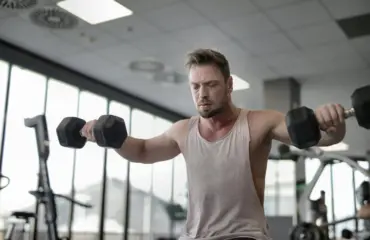
- Shoulder press. Hold the dumbbells at shoulder height, palms facing forward, then press them overhead until the arms are extended.
- Triceps extension. Hold a single dumbbell overhead, bend the elbows to lower it behind the head, then straighten the arms to press it back up.
- Chest fly. Lie back on a bench with the dumbbells above the chest and the arms almost straight, then open the arms out to the sides in a wide arc before bringing them back together.
- Dumbbell lunge. Hold the dumbbells at your sides or on the shoulders, step forward with one leg and bend both knees to roughly ninety degrees.
These six movements alone cover the whole body and form the backbone of most induction programmes. Pair the rack with professional weight benches so that pressing and fly work can be run without members carrying dumbbells across the floor.
Layout, storage and floor protection
Plan the dumbbell zone around the rack, not the other way round. Leave a clear working corridor in front of the rack so two members can train side by side, keep the heaviest weights at the end nearest the benches, and protect the surface underneath with heavy-duty rubber flooring rated for free-weight use. A dropped dumbbell on an unprotected screed is the fastest way to turn a floor repair into an unplanned budget line.
Frequently asked questions
Are dumbbells suitable for beginners as well as advanced members?
Yes. The load is chosen by the user, so the same rack serves an induction session and an advanced strength block. The important thing is that the weight is appropriate to the member’s level and that technique is correct, which is what prevents injury.
Hexagonal or round heads?
Hexagonal heads do not roll and are easier to control in a busy open-plan area. Round chromed heads sit better in a traditional strength room and are typically chosen for their durability and finish.
How many dumbbells does a commercial gym need?
That depends on the floor area, the number of simultaneous users and the programmes you run, which is why sets are specified case by case rather than sold as a fixed pack.
Specifying your dumbbell area
Light In Fitness has equipped more than 2,500 customers since 2013, from independent clubs to hotels, municipalities and rehabilitation centres. Tell us the surface available, the number of members and the training style you run, and we will put together the dumbbell set, rack and bench configuration to match. Request a quote for your project.