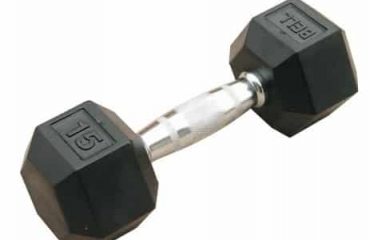
Free Weights vs Machines: Which Works Better in a Professional Gym?
Free weights or machines, which is more effective? Anyone who has spent time in a gym has heard the argument, and as an operator you have to settle it on paper before you settle it on the floor: the answer decides how much space you allocate, how much supervision you need and what you buy. The honest answer is that the two families do different jobs. This guide compares them on muscle recruitment, injury risk, range of motion and day-to-day management of a professional facility.
Free weights under the microscope
The fundamental difference between free weight work and machine work is that free weights recruit not only the prime movers but also the deep muscles, whose main role is to stabilise the joints. The second difference is balance: the body has to hold its own position, so the whole body contributes to the movement even when the target is a single region.
Free weight exercises fall into two groups. The first is compound movements, which engage a main muscle group plus several assisting ones. Take the barbell bench press on a flat bench: the chest is the prime mover, but pressing the bar also loads the triceps and the front deltoids, so a single exercise puts three groups to work, each to a different degree depending on the angle and the grip. Deadlifts, squats and rows belong to the same family. The second group targets a single muscle group, for example lying triceps extensions or alternating dumbbell curls.
What machines are designed for
Machines exist for a reason. Their priority is isolation and stability: the frame holds the body in place so the user can concentrate on loading one muscle region and on the tension in that region alone. A leg press, a leg extension or a preacher curl machine are typical examples.
It is often said that a squat on a machine works the same muscles as a barbell squat. The muscles are the same, but the work is not. In a barbell squat the spinal erectors and the abdominal wall work hard to control the trunk. On a guided machine the position is far more stable, so the user can handle more load with less demand on trunk control. That is a limitation for an experienced lifter and an advantage for a beginner, a hotel guest or a member training without supervision.
Where injuries are more likely
Injuries can happen anywhere, with free weights and on machines alike. What differs is the probability. It is higher on compound free weight movements, and the causes are consistent: poor technique and loads beyond the user’s current capacity. Details that get ignored are what turn a bad set into an injury that keeps a member away for months. Machines are not immune, since incorrect seat and lever settings and imprecise movement cause their share of problems, but on the balance of risk the machines win this round. For a facility that cannot staff its floor at all hours, that difference matters more than any training argument.
Range of motion and progression
On a machine the range of motion is bounded by the manufacturer’s settings and does not always allow a full stretch of the target muscle. With free weights the user sets the rules: the stance, the angle, the depth and the range are all chosen rather than imposed. Free weight training also costs more energy, because several muscle groups work at once. Set against that, machines keep improving, and a modern converging or plate-loaded machine follows the natural path of the movement far more closely than the equipment of twenty years ago.
Why competitive bodybuilders use machines so much
Videos of elite competitors show them spending a great deal of time on machines, which leads plenty of members to conclude that machines are the shortcut. The explanation is simpler than that. Athletes at the level of a Mr. Olympia line-up already have a fully developed muscular structure and are working on detail and shape rather than on building mass from scratch. Machines make that detail work easier. It is a stage-specific choice, not a general rule, and it is worth explaining to members who copy what they see online.
The mistakes beginners make
On the gym floor, strength, genetics and nutrition matter less than knowledge. New members should understand how an exercise is performed before they load it, and never neglect technique, which is where almost all avoidable injury comes from. They should not avoid free weights entirely at the start, nor confine themselves to machines. Building a body is a marathon, not a sprint. For an operator this translates into three concrete things: an induction session, clear instruction plates on the equipment, and a layout that keeps beginners in sight.
So which is better for your facility?
The most useful answer is to stop treating it as a contest. A professional facility mixes both, and the mix is what prevents plateaus and keeps sessions varied. What changes from one site to the next is the ratio. A commercial gym with a broad membership needs a full circuit of professional strength machines alongside a free weight zone with racks, weight benches and dumbbells. A hotel, a residence or a corporate gym with no permanent instructor leans towards machines. A strength-focused club or a cross-training box leans the other way. A rehabilitation centre uses guided and cable work almost exclusively at the start of a protocol.
Frequently asked questions
Can a small facility work with machines only?
Yes, and many unstaffed sites do exactly that, because guided equipment is the safest option when nobody is watching the floor. Adding even a small free weight area gives experienced members a reason to stay, provided the layout allows supervision.
How much floor area does a free weight zone need?
More than the equipment itself occupies, because racks and benches need clear working space and safe circulation around them. The figure depends on the equipment selected and on the room, and is calculated project by project.
Do machines suit experienced lifters?
They do, as a complement. Experienced users typically build a session around compound free weight work and use machines to add volume on a specific muscle group at the end of the session, or when returning from injury.
Specifying the right balance for your site
The right ratio of machines to free weights depends on your floor area, your membership and whether your floor is staffed. Send us those three things and we will propose a layout and a costed equipment list. Request a quote and our team will come back with a specification adapted to your facility.
À lire aussi sur le même thème
- 7 avantages de l’entraînement avec des haltères
- Free Weights or Machines: What Should Your Gym Floor Offer?
- Comment les kettlebells peuvent transformer votre routine d’entraînement en une séance dynamique
- Chin ups vs tractions : La différence, les avantages et les muscles travaillés
- Top 9 des minéraux pour rester en bonne santé, fort et en forme