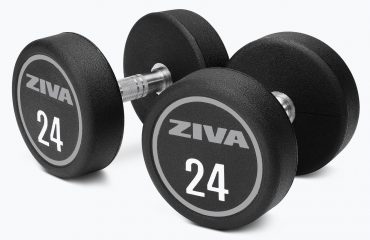
Free Weights or Machines: What Should Your Gym Floor Offer?
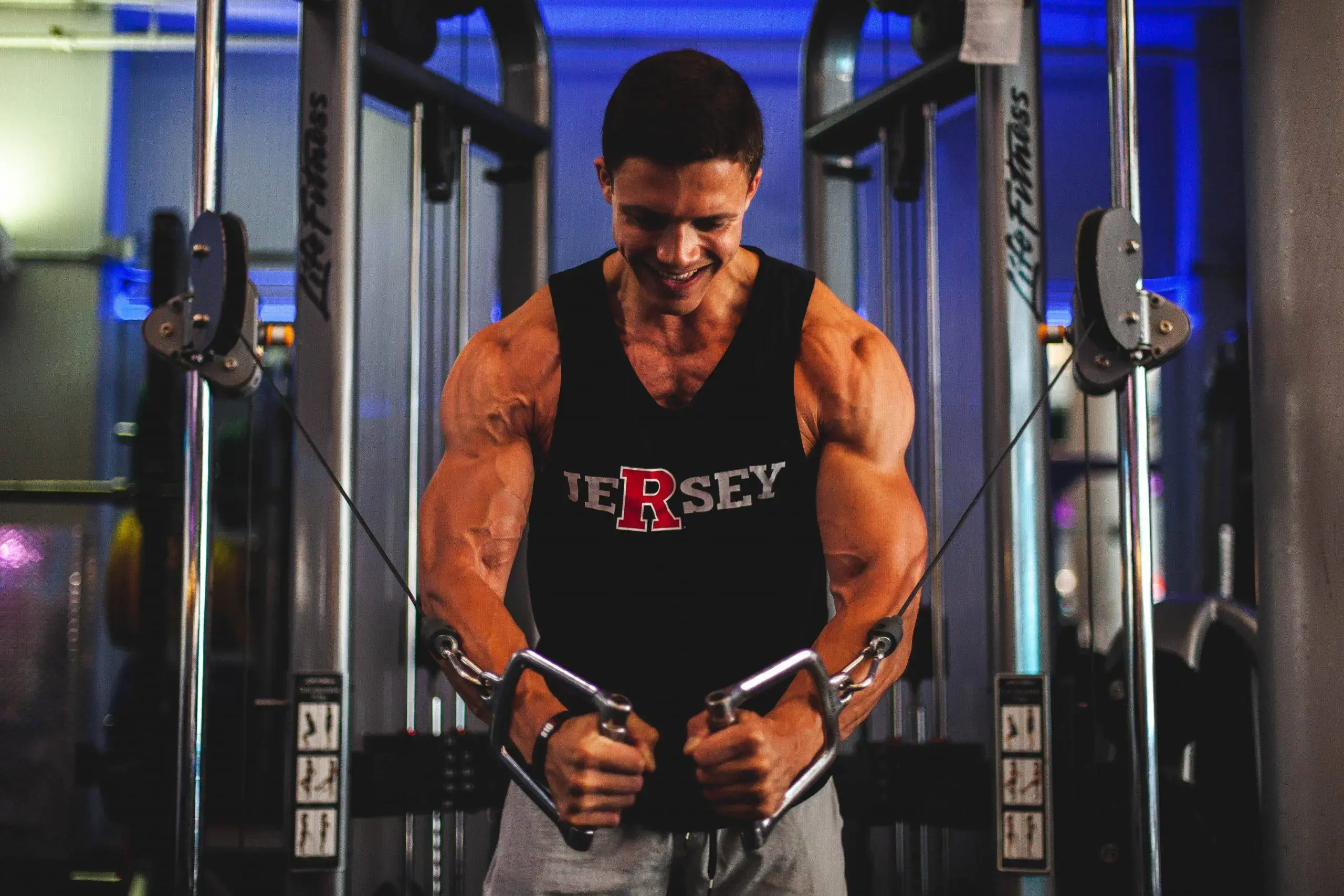
Free weights or machines: few questions come up more often when a gym, a hotel wellness suite or a municipal sports hall is being equipped. Both families of equipment have real strengths and real limits, and neither should be written out of a training plan or out of a floor plan. This guide looks at the debate from the point of view of the professional buyer who has to fill a room, not just a workout.
Free weights or machines: what actually decides the answer
Which exercises suit a given member depends above all on training goals and experience. With free weights, users can perform multi-joint movements that involve many muscle groups at once. That makes them an excellent choice for beginners and for anyone training for general physical condition. Multi-joint work also allows a much greater freedom of movement, since the barbell or the dumbbells can travel through different planes rather than along a single fixed path.
Multi-joint exercises are far harder to perform on machines, and on most of them they are simply not possible. Many machines isolate individual muscle groups, so those exercises do not significantly change overall strength or functionality. That isolation can still bring positive effects for advanced trainees and bodybuilders. The best results come from combining free weight exercises with accessory work performed on machines.
Which is better in most cases?
For most people, and particularly for beginners, free weights will be considerably better. They allow general movements such as deadlifts or bench presses. These recruit a far larger number of muscles and increase strength within a given movement pattern. At the start of a training journey, that is what develops muscle mass and strength most efficiently. Nobody has to train exclusively with free weights, but they should make up a significant part of the plan.
Free weight exercises also force the body to stabilise itself, which puts the deep muscles to work. The result is not only a heavier lift, but a benefit that carries over into everyday movement.
Training for mass: machines or free weights?
Both free weights and machines can push muscles to grow. However, the global exercises performed with free weights recruit far more muscle at once.
Building muscle mass using machines alone is close to impossible. A chest machine, for example, will engage the chest muscles only, whereas pressing a barbell also engages the shoulders and the triceps. That is why mass is much easier to build with free weights.
Advantages of training with free weights
Free weight training recruits many muscle groups at the same time, which allows practically the whole body to be developed. A varied range of exercises, such as:
- squats, deadlifts, dumbbell presses or pull-ups
makes targeted work on different muscle groups possible. This matters especially for members who want to build overall strength and muscle mass.
Free weight exercises demand greater stability, which translates into better balance and coordination. It is also much easier to keep the natural path of a movement when training with free weights.
Drawbacks of free weights
Despite the many advantages, free weights also have downsides that have to be taken into account. Strength training with free weights unfortunately requires correct technique. A beginner may not know how to carry the load properly through each individual exercise, and poor technique can lead to injury.
Beginners may also struggle to keep their balance at first: as soon as a load is picked up, the centre of gravity shifts considerably, which is not natural for the body. That can cause a good deal of trouble, especially the first time an exercise is attempted. For an operator, this is an argument for supervision, for clear circulation space around lifting areas and for a properly specified rack or power cage rather than an improvised setup.
Advantages of training on machines
One of the biggest advantages of machine training is the stability it gives the body. Machines often use mechanisms that limit movement through dangerous ranges, which reduces the risk of injury, particularly for beginners. Gym machines are generally easy to use and demand no great knowledge or experience of strength training.
When using them, there is no need to think too hard about technique, since the movement path is predetermined. For people recovering from injury, dealing with health problems or living with limited mobility, machine training can be the safer option, and it can also speed up recovery. In a mixed-membership club, that accessibility is often what keeps a whole segment of users on the gym floor.
Drawbacks of gym machines
Machine training has its own limits. The main one is restricted functionality. Machines generally allow isolation work on specific muscle groups, but they do not engage the stabilising muscles and they do not develop coordination and stabilisation to the same extent as free weights. That can lead to uneven muscular development, and it is not the best idea for members trying to build functional strength.
They are also far less available than free weights: even when a gym owns a specific machine, it is frequently occupied. Machine count, not machine quality, is often what creates queues at peak hours, which is a planning question as much as an equipment question.
Planning both zones in a professional facility
For an operator, the practical conclusion is that the two zones support each other. A free weight area needs floor protection, storage discipline and enough clearance for barbell work, with Olympic barbells, benches and racks grouped together. A machine area needs circulation between stations and a logical order of movements so that members can follow a circuit without crossing the room. Choosing professional strength training machines that match the profile of your membership is what makes the balance work in practice.
Frequently asked questions
Which is better, free weights or machines?
It depends mainly on training goals and experience. Free weights allow multi-joint exercises involving many muscle groups and give greater freedom of movement, which suits beginners and general conditioning. Machines isolate individual muscle groups, which benefits advanced trainees and bodybuilders. The best results come from combining the two.
Which is better in most cases?
For most people, especially beginners, free weights are better. They allow general movements such as deadlifts and bench presses, recruit far more muscle and build strength within a movement pattern. Free weights do not have to be the only tool, but they should form a significant part of the plan.
Machines or free weights for building mass?
Both stimulate growth, but global free weight exercises recruit far more muscle. Building mass with machines alone is practically impossible: a chest machine engages the chest, while a barbell press also engages the shoulders and triceps.
So, machines or free weights?
There is no single answer. What is certain is that limiting a facility to one option limits the development of the people training in it. Once the advantages and drawbacks of both are understood, exercises, and equipment, can be selected so that they complement each other.
Equipping your gym floor
Light In Fitness has been supplying professional fitness equipment to gyms, clubs, hotels, local authorities and training centres since 2013. Tell us the surface area you have, the profile of your members and the budget you are working with, and we will put together a balanced free weight and machine layout. Request a quote and we will come back to you with a costed proposal.
À lire aussi sur le même thème
- Comment les kettlebells peuvent transformer votre routine d’entraînement en une séance dynamique
- Comment maximiser votre entraînement avec MEDICINE BALL : les astuces ultimes
- The Black ZIVA 20 kg Olympic Barbell: A Professional Bar Reviewed
- Loss of Strength During Training: What to Do When Members Stall
- Quels sont les meilleurs exercices pour perdre du poids ?