Rubber Tiles for Gardens and Pool Surrounds: The Complete Guide
In brief: Rubber tiles for landscaped areas and pool surrounds deliver a slip-resistant, free-draining and impact-absorbing surface. Recommended thickness: 25-40 mm around pools and relaxation areas, 50 mm minimum for play and sports zones. Specify SBR or EPDM rubber, tested to EN 1177 wherever the area is a children’s playground.
Outdoor surfacing is one of the few line items in a leisure project that gets judged twice: once by the person signing the purchase order, and again by the first guest who walks across it barefoot and dripping wet. Hotel groups, campsite and holiday village operators, municipalities, social landlords, schools and sports clubs all end up asking the same question when they refurbish a pool deck or an outdoor activity area: which surface stays safe when wet, drains on its own, absorbs a fall and still looks presentable after ten seasons? Rubber tiles are one of the very few answers that tick all four boxes. This guide sets out what they are, which family to specify, how thick they need to be, how they are laid and what maintenance actually costs you in labour.
What rubber tiles for gardens and pool surrounds are
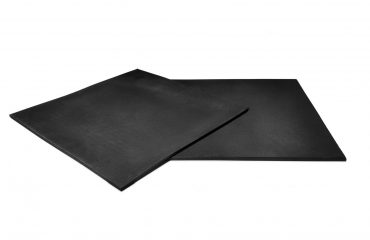
Rubber tiles are modular outdoor floor units produced from recycled rubber granulate. They are engineered for permanent exposure: rain, frost, UV, chlorinated splash-out and heavy foot traffic. Two properties make them different from concrete pavers, timber decking or ceramic tiles. First, the surface keeps its grip when it is wet, which is exactly the condition in which pool surrounds cause accidents. Second, the material deforms under impact instead of transmitting it, which is what turns a fall from a play structure into a bruise rather than an injury.
Because the surface is modular, a damaged unit is lifted and replaced on its own rather than triggering a full resurfacing. For an operator running twenty sites, that single characteristic usually decides the specification: the maintenance budget becomes predictable and no zone has to be closed for a week.
Using recycled rubber also matters in public tenders. A growing share of municipal and social housing specifications now award points for recycled content, and rubber tiles answer that requirement without any trade-off on performance.
Why professional buyers specify rubber outdoors
Slip resistance where it counts
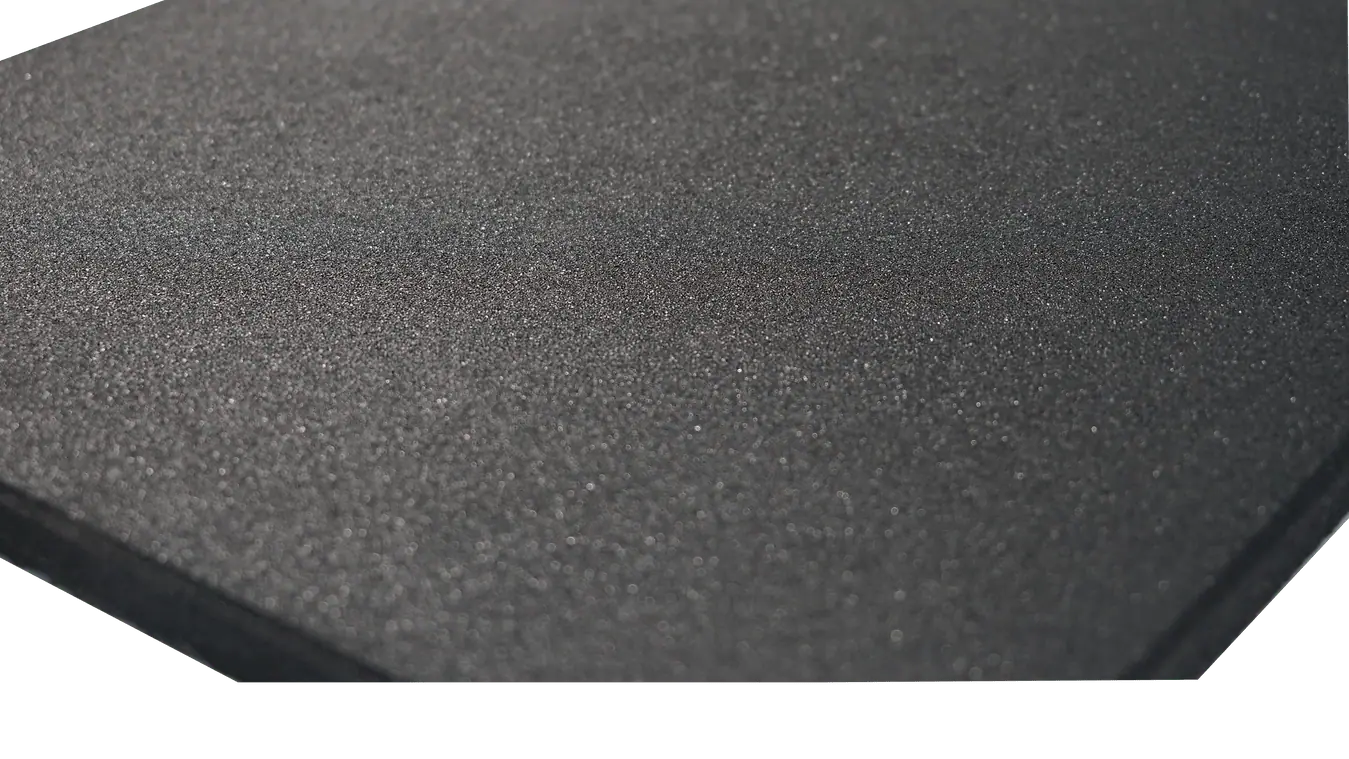
The textured rubber surface substantially reduces slips and falls, and it does so in wet conditions, not only in the showroom. Around a pool, on a splash deck, or on the approach to changing rooms, that is the whole point of the specification. Barefoot users get grip; users in wet sandals get grip; the surface does not turn into a skating rink after a summer storm.
Weather resistance
Rubber tiles are built to take UV, heat, frost and moisture without fading or breaking down. That is a meaningful difference from painted concrete or timber, both of which need recoating or treatment on a cycle. Outdoors, a surface that does not need an annual intervention is a surface that does not need a contractor booked every spring.
Service life
Rubber is an extremely durable material and stands up to intensive use and daily wear. Depending on traffic and upkeep, an outdoor rubber tile installation typically remains in service for ten to twenty years, and often longer. Spread over that horizon, the cost per square metre per year is what makes the business case, not the invoice on day one.
Appearance and zoning
Tiles are available in a range of colours, patterns and textures, so a single surfacing system can mark out a toddler zone, a circulation route and a sun deck without changing material. For hotels and holiday villages, that is a design tool as much as a safety one. A coloured EPDM finish is the option to specify when colour stability under strong sun is part of the brief.
Speed of installation
Tiles can generally be laid over an existing surface such as concrete or a prepared ground, without major groundworks. Many formats interlock, which cuts installation time and, for a seasonal business, cuts the number of days the area is out of service. On a hotel or campsite programme that has to fit between two booking peaks, that is often the deciding argument.
The four families of outdoor rubber tile
1. Impact-attenuating tiles for play areas
Designed for children’s play areas. They provide a soft, energy-absorbing surface that reduces the risk of injury in a fall, and they are frequently supplied in colours so a playground can be laid out with graphic patterns. This is the family to specify wherever there is a critical fall height to cover.
2. Pool surround tiles
Purpose-made for the area around a pool. They combine a slip-resistant, water-resistant surface with resistance to the chemicals used in pool water treatment. For a facility with public access this is not a comfort feature, it is a liability question.
3. Terrace and relaxation area tiles
The right choice for terraces and outdoor lounging areas. They are comfortable to walk on barefoot, reduce the risk of slipping and resist UV, so the colour does not wash out over successive summers.
4. General landscaping tiles
For paths, activity zones and rest areas in gardens and green spaces. They are slip-resistant and wear-resistant, and they are water-permeable, so rainwater drains through the surface into the ground below instead of pooling or being routed into a drainage system.
Choosing the right thickness
Thickness is the specification detail most often got wrong, and it is the one that determines whether the installation is compliant. As a working rule: 25 mm for a relaxation area, 40 mm for a light sports zone, and 50 mm and above for a children’s play area, where the thickness is dictated by the critical fall height of the equipment installed. For pool surrounds and adjacent relaxation zones, the 25-40 mm band in drainage-capable rubber is the standard specification.
Note that the thickness for a play area is never a matter of preference. It is derived from the fall height of the equipment and verified by the impact attenuation test, which is why the tender documents should state the fall height rather than a thickness.
Standards to quote in your specification
For children’s play areas, two standards apply and they must not be confused. EN 1176-1 covers the playground equipment itself: the structures, the platforms, the guardrails. EN 1177 covers the impact-attenuating surfacing underneath it and defines how the critical fall height of that surface is determined. A tile is certified to EN 1177; it is not certified to EN 1176-1, and a specification that mixes the two will be challenged at handover.
For pool surrounds and general landscaping, no playground standard applies, and the criteria are slip resistance, drainage and chemical resistance. Where the surfacing is installed inside a building open to the public, national fire performance requirements apply to the floor covering and the reaction-to-fire class has to be checked against the local building regulation for the country of installation.
Installation
Laying outdoor rubber tiles is straightforward, and a competent groundworks team handles it without specialist plant. The sequence is always the same.
1. Prepare the substrate. The surface has to be clean, dry and level. Clear debris, level the ground and, where required, lay a bed of sand or fine gravel. A clean, level concrete slab or a stabilised sand bed are both valid substrates.
2. Lay the tiles. Start with the first tile in a corner of the area and work outwards, aligning each unit carefully. Interlocking systems are seated with a rubber mallet so the joints close fully.
3. Cut the perimeter. Edge tiles are cut to follow the shape of the area with a utility knife or a hacksaw blade.
4. Finish and fix. Once everything is down, check that the tiles are properly seated and that there are no gaps between them. Depending on the system, fine sand or a purpose-made exterior polyurethane adhesive is used to secure the field.
Maintenance
Rubber tiles need very little upkeep, which is the point. Four rules cover it:
Clean the tiles regularly with water and a mild detergent to remove dirt and staining. Avoid aggressive chemicals and abrasive cleaners, which damage the tile surface. Treat grease or oil marks immediately by dusting them with talc or bicarbonate of soda and then brushing gently. Inspect the field periodically and replace any tile that is damaged or worn.
For a playground, add one item: the surfacing inspection is part of the routine playground inspection regime, and any tile that has lifted, split or lost thickness is replaced before the next opening, because the fall protection is only as good as the worst tile in the impact area.
Frequently asked questions
Which rubber tiles should be used around a pool?
Free-draining rubber tiles of 25-40 mm, slip-resistant and resistant to chlorine. A coloured EPDM finish is preferred for appearance and UV durability.
What thickness of rubber tile for a landscaped area?
25 mm for a relaxation area, 40 mm for a light sports zone, 50 mm and above for a children’s play area, where the thickness follows the critical fall height under EN 1177.
How are outdoor rubber tiles laid?
On a clean, level concrete slab, or on a bed of stabilised sand. Some tiles interlock; others are bonded with a purpose-made exterior polyurethane adhesive.
How do you clean rubber tiles?
With warm water and a mild detergent. Brush or mop the surface gently to lift dirt and stains, rinse thoroughly with clean water and let it air dry.
Are rubber tiles UV-resistant?
Most rubber tiles for landscaping and pool surrounds are UV-resistant and keep their original colour even after long exposure to strong sun.
Can rubber tiles be laid on grass?
Some rubber tiles can be laid directly on grass. The grass has to be cut short and the ground has to be level before the tiles go down.
Are rubber tiles water-permeable?
Some rubber tiles are water-permeable, meaning water passes through the tile and reaches the ground beneath. In landscaped areas that is an advantage, because rainwater feeds the planting instead of being collected and drained away.
How long do rubber tiles last?
Rubber tiles are built to last. Depending on use and maintenance, expect ten to twenty years of service, and often more.
Are rubber tiles environmentally sound?
Yes. They are manufactured from recycled rubber, which diverts rubber waste from disposal and reduces demand on virgin material.
Specifying with Light In Fitness
Rubber tiles solve a problem that most outdoor surfaces solve only partially: grip when wet, drainage, impact attenuation and a service life long enough to justify the investment. The specification work comes down to three decisions. Which family fits the zone. Which thickness the use and the fall height require. Which finish holds its colour where you are installing it.
Light In Fitness has been supplying professional sports and leisure equipment since 2013 and manufactures and distributes the corresponding surfaces. You can browse the full rubber gym flooring tiles range, the dedicated pool surfacing range and the playground surfacing range for impact-attenuating applications. Send us the zones, the surface areas and, for play areas, the fall heights, and we will come back with a costed specification: request a quote.
Réalisations documentées
- Dalles et sols sportifs : livraisons documentées – plusieurs chantiers
- Sol sportif extérieur, square Georges-Vallerey – Taverny (95)
À lire aussi sur le même thème
- Comment Aménager un espace de loisirs pour adolescents : Guide complet pour créer une aire de jeux et de sport
- Aquabikes Waterflex et Piscines Zodiac avec Light In Fitness : La Synergie Parfaite pour un Entraînement Aquatique Efficace
- How to Protect Your Floor Effectively with Rubber Tiles
- Sport Matériel chez Light in Fitness : Équipez-vous pour la Performance et le Bien-être