Why Install an Obstacle Course in Your Playground?
Un parcours d'obstacles sollicite simultanément la coordination, l'équilibre, la force et la prise de décision chez l'enfant. Ces qualités se développent difficilement sur des jeux à fonction unique. Les modules relèvent de la série EN 1176 et imposent un sol de réception calibré sur la hauteur de chute libre.
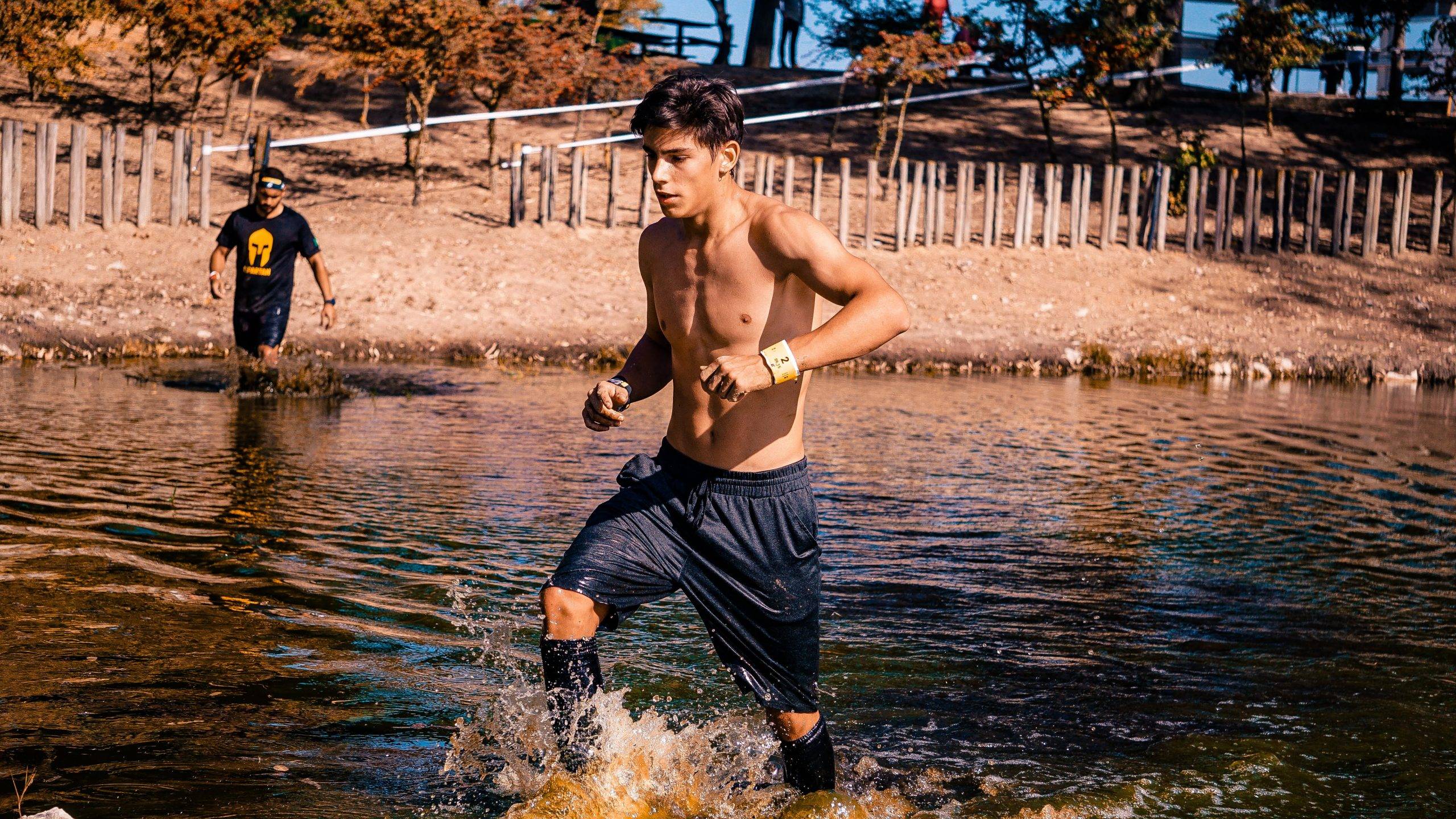
Outdoor obstacle courses are great fun and they support child development on several levels at the same time. Rolling, jumping over obstacles, crawling, gripping and climbing all improve general physical condition and fitness. They build motor skills, both fine and gross, along with agility, speed, endurance and strength, and they sharpen hand-eye coordination and balance. For a school, a nursery, a municipality or a campsite, that combination is the whole argument: one installation covers a range of physical qualities that single-function play equipment cannot reach.
The benefits go beyond the physical
Getting through an obstacle course does not only develop physical and sensorimotor skills. It also trains memory and problem solving. A child has to read the sequence, remember the route, judge a gap and choose a way through, which is a cognitive task as much as a physical one. Those qualities develop poorly on play equipment that offers a single fixed function, and that is why an obstacle course changes the character of a play area rather than simply adding to it.
Where an obstacle course earns its place
A challenge in the form of an obstacle course makes nursery sessions and primary school physical education noticeably more attractive. It also suits practically any outdoor play area, giving children extra excitement and a different kind of experience from a slide or a swing set. In practice the same layout answers several very different briefs: a school looking for structured PE content outdoors, a municipality upgrading a neighbourhood play area, a holiday park that needs something for the older children, a residential developer adding an outdoor amenity.
The full equipment range sits in the playground equipment category, and the ready-built circuits in ninja warrior and obstacle rigs.
Not only for children
Alongside the sets designed for play areas, our range also covers the equipment needed to create a multifunctional outdoor gym and an adult fitness trail. The two are frequently specified together: a children’s obstacle course on one side of the path, adult stations on the other, so that families use the site at the same time instead of taking turns. Adult outdoor equipment is a different specification, covered by EN 16630, and it is grouped in the outdoor fitness trail range.
Which skills each type of module develops
Our product range makes it straightforward to design an agility obstacle course that supports the whole physical development of the child. The modules break down into three families.
Jumping and general fitness
- hurdle elements
- bars
- weaving and slalom elements
Coordination and balance
- balance beams
- moving bridges
- stepping posts
- hurdles to jump
- horizontal nets
Climbing
- climbing ladders
- vertical nets
- climbing walls
- climbing posts and structures
A well-built course takes at least one module from each family. A circuit made only of climbing elements trains grip and upper body but leaves balance and rhythm untouched, and a circuit made only of hurdles becomes repetitive within a few minutes.
How to design an obstacle course for children
Start from a proven configuration
Our play area range includes ready-to-install obstacle courses in a variety of layouts, configurations and equipment counts:
- Mini sets with 4 obstacles, the right answer for small, compact play areas.
- Multi-element obstacle courses laid out on a circular, rectangular or linear plan. The individual units are either spaced at suitable intervals or connected to one another, forming a continuous circuit.
The individual modules are listed under obstacle trail modules, which is the page to work from when you are building a course station by station.
Or plan a course to your own idea
Working from our range of individual units, weaving elements, balance beams, hurdles, climbing walls and nets, moving bridges, you can design your own combination of obstacles, matched to the dimensions of the play area and to the age and physical condition of its young users. That last point matters more than the equipment list: a course scaled for a nine-year-old is unusable and unsafe for a three-year-old, and a site that serves both age groups needs either two zones or modules with a genuinely wide age range.
The standards that apply
Children’s outdoor play equipment falls under the EN 1176 series, and the equipment itself is covered by EN 1176-1. That is the reference for structural strength, entrapment, protrusions and the free height of fall.
The surfacing is a separate requirement covered by EN 1177, which sets the impact attenuation of the surface. The two must be read together: the critical fall height of the surfacing has to be at least the free height of fall of the equipment installed above it. This is where projects most often go wrong, an approved module dropped onto a surface that was never rated for its fall height. Our playground surfacing range covers the certified options.
One point to be clear about: EN 16630 covers permanent outdoor fitness equipment for adults and must never be applied to children’s play equipment, and EN 1176-1 must never be used to justify an adult station. Where a site mixes both, the two zones are specified separately.
Frequently asked questions
How much space does an obstacle course need?
It depends on the modules chosen and on the impact area each one requires under EN 1176-1, so there is no single figure. Draw the module list first, add the manufacturer’s impact areas, and the required surface follows. We size the area from the site plan at the quotation stage.
Can an obstacle course be installed on grass?
Only where the free height of fall of every module is low enough for the surface to satisfy EN 1177. Above that threshold an impact-attenuating surface is required. Check the free height of fall of each module against the critical fall height of the surface before you commit to a ground build-up.
Is an obstacle course suitable for a nursery age group?
Yes, provided the modules are specified for that age range. Module heights, gaps and grip diameters differ significantly between age groups, and a course intended for the youngest users is a different product from a school-age circuit, not the same one installed lower.
Can adults use the same course?
No. Children’s play equipment is designed and certified for children’s loads and body dimensions. If the site is meant for adults as well, adult stations to EN 16630 are installed as a separate zone alongside the play area.
Planning your obstacle course
Send us the dimensions of the area, the age range of the users and the existing ground build-up, and we will come back with a layout, the matching surfacing specification and a costed equipment list. Request a quote and we will design the course around your site rather than around a standard set.
Sources et références
- Décret n° 96-1136 du 18 décembre 1996 – prescriptions de sécurité relatives aux aires collectives de jeux (Légifrance)
- NF EN 1176-1 – Équipements et sols d’aires de jeux, partie 1 : exigences de sécurité et méthodes d’essai générales (AFNOR)
- NF EN 1177 – revêtements de surface amortissants : détermination de la hauteur de chute critique (AFNOR)