Pilates Reformer Equipment: How to Equip a Studio
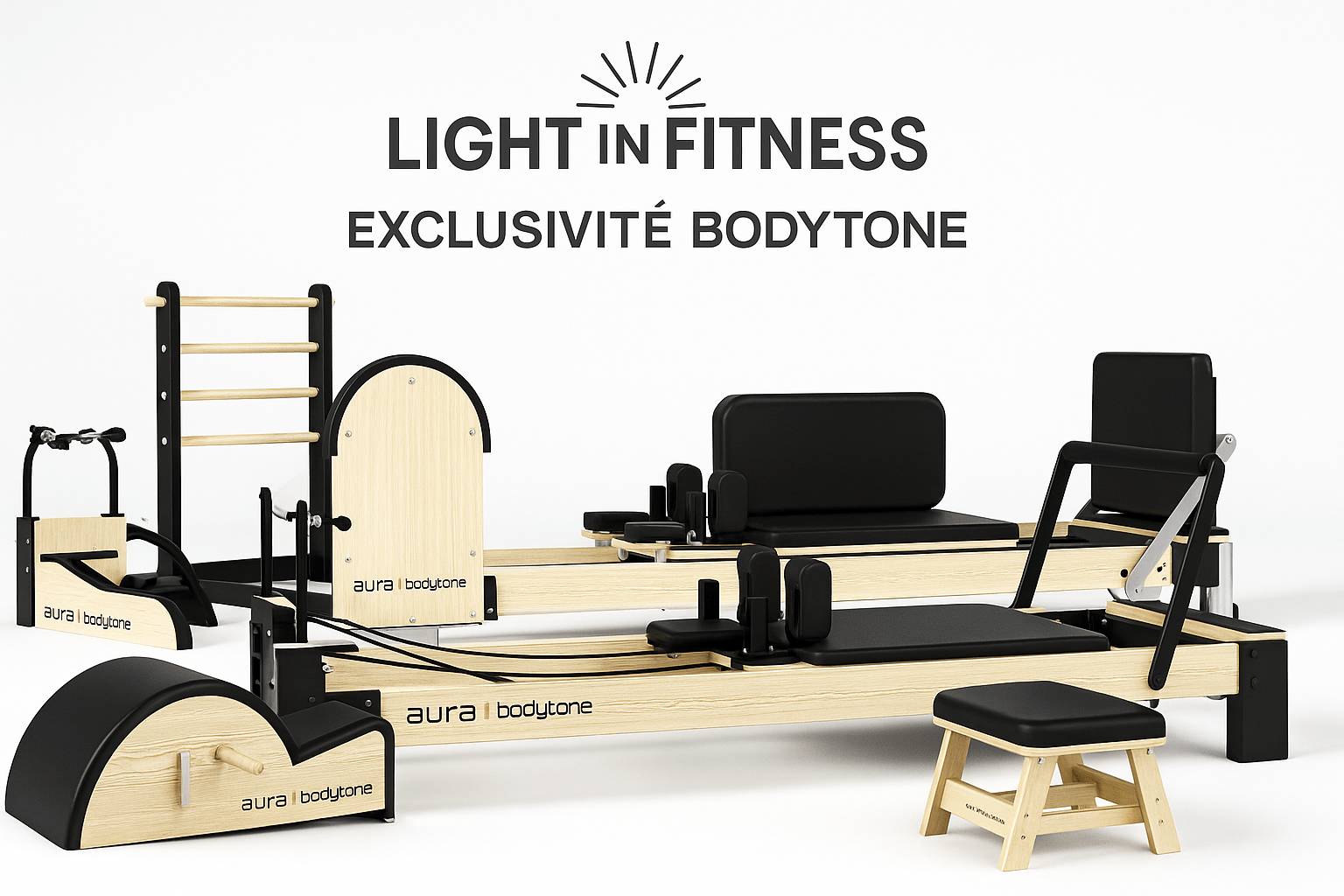
Equipping a Pilates studio is a different exercise from equipping a gym floor. The apparatus is fewer in number, far more specific in what each piece does, and much more closely tied to how you intend to teach. Get the mix right and a single room supports private work, duets and mat classes without ever feeling crowded. Get it wrong and you own an expensive piece of apparatus that sits unused between two reformers. This guide covers the main apparatus families, the small equipment that surrounds them, and the criteria that actually matter when you specify.
The three core apparatus
Three families dominate a studio: the reformer, the cadillac and the chair. Each answers a different need, which is why they are usually installed alongside one another rather than as alternatives. Understanding what separates them is the fastest way to decide what your room needs first.
Why the reformer sits at the centre of the studio
The reformer is the piece that defines the space. It is worked seated, lying and standing, and its spring-based resistance is adjustable across a wide range, which is what allows one machine to serve a first-time client and an advanced practitioner in consecutive appointments. The carriage loads the deep stabilising musculature while keeping the joints supported, so it delivers strengthening, lengthening and mobility work in a single session. That versatility is also why the reformer is the machine to buy in multiples: two or three units turn a private studio into a duet or small-group studio without any change to the room itself. Our professional reformer range is built for continuous studio use rather than occasional sessions.
What the cadillac and the chair add
The cadillac is the most complete apparatus of the three. Its removable bars and straps open up strength, coordination and joint mobility work across a very large repertoire of positions, and it is the piece instructors reach for when a client needs detailed technical work or a graduated return after injury. The chair takes the opposite approach: compact, highly manoeuvrable, and focused on the lower body and on trunk control. Its small footprint hides a wide movement vocabulary, which makes it particularly valuable for balance and stability work and for clients who are ready to raise the demand of their sessions.
Barrels and arcs
Barrels and arcs answer a narrower brief, and they answer it very well. Their curved profile follows the line of the spine, which lets a client work into extension and into deep stretch with the trunk fully supported. Used regularly they give access to targeted work for the back, the rib cage and the trunk, and they make breathing work far easier to teach because the thorax is opened rather than compressed. They are an ergonomics-led design, and they have earned their place in specialist studios and with experienced practitioners for exactly that reason.
Small apparatus and studio accessories
The large apparatus sets the character of the studio, but the small equipment determines how much variety an instructor can build into a class. It refines individual movements, changes the angle of loading and adds progression without adding floor space. A working studio kit usually includes:
- Resistance bands to build load progressively and to scale an exercise mid-class.
- Balls in several sizes, for proprioceptive work and for supporting the back.
- Foam rollers for self-massage and recovery work.
- Magic circles to load the inner thigh and the arms.
- Light hand weights to add a controlled strength demand.
Our Pilates studio accessories cover this kit for professional use, which matters more than it sounds: accessories in a commercial studio are handled dozens of times a day by different clients.
Do not treat the mat as an afterthought
The mat is the most overlooked line on most equipment schedules, and it has a direct effect on the quality of a session. Floor work makes up a large share of teaching time, and the mat is what provides stability underfoot, comfort at the spine and pelvis, and joint protection during dynamic transitions. A mat designed for the method rather than a generic exercise mat also helps clients hold their concentration and execute more precisely; some carry alignment markings that make correct positioning easier to find and reduce the risk of poor habits setting in. For a commercial studio, hygiene and cleanability matter as much as thickness, because the surface is in contact with a different client every hour. The Pilates and gymnastics mat range is specified for that duty cycle.
How to specify for your studio
Before committing to a schedule, work through four questions in order. How much floor area do you have once circulation around each machine is allowed for? How many hours a day will each piece be in use? What do you actually teach, and what do you intend to teach in two years? And what is your budget envelope? Frequency of use is the criterion buyers most often underestimate: apparatus that is fine for a few sessions a week behaves very differently under continuous studio load, and durability is where the difference shows up. Robust, adjustable apparatus costs more at the outset and less across its life.
Frequently asked questions
Why is the reformer considered central to Pilates practice?
Because one machine covers seated, lying and standing work with spring resistance that adjusts across a very wide range. It engages the deep stabilising muscles while supporting the joints, so it combines strengthening, stretching and mobility in a single session and suits every level of client.
What do the cadillac and the chair bring that the reformer does not?
The cadillac offers the largest repertoire of the three thanks to its removable bars and straps, and it is the apparatus of choice for detailed technical work and for graduated return after injury. The chair is compact and targets the lower body and trunk control, making it the strongest option for balance and stability work in a small footprint.
Is a Pilates-specific mat really worth it?
Yes, for any studio teaching floor work regularly. A dedicated mat gives better stability, comfort and joint protection than a general exercise mat, and alignment markings help clients position themselves correctly, which reduces the risk of injury developing over time.
Which apparatus should a new studio buy first?
Reformers, and more than one if the room allows. They carry the widest range of teaching and are the pieces that let you sell private, duet and small-group sessions from the same room.
Building your equipment schedule
Tell us the dimensions of the room, how you teach and how many hours a day the apparatus will be working, and we will put together a costed schedule with a layout that leaves proper circulation around every machine. Request a quote and our team will come back with apparatus options and delivery arrangements for your market.
À lire aussi sur le même thème
- How to Design, Lay Out and Equip a Premium Pilates Reformer Studio
- Boostez votre flexibilité avec ces 8 postures de yoga (dos, hanches, épaules)
- Boutique Pilates Studio Specification: Reformer, Cadillac, Wunda Chair and Barrel
- Pilates reformers and studio equipment: Light In Fitness compared with Balanced Body