Boutique Pilates Studio Specification: Reformer, Cadillac, Wunda Chair and Barrel
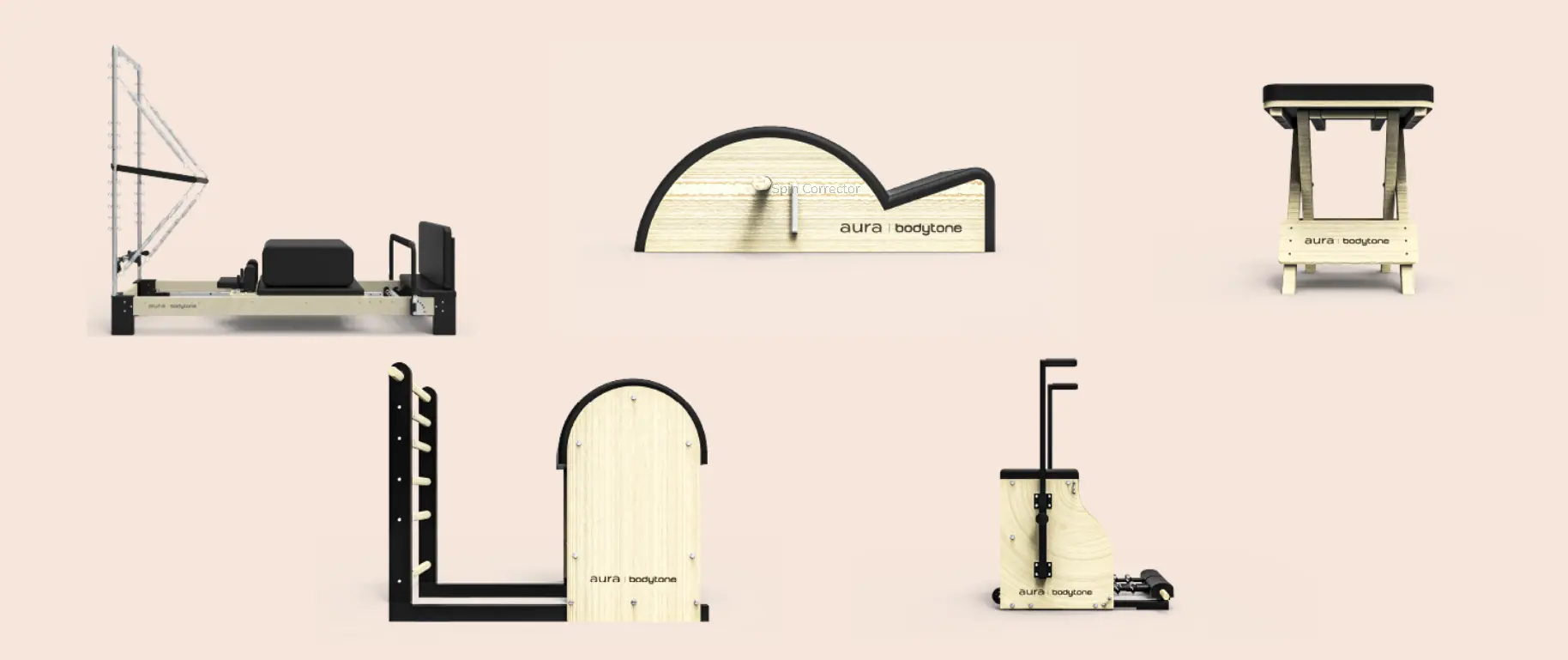
Equipping a boutique Pilates studio means specifying four apparatus correctly: the reformer, which carries most of the method and is chosen on carriage silence, fleet homogeneity and frame quality; the cadillac for individual work and duets; and the wunda chair and ladder barrel to complete and diversify. Budget 20,000–35,000 EUR excluding VAT for an intimate studio and 45,000–80,000 EUR for a group-class studio, and plan 90 cm between reformers with 1.5 m at the carriage end. This specification covers the apparatus criteria, layouts, budgets and the capacity arithmetic that decides profitability.
Three studio profiles, one technical standard
- Independent boutique studio: 60–150 m2, 4–12 reformers, premium positioning, group classes and duets.
- Chain studio: 150–300 m2, 10–18 reformers, standardised formats.
- Integrated Pilates space: physiotherapy practice, premium club or hotel — 30–80 m2, 1–6 mixed apparatus.
All three share the same apparatus requirements; what changes is the equipment mix and layout. If you are still at the business-model stage, start with our guide to opening a reformer Pilates studio.
Apparatus 1: the reformer (3,500–8,000 EUR excl. VAT per unit)
The central apparatus — a sprung carriage on rails with straps and an adjustable footbar. Variants include the classic studio reformer, the reformer with integrated tower, the rehabilitation reformer with raised carriage, and jumpboard-equipped units for supine cardio work.
What separates professional from consumer models:
- Carriage silence: quality bearings on ground rails. In a group class this is the first thing clients perceive, before comfort.
- Calibrated, colour-coded springs — ideally five — for legible progression.
- Multi-position footbar, adjustable in height and depth.
- Hardwood or anodised aluminium frame: light structures and fibreboard do not survive collective use.
- Length of 240–250 cm to serve all statures at full range.
- CE marking and reference to the EN ISO 20957 series for stationary training equipment.
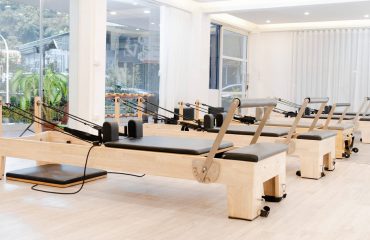
For group classes: 6–12 strictly identical reformers, 90 cm between machines, 1.5 m clear at the carriage end for circulation and standing work.
Apparatus 2: the cadillac (3,000–7,000 EUR excl. VAT)
A raised table inside a steel frame with bars, multiple springs, trapeze, straps and rollers — the most versatile apparatus of the method, with hundreds of exercises. Check tube section and weld quality (folding entry-level models are unsuitable professionally), an accessible table height, high-density padding, interchangeable springs on quality carabiners, and a height-adjustable trapeze. It serves one-to-one sessions, duets and targeted rehabilitation — not group classes.
Apparatus 3: the wunda chair (1,500–3,500 EUR excl. VAT)
A sprung-pedal chair with a small footprint and high versatility, usable in group classes alternating with reformers. Check that the pedal returns smoothly without friction, at least four spring positions per side, optional handles for standing work, and a non-slip seat surface — clients stand on it.
Apparatus 4: the ladder barrel and small barrels (800–2,500 EUR excl. VAT)
An arched barrel paired with a ladder, dedicated to spinal mobility, back extension and deep core work; the step barrel and spine corrector are its compact versions. Specify solid wood or a robust wood-metal build, a ladder adjustable in distance, dense padding and seamless welded upholstery.
The supporting equipment
- Reformer-with-tower units for compact studios; jumpboards for plyometric work.
- Small equipment: resistance rings, rollers, balls, bands, blocks.
- Flooring: aesthetics and comfort over heavy impact absorption — wood-effect rubber tiles or thin rubber rolls suit the positioning.
- Full-height wall mirrors (2.4 m minimum) and changing rooms with showers, expected at boutique price points.
Three reference configurations
| Configuration | Area | Equipment | Budget (EUR excl. VAT) |
|---|---|---|---|
| A — Intimate studio, one instructor | 40–70 m2 | 2 reformers, 1 cadillac, 1 wunda chair, 1 ladder barrel, small equipment | 20,000–35,000 |
| B — Boutique group-class studio | 80–150 m2 | 6–10 identical reformers, 2 wunda chairs, 1 cadillac, 1 ladder barrel | 45,000–80,000 |
| C — Multi-room studio | 150–300 m2 | 12–18 reformers, 3–4 wunda chairs, 2 cadillacs, 2 barrels, matwork zone | 100,000–180,000 |
Add fit-out works, flooring, mirrors, changing rooms, reception furniture, booking software and launch costs on top. All figures are project estimates.
The capacity model most business plans get wrong
Boutique Pilates commands high revenue per client — typically 25–40 EUR per single session and 180–280 EUR per month for unlimited memberships depending on the city and positioning. What caps the model is not price but physical capacity.
Worked example on an 8-reformer studio running 40 classes a week at 75 percent fill:
- Attendances: 8 x 40 x 0.75 = 240 per week, roughly 1,040 per month.
- Corresponding monthly revenue: 26,000–42,000 EUR depending on the session price.
- Active members supported: 240 if they attend once a week, 160 at one and a half times, 120 at twice a week.
This last line is the one most forecasts misjudge: a 400-member file on 8 reformers means one visit a fortnight — and nobody pays a premium membership for that. Growth comes from adding time slots or reformers, not from recruitment alone.
Pilates in rehabilitation settings
Machine Pilates is widely used in physiotherapy and rehabilitation for post-operative work, spinal conditions and return to activity. Three additions apply: a rehabilitation reformer with raised carriage to ease patient transfer, step-free accessible routes where patients include wheelchair users, and fine spring progressions documented for clinical follow-up.
Frequently asked questions
How many reformers can I fit in my floor area?
Count 5–6 m2 per reformer once the 90 cm side spacing, 1.5 m carriage-end clearance and circulation are included. An 80 m2 class room therefore holds 8–10 reformers plus an instructor lane — not the 14 a naive footprint calculation suggests.
Do all reformers in a class need to be identical?
Yes. Different spring calibrations or carriage feels between machines break the flow of a guided class and generate client complaints. Buy the class fleet in one order from one range.
What budget does a boutique studio need to open?
20,000–35,000 EUR excluding VAT in apparatus for an intimate studio, 45,000–80,000 EUR for a group-class studio — before works, flooring, mirrors, changing rooms and software. Leasing is common in this segment to preserve launch cash.
Which apparatus should a physiotherapy practice buy first?
A rehabilitation reformer, then a wunda chair for its footprint-to-versatility ratio. The cadillac follows when one-to-one clinical programming justifies it. See our Pilates studio equipment range for the apparatus families.
What maintenance does Pilates apparatus need?
Monthly checks of springs and carabiners (immediate replacement at any deformation), quarterly rail cleaning and bearing checks, and upholstery disinfection with covering-compatible products daily. Springs are safety consumables — budget their renewal every 2–3 years in intensive use.
Get a studio layout and fleet quotation
Light In Fitness equips Pilates studios, clubs and rehabilitation practices with professional reformers, cadillacs, chairs and barrels, including layout plans and installation. Send us your floor plan and class format and we will return a configuration and itemised quotation within 24 working hours. Request your free quote.
Réalisations documentées
- Dalles et sols sportifs : livraisons documentées – plusieurs chantiers
- Sol sportif extérieur, square Georges-Vallerey – Taverny (95)
Sources et références
- Code du sport, articles R322-4 à R322-43 – garanties d’hygiène et de sécurité applicables aux établissements d’activités physiques et sportives (Légifrance)
- NF EN ISO 20957-1 – équipement d’entraînement fixe, partie 1 : exigences générales de sécurité et méthodes d’essai (AFNOR)
- AFNOR Normalisation – dossier thématique sur les appareils d’entraînement fixes et leurs classes d’usage