Pickleball Court in PVC or Interlocking Polypropylene Tile: Choosing the Right Surface
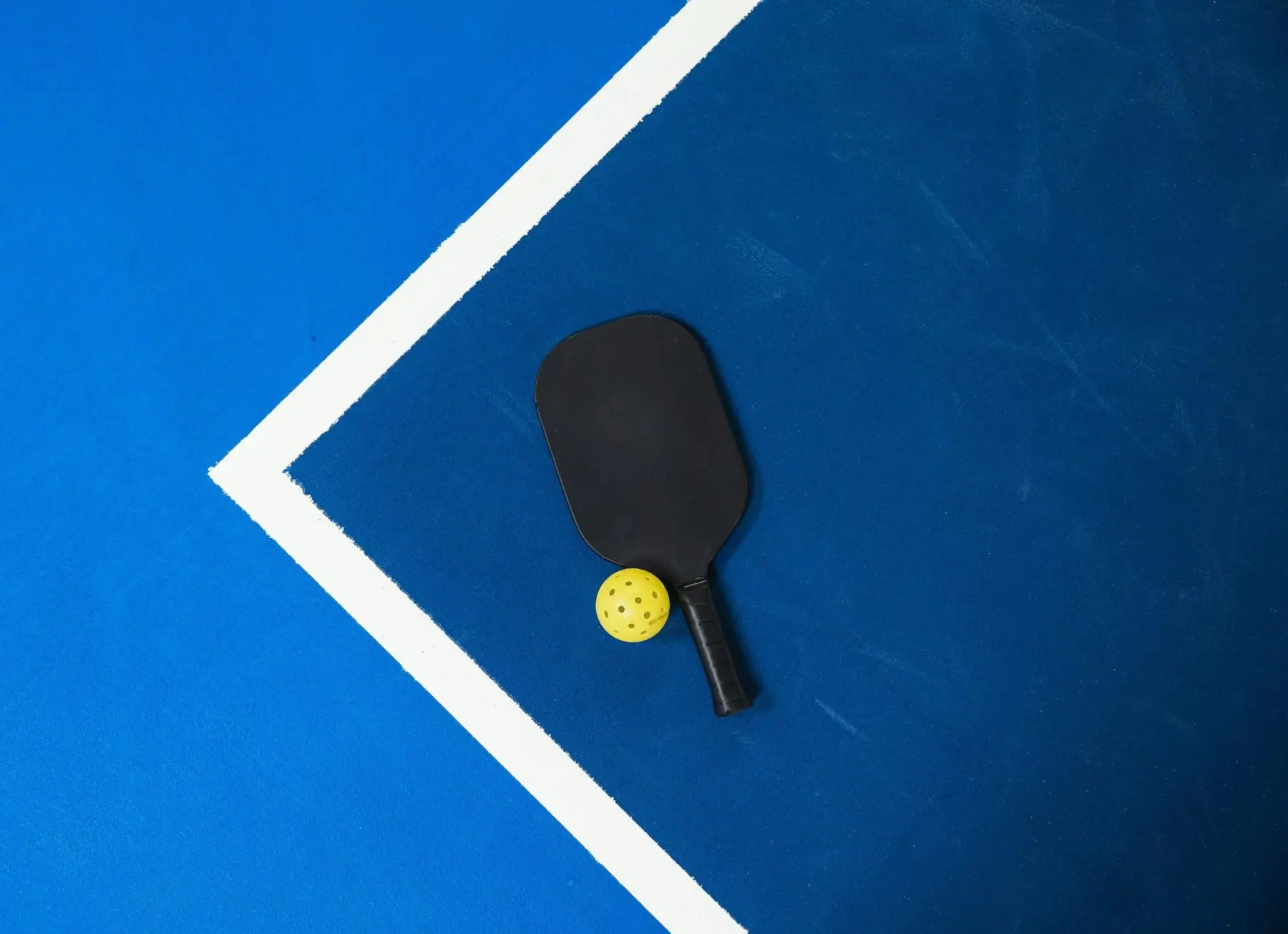
PVC sheet and interlocking polypropylene tile are the two surfaces that dominate modular pickleball courts, and the choice between them is settled almost entirely by where the court is. PVC is the indoor answer: cushioned, quiet, consistent underfoot. Polypropylene is the outdoor answer: UV stable, freeze tolerant, self-draining and demountable. Everything else, comfort, cost, markings, maintenance, follows from that first decision.
This comparison is written for the people who actually commission courts: clubs, sports halls, schools, local authorities, hotels, campsites and event organisers. It sets out what each material is, what it does well, where it is the wrong choice, and how to run the comparison for a specific site.
Two plastics, two jobs
PVC and polypropylene are both common in sports surfacing and both are chosen for practicality and durability, but they do not answer the same brief. Understanding why is the fastest route to a decision that survives the first winter.
What a PVC pickleball court is
PVC, or polyvinyl chloride, arrives as a flexible sheet supplied in rolls or lengths and laid directly over a prepared base. Its defining property is a cushioned, slip-controlled surface that suits indoor play. Beyond the feel underfoot, PVC absorbs impact well, which limits the load on joints during the sharp changes of direction the sport is full of. Colours and finishes are specified to order, so markings can be made genuinely legible and coordinated with the rest of the hall.
What an interlocking polypropylene tile court is
Polypropylene tile is a modular system: rigid modules that clip together across the floor like a puzzle, with no adhesive. The appeal is that it is incremental and reversible. Unlike PVC, polypropylene copes with temperature swings and UV exposure, which makes it the right choice for an outdoor court, whether permanent or seasonal, without worrying about the surface degrading in a couple of years.
Comfort and safety on court
A comfortable surface lets people play longer with less fatigue. PVC leads here: its flexibility cushions a fall and spares the joints, which matters for older players, for high-volume club sessions and for anyone playing several matches in a day.
Polypropylene tile is slightly firmer, but it still delivers good grip and a reasonable degree of impact absorption. Its perforated structure stops water standing after rain, which removes the main slip risk on an outdoor court and lets play resume quickly after a shower.
Installation and maintenance
A PVC floor is laid with a specific adhesive or a self-adhesive system, and it usually wants a professional installer to guarantee flatness across the whole court. Maintenance is straightforward: a sweep and a damp mop keep the surface in condition.
Interlocking tiles are simply clipped together. No tools, no adhesive, and the assembly is within reach of a site team. If a tile is stained or damaged, that single tile is replaced without touching the rest of the court, which is a real saving in both time and money over a court’s life.
Where each surface belongs
Indoors: sports hall, club or multi-purpose room
PVC comes into its own under cover, where temperature and humidity stay stable. In sports halls, municipal rooms and covered spaces it gives a consistent bounce and a clean finish, and it dampens footfall noise, which matters more than people expect in a hall running several courts at once. Operators also value the range of colours available, so a pickleball court can be coordinated with the existing markings and equipment rather than fighting them.
Outdoors: schools, open-air clubs, hotels and campsites
For an outdoor space, polypropylene tiles are the obvious answer. They withstand rain, frost and sunlight without the cracking or fading that catches out an indoor material used outside. That suits schools, sports centres and holiday sites looking for an installation that lasts.
Modularity also leaves the door open: a court can be extended later, or dismantled seasonally and stored. That is of particular interest to event organisers and to temporary installations, where the same tiles are reused across several sites.
Side by side
| Criterion | PVC sheet | Interlocking polypropylene tile |
|---|---|---|
| Best location | Indoor | Outdoor, and indoor where drainage or modularity matters |
| Impact absorption | Higher, cushioned underfoot | Moderate, firmer feel |
| Weather and UV | Intended for covered use | Resistant to rain, frost and sunlight |
| Drainage | Sealed surface, needs falls and drainage designed in | Perforated structure drains naturally |
| Installation | Bonded or self-adhesive, professional installation advised | Clipped, no adhesive, no specialist tools |
| Repair | Section repair or patching | Individual tile replaced |
| Markings | Wide colour range, coordinated finishes | Contrasting tiles form the lines |
| Reversibility | Permanent installation | Extendable, demountable, reusable |
| Base required | Flat, dry, sound substrate | Flat hard surface with falls for drainage |
Both systems sit within our pickleball court surfacing range, with the polypropylene interlocking tiles for modular courts and the wider outdoor sports flooring offer for sites combining several uses.
Looking after the court
Service life comes down to routine more than to the material. Cleanliness improves safety, and regular inspection catches wear before it becomes a repair.
On PVC, clearing shoe marks quickly prevents stains bedding into the wear layer, and using non-abrasive products keeps the finish intact. On polypropylene, the priority is clearing leaves and grit from between the modules so the drainage keeps working.
- Wash regularly with warm water and a soft brush.
- Avoid aggressive detergents, which attack the colour.
- Check the joints between tiles, and re-bond any lifted PVC seams.
- Store demounted tiles out of direct sunlight during long periods out of use.
- Run a monthly inspection; it removes most unpleasant surprises.
Frequently asked questions
Can PVC be used outdoors?
It is intended for covered use. Outdoors it faces UV, frost and standing water, which is exactly what polypropylene tile is designed for.
Can polypropylene tile be used indoors?
Yes, and it is a sensible choice indoors when the court has to be demountable, when the substrate is uneven or damp, or when the space is shared with other activities.
Which surface is better for a club that plays competitively?
Indoors, PVC gives the most consistent ball response and the most comfort over long sessions. Outdoors, polypropylene is the durable choice and its drainage keeps courts playable.
Can a modular court be enlarged later?
Yes. Tiles are added at the perimeter, which is one of the main reasons sites with a phased budget choose the modular route.
Choosing for your site
Send us the court dimensions, whether the court is indoor or outdoor, what lies underneath and the expected playing hours. You get back a recommended system, the base preparation it needs and a costed proposal. Request a quote to start.
Réalisations documentées
- Dalles et sols sportifs : livraisons documentées – plusieurs chantiers
- Sol sportif extérieur, square Georges-Vallerey – Taverny (95)
À lire aussi sur le même thème
- Anti-Slip Rubber Tiles Certified R10 to DIN 51130: Which Standard Really Applies?
- 10 Utilisations Surprenantes de Dalles en Caoutchouc à Découvrir Absolument
- Indoor and Outdoor Sports Flooring: Tiles, Rolls and Resilient Surfaces
- 20 mm rubber gym tiles: exactly what they are for, and when to avoid them