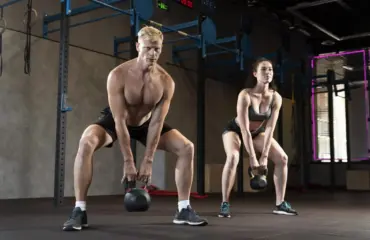
Indoor and Outdoor Sports Flooring: Tiles, Rolls and Resilient Surfaces
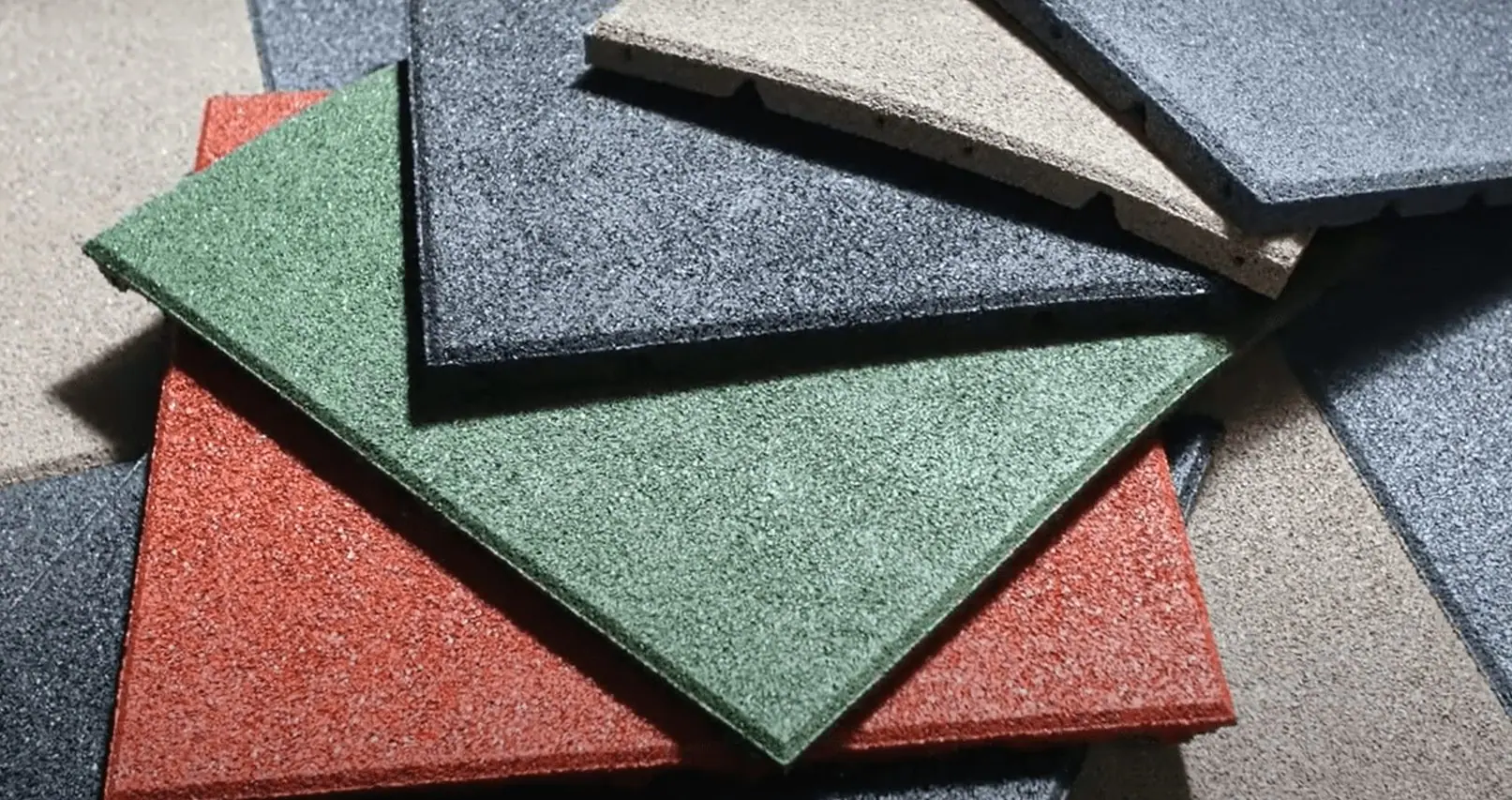
Choosing a sports floor is not a finishing decision taken at the end of a project. It sets how the room absorbs impact, how loud it is, how it behaves when it is wet, whether it satisfies the fire requirement for the building, and how long it lasts before it has to be lifted again. Light In Fitness supplies and installs professional sports flooring for indoor and outdoor use: rubber tiles and rolls, EPDM surfacing, PVC sports vinyl, polyurethane resin systems and artificial turf.
What a resilient sports floor actually is
A resilient floor is an elastic covering, made from rubber, PVC, EPDM or polyurethane, that absorbs impact, protects joints and gives a stable working surface. It comes in three formats: modular tiles, rolls, and continuous cast resin systems.
Sports surfaces cover every technical floor used for practice: running tracks, fitness and cross-training areas, gymnasiums, weight rooms and training halls, playgrounds, multi-sport courts and outdoor fitness trails. What they share is that the specification follows the use, not the other way round.
Why specify a resilient floor
- Impact absorption and safety: protects joints and reduces injury.
- Grip: a slip-resistant, dimensionally stable surface.
- Durability: resistance to impact, wear and UV exposure.
- Maintenance: quick and inexpensive cleaning routines.
- Appearance: a wide choice of colours, textures and finishes, including logos.
The main technologies compared
| Floor type | Recommended use | Strengths |
|---|---|---|
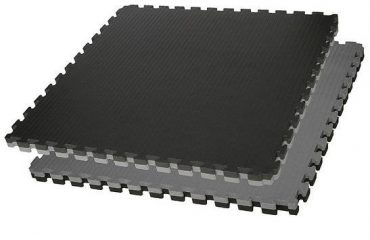
| Rubber tiles | Gyms, cross-training areas, outdoor spaces | Slip resistant, shock absorbing, modular |
| Sports PVC | Gymnasiums, schools, indoor clubs | Fast to lay, clean finish |
| Polyurethane resin | Tracks, multi-sport courts | Seamless surface, high resistance |
| EPDM surfacing | Playgrounds, outdoor fitness trails | Free draining, coloured, impact attenuating |
| Artificial turf | Multi-sport courts, outdoor zones | Hard wearing, realistic, comfortable |
You can browse the ranges in rubber gym flooring tiles, rubber flooring rolls, outdoor sports flooring and playground surfacing.
Standards, fire classification and what to check
Three separate frameworks apply, and they answer different questions.
EN 1177 covers impact-attenuating playground surfacing and the critical fall height a surface is tested to. It is the standard to cite under play equipment, alongside EN 1176-1 for the equipment itself. EN 14041 covers the essential characteristics of resilient, textile and laminate floor coverings, which is the framework behind CE marking and the declared reaction to fire and slip resistance. ISO 9001 is a quality management system standard for the organisation, not a property of the floor.
Reaction to fire is declared per product reference on the Euroclass scale for floorings, and it varies across a flooring range rather than being uniform: Bfl-s1, Cfl-s1, Cfl-s2, Dfl-s1 and Efl products all exist. Ask for the class of the exact reference you are buying, keep the smoke index attached to it, and check it against the requirement that applies to your building. A tile that satisfies a private gym may not satisfy a public building.
Long warranties, up to 10 years depending on the system, are part of the specification too.
How to choose: five criteria
- Intended use: strength training, cardio, play, outdoor.
- Mechanical resistance: thickness and density matched to the activity.
- Safety standards: HIC and critical fall height, slip resistance, fire class.
- Installation and maintenance: how it is laid and how it is cleaned.
- Total budget: material, labour and service life together, not material alone.
As a rule of thumb, intensive indoor use is served by rubber tiles of 20 to 25 mm, which suit weight rooms and cross-training areas. Outdoor use calls for EPDM tiles of 40 to 60 mm or free-draining sports resin. Multi-sport courts are usually best served by polyurethane systems, which combine performance with a seamless, durable surface.
The sub-base decides as much as the covering. Every installation starts with a survey of the existing surface: flatness, load-bearing capacity and drainage. A resilient floor laid over an unsuitable base fails at the base, not in the covering.
Frequently asked questions
What does a sports floor cost?
It depends on the material, the thickness, the condition of the sub-base and the area to be covered, and the installed cost is not the same as the supply cost. We price it from the actual site rather than from a general rate, so ask for a quotation on your own surface and specification.
How long does a sports surface last?
Between 10 and 20 years, depending on how heavily it is used and how it is maintained.
What are the advantages of a rubber floor?
Excellent impact absorption, sound damping, easy maintenance and simple replacement of individual tiles when they wear.
Can a resilient floor be installed outdoors?
Yes. EPDM tiles, free-draining resins and UV-stable coverings are designed to withstand weather exposure.
Which standards apply?
EN 1177 for impact-attenuating playground surfacing, EN 1176-1 for the play equipment above it, and EN 14041 for the essential characteristics of resilient floor coverings. Reaction to fire is declared per reference on the Euroclass scale for floorings.
Are these floors environmentally responsible?
Recycled materials and low-VOC products are used, in line with European REACH requirements.
Getting your floor specified
Send us the area, the intended use, the state of the existing sub-base and the fire requirement that applies to your building, and we will come back with a specification and a costed proposal: request a quote.
Réalisations documentées
- Dalles et sols sportifs : livraisons documentées – plusieurs chantiers
- Sol sportif extérieur, square Georges-Vallerey – Taverny (95)