Anti-Slip Rubber Tiles Certified R10 to DIN 51130: Which Standard Really Applies?
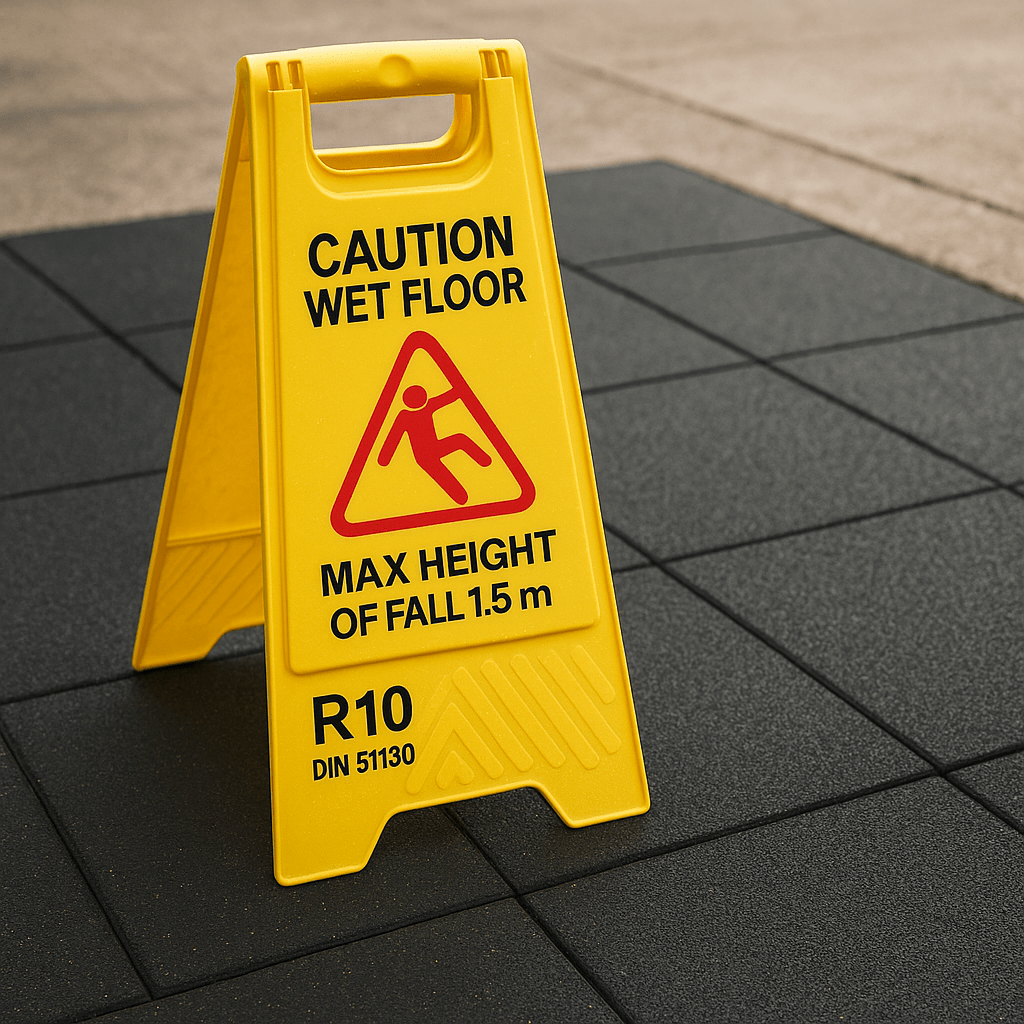
R10 under DIN 51130 is a slip resistance classification, not a fall protection standard. The two are often confused when specifying rubber tiles, and the distinction matters: R10 tells you how much grip a surface offers underfoot, while impact attenuation – protection against injury from a fall – is covered by a separate standard, EN 1177, and only for playground surfacing. This article separates the two so you specify the right thing.
What R10 under DIN 51130 actually measures
DIN 51130 classifies floor surfaces by their resistance to slipping. The classification runs from R9 to R13, R9 being the lowest level of grip and R13 the highest, and it is assigned on a ramp test rather than calculated from the material. R10 therefore describes a surface with a defined level of grip, including where moisture is present.
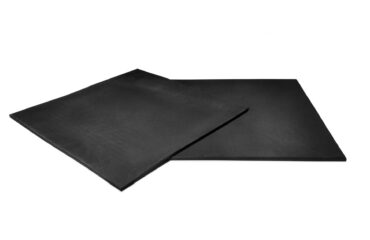
Anti-slip rubber tiles classified R10 are designed to deliver that grip through their surface structure and through the materials used, notably natural rubber granules. Correctly installed, they give a non-slip surface that helps prevent slips and falls in pedestrian areas, indoors and outdoors: wet zones, changing rooms, poolside circulation, ramps and stairs are the typical cases.
Slip resistance is not impact attenuation
This is the point that most often goes wrong in a specification. A slip classification says nothing about what happens to a body that does fall.
- DIN 51130 (R9 to R13) answers: how likely is someone to lose their footing on this surface?
- EN 1177 answers: if a child falls from a piece of play equipment, does the surface attenuate the impact? It is the standard for impact-attenuating playground surfacing and it works together with EN 1176-1, which covers the play equipment itself.
An R10 tile is not automatically an impact-attenuating surface, and an impact-attenuating surface is not automatically R10. If your project involves children’s play equipment, the surfacing question is an EN 1177 question and belongs with our playground surfacing range, specified against the critical fall height of the equipment above it. If your project is a wet circulation area, the question is a slip resistance question and R10 is the relevant answer.
Why these tiles grip, and how they are built
The manufacturing process behind anti-slip rubber tiles commonly uses epoxy and polyurethane binders, which raise durability and resistance to wear and to the abrasion caused by heavy foot traffic. The anti-slip treatment applied to the surface is what determines performance, above all when the floor is wet. Tiles of this type can be laid over several substrates – concrete, porcelain stoneware, PVC floors – while still providing good sealing against water ingress.
Large areas: rolls rather than tiles
For industrial and commercial areas, anti-slip rubber flooring rolls cover large surfaces with fewer joints. Their flexibility and the ease with which they can be cut allow them to be adapted to any dimension required, whether the finished item is a floor tile, a rubber mat or a shaped section. On the finishing side, a range of colours and thicker treatment layers make it possible to combine appearance and safety. Complementary accessories – anti-slip strips, adhesive tape, anti-slip discs – reinforce safety on existing surfaces or in specific risk zones without relaying the whole floor.
Frequently asked questions
Does an R10 tile meet fall protection requirements?
No. R10 under DIN 51130 is a slip classification. Fall protection on a playground is assessed against EN 1177, using the critical fall height of the equipment installed above the surface. The two requirements are specified separately.
Is R10 enough for a wet area?
R10 describes a defined level of grip that holds up in the presence of moisture, which is why it is widely specified for pedestrian wet zones. Where the risk profile is higher, a higher class in the same scale is specified instead. Always match the class to the actual use of the area rather than to the product family.
Can anti-slip rubber tiles be laid over an existing floor?
Yes, over concrete, porcelain stoneware or PVC among others, provided the substrate is sound, flat and clean. The installation method matters as much as the classification: a tile that moves underfoot loses the benefit of its surface treatment.
Which standard applies to fire performance?
Fire classification is separate again and is stated as a reaction-to-fire class for the specific product. Take the class from the product documentation and reproduce it in full, smoke index included, as with our fire-rated rubber tiles.
Specifying the right surface
R10 under DIN 51130 confirms that anti-slip rubber tiles offer an adequate resistance to slipping and usable grip even in the presence of moisture. That is a real safety benefit for daily use of the spaces where they are installed, alongside the other options available – anti-slip tiling, mats and other coverings – all of which reduce the risk of slips indoors and outdoors. But it is not a fall protection classification, and a project that needs impact attenuation needs EN 1177. Tell us the area, the exposure to water and whether children’s play equipment is involved, and we will specify the correct surface: request a quote.
Réalisations documentées
- Dalles et sols sportifs : livraisons documentées – plusieurs chantiers
- Sol sportif extérieur, square Georges-Vallerey – Taverny (95)