The pec fly rear delt machine: one selectorised station, two movements
The pec fly rear delt machine: one selectorised station, two movements
The pec fly rear delt machine with a selectorised weight stack is a versatile piece of equipment designed to target the pectorals, the posterior deltoids and the back muscles specifically. The station offers adjustable resistance, so users can train at their own pace and progress through their programme. This article looks at the benefits, the technique and the practical points that get the most out of a pec fly rear delt station on a commercial gym floor.
What is a pec fly rear delt machine?
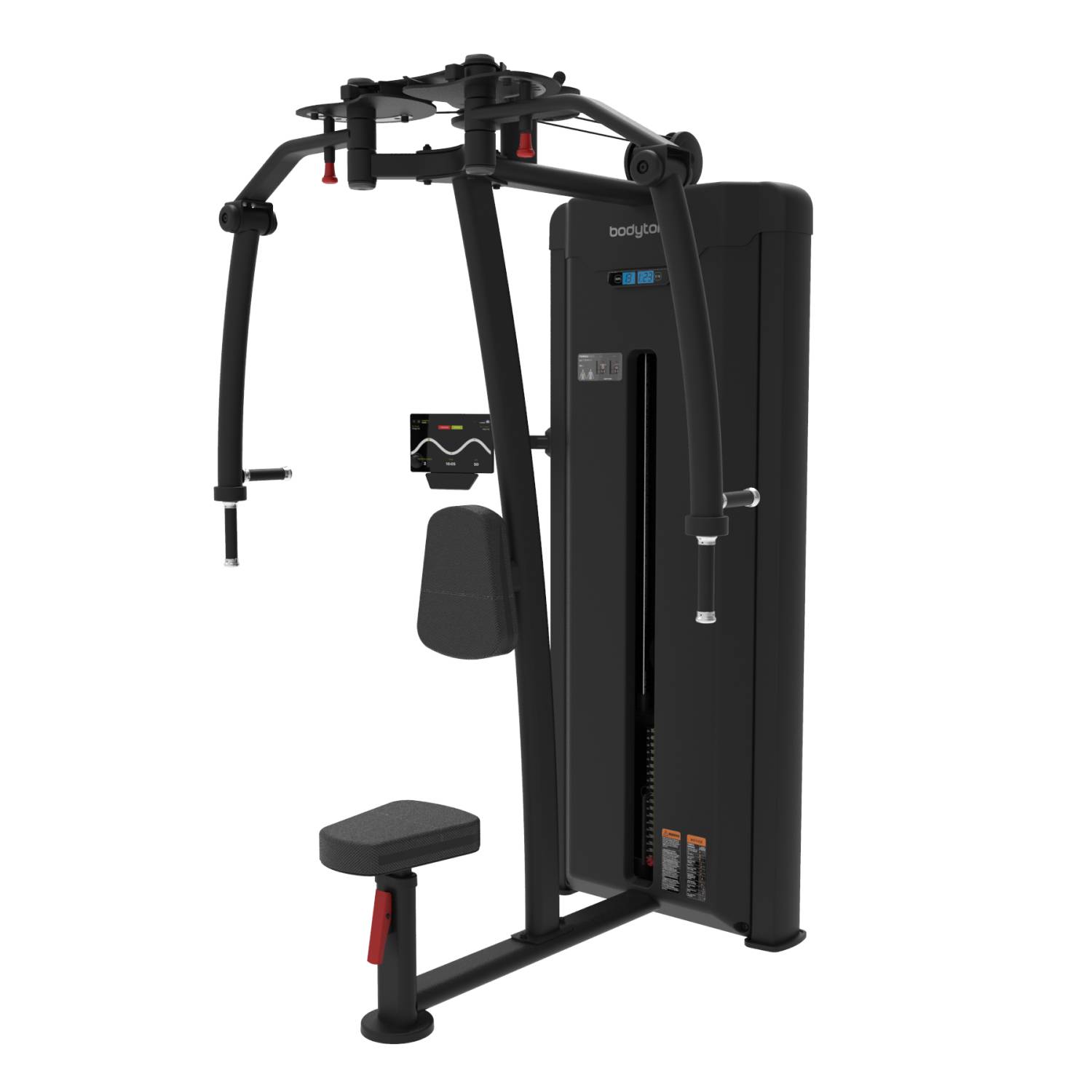
The pec fly rear delt machine with a selectorised stack is a strength station that works the pectorals, the posterior deltoids and the back muscles. It is made up of a seat, an adjustable backrest, pivoting arms and a guided weight stack. The user sits down, takes hold of the handles on the pivoting arms and performs pushing and pulling movements to load the target muscles.
The station uses guided loads, which means the resistance can be adjusted to suit each user. That allows progressive advancement through training and lets the resistance be matched to the individual’s strength and capacity.
For an operator, the interesting part is that both movements live in one footprint. One station covers the chest fly and the reverse fly, which is why it appears so often in compact rooms where a separate machine for each movement would not fit. Our selectorised strength machines include several versions of it, from the Power Line pec fly rear delt to the Etenon R8103 pec deck and rear delt.
Benefits of a selectorised pec fly rear delt station
Using a pec fly rear delt machine with guided loads brings a number of benefits. Here are the main ones.
1. Muscular isolation
The pec fly rear delt machine allows precise muscular isolation. With this station a user can target the pectorals, the posterior deltoids and the back muscles specifically, without over-recruiting other muscle groups. Training is more efficient and more focused as a result.
2. Safety and stability
The machine gives a high level of stability and safety during training. The movements are controlled and guided, which reduces the risk of injury and of poor posture. The guided loads also keep the resistance constant and prevent the abrupt movements that could cause harm.
On a floor used without permanent supervision – a hotel gym, a residential gym, a corporate room – that is often the deciding argument in favour of a guided station rather than free weights.
3. Progression and adaptation
Thanks to the guided loads, the pec fly rear delt machine makes progression and adaptation straightforward. Users can increase or decrease the resistance according to their strength level and capacity, which allows gradual and safe progression.
4. Balanced development
Using the pec fly rear delt machine develops the pectorals, the posterior deltoids and the back muscles in a balanced way. That contributes to better posture, fewer muscular imbalances and improved overall upper body strength.
How to train on the machine
To get the most out of a pec fly rear delt station, the right technique matters. Here are the recommended points.
1. Correct positioning
Before starting, adjust the seat and the backrest to reach a comfortable and stable position. The feet should be firmly planted on the floor, the back straight and the shoulders relaxed.
2. Breathing control
During the movement, controlling the breath is essential. Breathe in on the return phase and out on the phase of muscular contraction. This breathing pattern helps maintain stability and supplies additional energy during the effort.
3. Full range of motion
To maximise results, work through a full range of motion. That means extending the arms completely on the return phase and contracting the target muscles on the contraction phase. A full range of motion guarantees optimal muscular work.
4. Gradual progression
Start with a light resistance and increase the load progressively as strength and capacity grow. It is important not to overload the muscles from the outset, in order to avoid injury and to encourage steady progression.
5. Varying the angles
To work the muscles in different ways, the training angles can be varied. By adjusting the backrest of the machine, for example, the emphasis can be shifted more towards the posterior deltoids or more towards the pectorals. Experimenting with different angles brings variety to the training.
6. Warm-up and stretching
Before a session on the pec fly rear delt machine, warm up properly to prepare the muscles. After training, take the time to stretch to support muscular recovery.
Specifying the station for a commercial floor
Three points decide the choice between the versions of this station. The first is the smallest increment on the stack: an increment that is too coarse blocks the progression the machine is bought for. The second is the adjustment of the backrest and of the arm start position, because it is what allows a small user and a tall user to follow each other on the same station without losing the range of motion. The third is the duty cycle: for indoor commercial use, the equipment should conform to EN ISO 20957-1, class S, the classification for professional use.
FAQ
Is the pec fly rear delt machine suitable for beginners?
Yes. The resistance can be adjusted to each individual’s strength level, which allows gradual progression.
How many times a week should the machine be used?
Two to three times a week is the usual recommendation, leaving at least 48 hours of rest between sessions so the muscles can recover.
Can it be used to reduce back fat?
The machine is used above all to strengthen the back muscles. It can contribute to reducing fat in that area when it is combined with a balanced diet and regular cardiovascular activity.
What is the difference between this machine and dumbbells?
The pec fly rear delt machine gives a constant, guided resistance, whereas dumbbells demand far more control of posture and stability. The two are complementary within a training programme.
Are there training variations on this station?
Yes. Variations such as the reverse pec fly or the reverse row target other muscles of the back and shoulders.
Are there any contraindications?
Anyone with back problems or a previous injury should consult a health professional before using the machine. The safety instructions should be followed and the muscles should not be overloaded.
Conclusion
The pec fly rear delt machine with a selectorised stack is a powerful tool for targeted work on the pectorals, the posterior deltoids and the back muscles. With its adjustable resistance and its controlled movement, it brings real benefits in muscular isolation, safety, progression and balanced development. Used with the right technique and the right safety practice, it earns its place on the floor.
Tell us the area available and the profile of your users: we come back with a priced proposal and the floor footprint of the station. Browse the range of Gold Line selectorised machines, or request a quote.