Chest Press Machine: Which Muscles Does It Work?
In short: the chest press machine works the pectoralis major as the prime mover, assisted by the anterior deltoid and the triceps brachii, with the serratus anterior acting as a stabiliser. It isolates the horizontal pressing pattern in a guided, low-risk path, which makes it a natural choice for beginners and for finishing a heavy chest session once the free-weight stabilisers are fatigued.
What the chest press machine actually trains
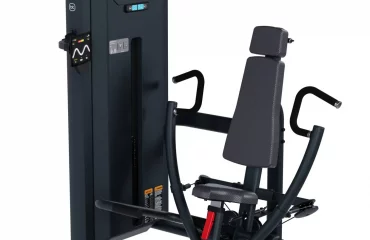
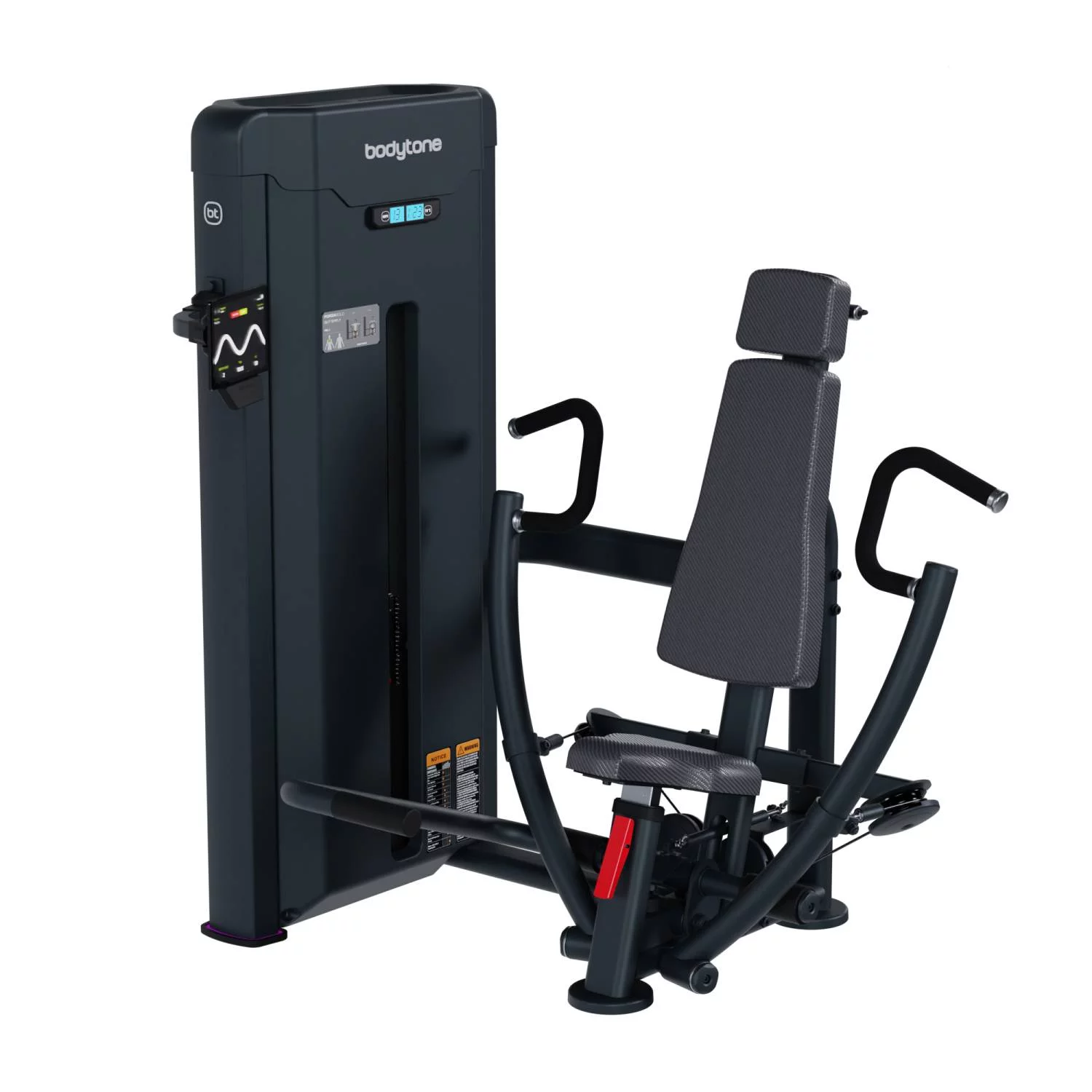
The chest press, also called the seated chest press or pec press, is one of the most heavily used stations on any gym floor. The user sits against a backrest, grips two handles at roughly chest height with the elbows flexed, and presses the handles forward until the arms extend and the hands converge. Resistance comes from a selectorised weight stack, a cable and pulley arrangement, or loaded plates, depending on the machine.
The movement is horizontal shoulder flexion combined with adduction and a degree of internal rotation. Those are precisely the actions of the pectoralis major, which is why the chest press loads it so directly. The anterior deltoid contributes to the pressing arc at the shoulder, and the triceps brachii completes the elbow extension in the second half of the range. The serratus anterior works isometrically to hold the shoulder blade against the ribcage, and the trunk musculature stabilises the torso against the backrest.
It is worth being precise here, because guidance on this exercise is often overstated. The chest press is an upper-body pressing movement performed from a supported seated position. The lower body is not a working muscle group in this exercise; it simply provides a base. Any claim that a seated chest press develops the glutes or the thighs should be treated with scepticism by anyone writing training material for members.
Why operators put a chest press on the floor
A safe entry point to pressing
A guided path removes the balance demand of a barbell bench press. There is no bar to unrack, no spotter required and no risk of a failed repetition trapping the user. For a club with a high proportion of new members, that alone justifies the station.
Fast turnover in peak hours
Selectorised loading means a weight change takes seconds. At peak times a chest press moves several users through in the time a bench press serves one, which matters when you are sizing a strength area against expected footfall.
Volume without stabiliser fatigue
Experienced members use the chest press at the end of a session, once the stabilisers are tired, to add pressing volume with the technique still under control. It complements free-weight work rather than replacing it.
Rehabilitation and older members
The supported position and the fixed path make the chest press usable in supervised rehabilitation and by older members who cannot safely handle a free bar.
Technique points worth putting on the instruction panel
Getting the set-up right is what separates a productive station from a source of shoulder complaints.
- Adjust the seat so the handles sit at mid-chest height, not at the collarbone.
- Keep the back in contact with the backrest through the full repetition.
- Start with the elbows flexed and under the hands, not flared behind the torso.
- Press in a controlled tempo and avoid locking the elbows aggressively at the end of the range.
- Warm up with dynamic shoulder rotations and arm swings before the first working set.
Progression follows the usual rules: add load or repetitions gradually, and keep the chest press as one element of a balanced programme that also includes horizontal pulling. A chest area built only around pressing will produce the shoulder imbalances every floor manager recognises.
Choosing a chest press for a commercial floor
Machines aimed at unsupervised commercial use are built to EN ISO 20957-1 class S. That is the specification to ask for on any tender: it covers structural strength, stability, trap points and the durability expected of equipment in continuous use. Beyond the standard, the differences that matter over a ten-year life are the bearing quality, the upholstery specification, the ease of changing a cable, and whether the seat adjustment can be operated one-handed by a seated user.
Our chest press machines cover selectorised, plate-loaded and converging designs. If you are specifying a full strength area rather than a single station, the wider selectorised machine range is the better starting point, and the Bodytone Forza FH line is a frequent choice where floor space is tight.
Frequently asked questions
Which muscles does the chest press machine work?
Pectoralis major as the prime mover, with the anterior deltoid and triceps brachii as secondary contributors. The serratus anterior is engaged for scapular stability.
Chest press or dips: which should a programme use?
The chest press isolates the pressing pattern safely and suits beginners. Dips are more demanding, recruit more stabilisers and build functional pressing strength. The two are complementary rather than alternatives.
How many sets of chest press?
Three to five sets of eight to twelve repetitions covers most goals: eight to twelve for hypertrophy, five to eight for strength, twelve to twenty for muscular endurance.
Is the chest press enough on its own for chest development?
No. A complete upper-body programme also includes push-ups, bench and incline pressing, dumbbell flyes, rows and pull-ups so that pushing and pulling volume stay balanced.
Does the chest press work the lower body?
No. The legs and glutes provide a stable base in the seated position but are not trained by the movement. Lower-body development requires dedicated leg work.
Specifying your strength area
A chest press is rarely bought alone. Tell us the floor area, the member profile and the number of stations you need to cover, and we will return a laid-out proposal with machine references, spacing and installation requirements. Request a quotation to get started.