Outdoor Strength Training Equipment for Professional Sites
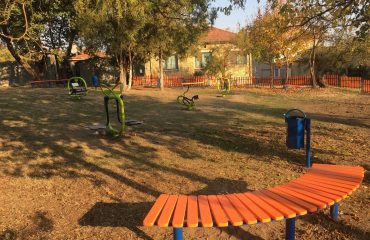
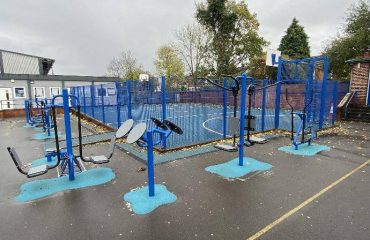
Outdoor strength training equipment lets a site offer real resistance training without a building, a reception desk or an energy bill. For a municipality, a campsite, a hotel or a housing association, it is often the fastest way to add a genuine fitness offer to land that is already owned. Light In Fitness has been manufacturing and installing professional fitness equipment since 2013, and outdoor strength stations are one of the ranges we supply most to public and commercial sites across Europe.
What outdoor strength training equipment really is
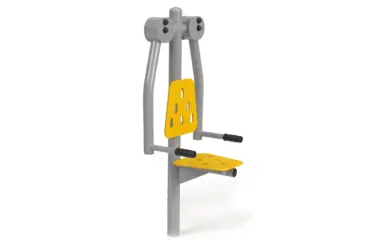
Outdoor strength stations reproduce the movement patterns of indoor machines – chest press, lat pull, leg press, rowing, shoulder press – in a form built to stay outside permanently. There is no upholstery to soak up rain, no electronics to fail in the cold and no stack of steel plates to steal. Resistance comes from the user’s own body weight, from a lever ratio, or from an adjustable mechanism the user sets before starting. That is what makes a single station usable by a first-time trainee and by an experienced lifter on the same afternoon.
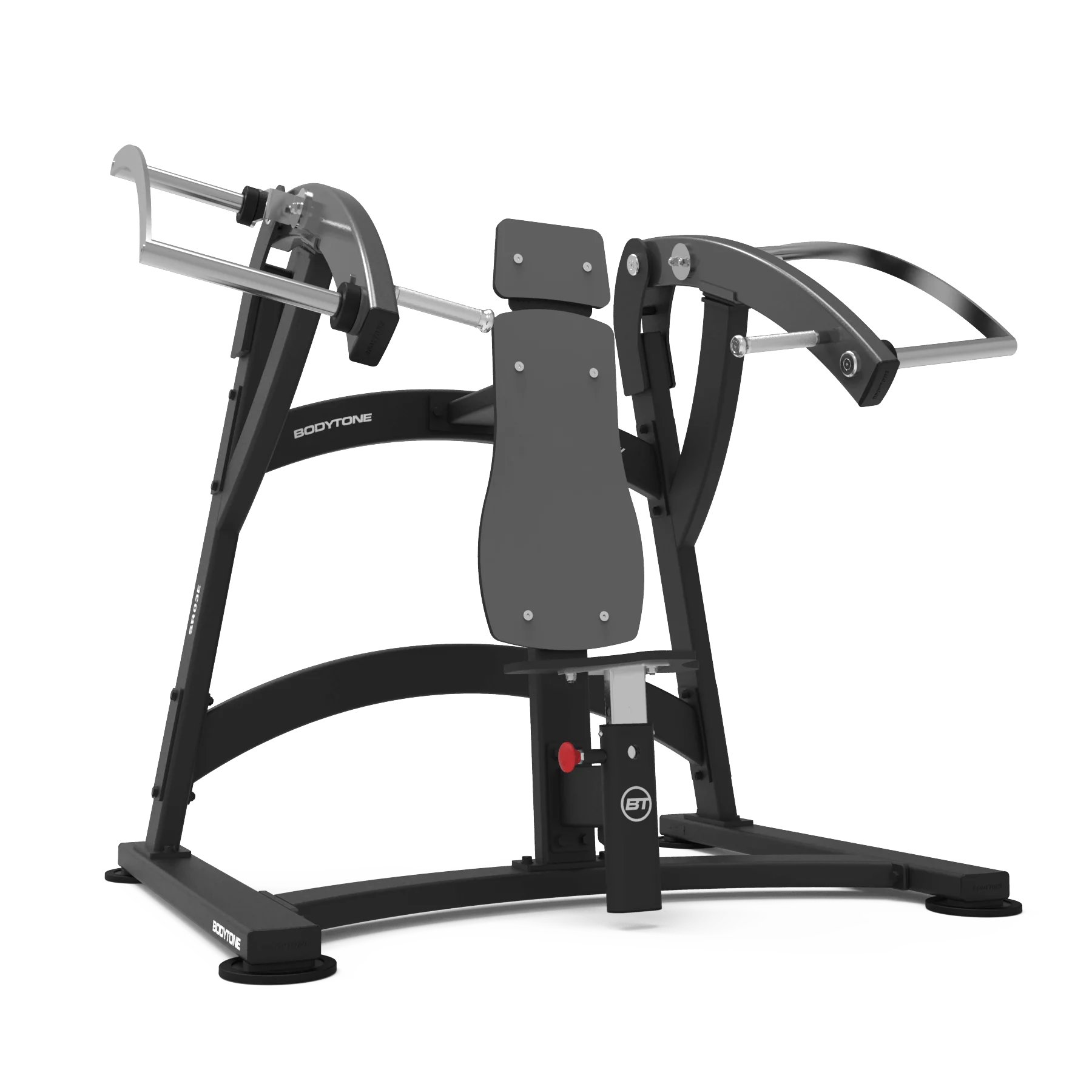
Our outdoor range covers upper body, lower body, back and core work, with brands such as Bodytone alongside our own manufactured structures. You can see the full range in the outdoor gym equipment category.
Who installs it
The buyers are rarely private individuals. They are local authorities adding a fitness area to a park, campsite and holiday village operators who need an activity that costs nothing to staff, hotels that want a wellness offer outside the building, housing associations, schools, sports clubs and rehabilitation centres. Each of these has a different priority: vandalism resistance for open public space, aesthetics for a hotel garden, accessibility for a rehabilitation site. The equipment specification should follow that priority, not the other way round.
Materials and weather resistance
An outdoor station spends its whole life in UV, rain, frost and, on coastal sites, salt air. Three construction families dominate:
- Hot-dip galvanised and powder-coated steel – the standard choice, robust and cost-effective for inland public sites.
- Stainless steel – the answer for seafront, poolside and high-salinity environments, and the longest-lasting option. See our stainless steel outdoor machines.
- Steel and timber combinations – chosen where the installation has to blend into a park or a natural setting.
Moving parts matter as much as the frame. Sealed bearings, self-lubricating bushings and anti-vandal fixings are what decide whether a station is still smooth in year eight.
Standards that apply
Permanently installed outdoor fitness equipment for adults falls under EN 16630, which covers structural strength, entrapment, fall zones and installation. It is a different framework from the one used indoors, where professional machines are built to EN ISO 20957-1 class S. If your project also includes equipment intended for children, that equipment belongs to EN 1176-1, with impact-attenuating surfacing to EN 1177 – never to EN 16630. Mixing the two is the single most common specification error we see on public tenders.
Layout, surfacing and access
A row of stations along a path is not a training area. Plan the free space around each station first, then the circulation between them, then the surfacing. Grass works on low-traffic sites; rubber or synthetic surfacing is needed where use is heavy or where fall protection is required. If the site is public, consider from the start whether wheelchair users can reach and use at least part of the circuit – our accessible outdoor gym range is designed for exactly that.
Many projects combine strength stations with a walking or running loop. In that case the wider outdoor fitness trail approach is usually a better structure than isolated machines.
Frequently asked questions
Can outdoor strength equipment be left out all year?
Yes – that is what it is designed for. Professional outdoor stations are specified for permanent open-air installation, with corrosion protection and materials chosen for continuous exposure. Indoor machines moved outside will fail quickly, whatever their quality.
How is the resistance adjusted for different fitness levels?
Depending on the station, either by the user’s body position and body weight, or by an adjustable setting on the machine itself. A well-planned circuit mixes both so that beginners and regular trainees can use the same area.
Does it need supervision?
Not in the sense a gym does. Outdoor fitness areas are designed for unsupervised use, which is precisely why the standard, the fall zones and clear pictogram instructions on each station matter so much.
What maintenance does it require?
Periodic visual inspection of fixings, moving parts and surfacing, plus cleaning. Inspection frequency depends on how public and how busy the site is, and should be set as part of the installation.
Talk to us about your site
Every outdoor project is defined by its ground, its budget and its users. Send us the plan, the surface available and the audience you are equipping, and we will come back with a configuration and a costed proposal. Start here: request a quote.
Réalisations documentées
- Cage street workout ultime, Carcassonne – armée française
- Cage street workout ultime, Tahiti – armée française, Polynésie
- Cage SP Max, centre EPIDE de Combrée – établissement public d’insertion
- Cage SP Max, lycée Saint-Bénigne de Dijon – établissement scolaire
Sources et références
- NF EN 16630 – modules fixes d’entraînement physique de plein air : exigences de sécurité et méthodes d’essai (AFNOR)
- Code du sport, article L322-2 – garanties d’hygiène et de sécurité des établissements d’activités physiques et sportives (Légifrance)