Outdoor Fitness Equipment on Military Bases: A Strategic Tool for MWR and Sports Directors
Une base militaire équipée en fitness extérieur permet un entraînement collectif sans créneau de salle ni encadrement permanent. Les structures doivent encaisser un usage quotidien intensif, avec des utilisateurs de gabarits très différents. L'inox et l'acier galvanisé épais répondent aux implantations exposées, en métropole comme en outre-mer.
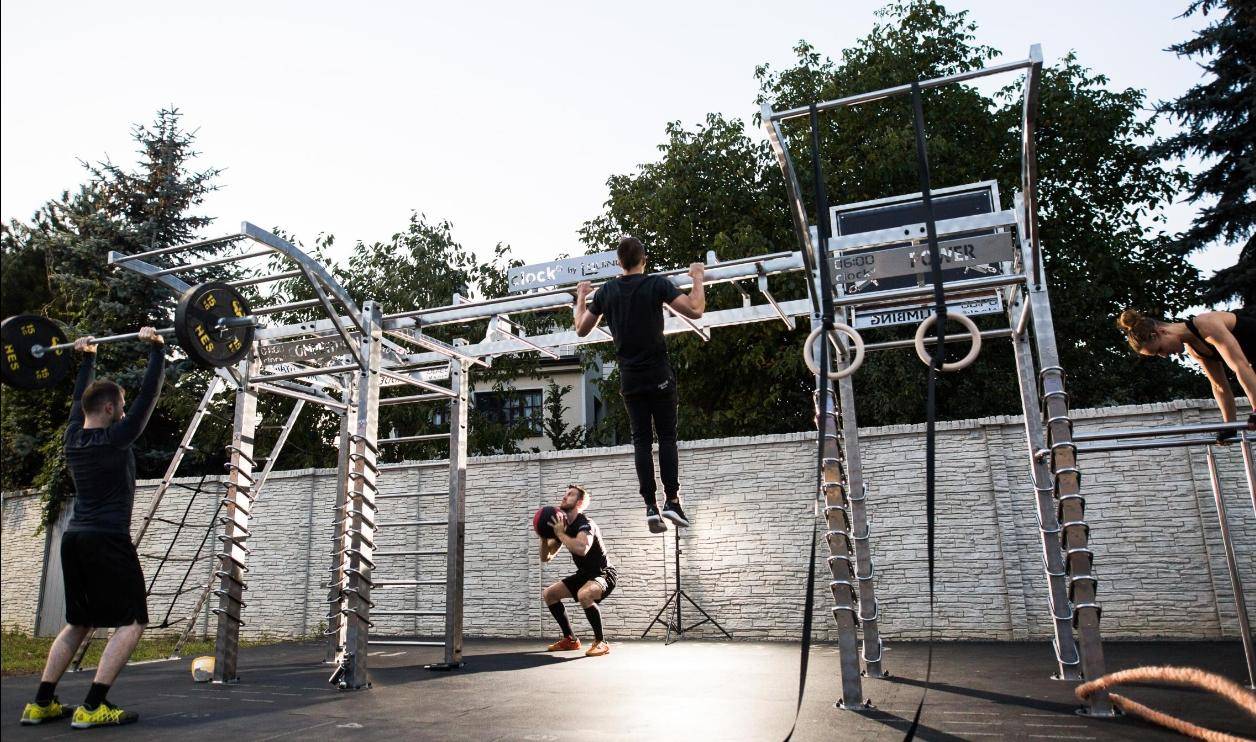
On a military installation, an outdoor training area built to EN 16630 turns under-used hard standing into an operational conditioning platform open around the clock, in any weather. A single outdoor rig supports more than 50 exercises and, depending on configuration, up to 15 users at the same time. It bolts onto an existing concrete slab, so no construction programme is required. The return shows up in physical readiness, in realistic training, in unit cohesion and in mental recovery.
Outdoor conditioning equipment is not a nice-to-have on a base. Handled properly it becomes a planning tool for readiness. Light In Fitness has equipped more than 2,500 customers in France since 2013, military installations among them, and the lesson is always the same: what decides the outcome is not the number of machines, it is the density of useful exercises per square metre and the real availability of the equipment.
Why put outdoor conditioning equipment on a base?
Operational physical readiness
An outdoor training area gives personnel a simple, freely accessible, structured way to train every day. It makes it far easier to hold the standard of physical condition that the job actually demands.
Training that looks more like the job
Training outside moves the session closer to field conditions: temperature swings, wind, rain, uneven ground, an environment nobody controls. Endurance, strength, mental resilience and adaptability all benefit from that exposure.
Unit cohesion
An outdoor fitness area quickly becomes collective ground. Personnel run circuits there, set up partner sessions and group workouts, and push each other. That shared effort does more for cohesion than any indoor rota.
Stress and mental recovery
Exercise outdoors is widely recognised for helping to lower stress and anxiety. An outdoor area that stays open after a demanding period gives people somewhere to burn off pressure and reset in calmer surroundings.
A well designed outdoor area, in short, becomes a natural extension of the training programme, serving performance and morale at once.
The standards framework: EN 16630 and EN 1177
EN 16630 is the European reference standard for permanently installed outdoor fitness equipment: free space zones, anchorage stability, absence of pinch points, marking and user information. Inside a military perimeter the standard is no less relevant. Specifying EN 16630 compliant equipment secures the installation legally and guarantees a design proven for intensive use. The whole Light In Fitness outdoor range, including the street workout rigs and outdoor cages and the 316L stainless steel range, is designed in accordance with it.
EN 1177 covers impact attenuating surfacing and the reduction of injury in the event of a fall. Under hanging, pull-up and traverse zones the receiving surface has to be sized against the free fall height. Rubber tiles certified to EN 1177, UV stable and weather resistant, meet that requirement; the outdoor sports flooring range covers the traffic levels involved.
On a base the equipment and surfacing pair matters even more than elsewhere. Use is heavier, more frequent and often loaded, with weighted vests, packs and kit. Skimping on the surface concentrates wear and risk at exactly the point where training is hardest.
Which item for which operational objective?
The question sports directors ask on every project is the same one: which structure for which type of preparation? The table below maps the main families of outdoor equipment onto the physical qualities a military programme is trying to build.
| Equipment or structure | Muscles and qualities trained | Level | Recommended military use |
|---|---|---|---|
| Multifunction outdoor strength cage | Full body, more than 50 exercises: pull-ups, dips, rows, squats, presses, suspension work | All levels | Central conditioning platform, group sessions of up to 15 users |
| Multi-height pull-up bars | Back, biceps, forearms, grip, core | Intermediate to advanced | Pull-up testing, grip work, preparation for physical assessments |
| Parallel bars for dips | Chest, triceps, shoulders | Intermediate | Pushing strength, calisthenics circuits, partner work |
| Monkey bars and horizontal ladders | Grip, shoulders, coordination, hanging endurance | Intermediate to advanced | Traverse skills, complement to the assault course |
| Outdoor rack or power rack | Maximal strength: squats, presses, heavy pulls | Advanced | Strength development, specific physical preparation |
| Outdoor guided resistance machines | Targeted muscle groups depending on the machine | Beginner to advanced | Return to training after injury, safe technical learning |
| Outdoor cardio modules such as rower or cross trainer | Cardiovascular endurance, legs, back | Beginner to intermediate | Warm-up, base endurance, active recovery |
One area, three populations
New entrants and personnel rebuilding a base
Here the point is progression without singling anyone out. Guided machines and cardio modules build the foundation, general strength, endurance and technique, in safety, before the move to bodyweight work. Guided outdoor strength machines are the right tool for that acquisition phase.
Experienced operational personnel
This group needs intensity, load and variety: weighted pull-ups, dips, squats, suspension work, timed circuits. That is the territory of multifunction cages and racks. One structure, more than 50 exercises, and full group sessions without queueing thanks to the 15 simultaneous stations.
Return from deployment and recovery
After a demanding period the requirement shifts to active recovery and mental decompression: moderate outdoor cardio, mobility, stretching on wall bars, low intensity bodyweight work. An open, calm outdoor space plays a role here that a closed gym does not fill.
Why the Light In Fitness systems
Real exercise and controlled biomechanics
Every Light In Fitness product is designed around correct exercise biomechanics so that movement stays safe and effective. The aim is to let personnel train hard without sacrificing technique or raising injury risk. A badly dimensioned piece of equipment means compromised joint paths, and injuries cost days of operational availability.
The outdoor cages and racks deliver:
- more than 50 possible exercises on a single structure: pull-ups, dips, rows, squats, presses, suspension work and more
- up to 15 users at the same time depending on configuration
What you get is a genuine outdoor conditioning platform, compact, versatile and usable for individual or group sessions.
Open 24/7, whatever the conditions
With a dedicated outdoor area, personnel are no longer limited by the opening hours of the base gym. All equipment is treated for permanent outdoor exposure, in treated steel or in 316L stainless steel for the most corrosive settings, which allows training:
- at any hour of the day or night
- in varied weather, cold, heat, rain or wind
Rather than losing sessions to the weather, you build it into the programme. That mirrors real world constraints and strengthens the ability to perform in an environment nobody controls.
Use the infrastructure you already have
Extending training capacity does not require a construction programme. The outdoor cages:
- bolt quickly onto any existing concrete slab
- need a small ground footprint, which allows installation across a wide variety of zones, near accommodation blocks, beside the assault course or within existing sports areas
Surfaces that were doing nothing become functional training space.
Already proven in demanding environments
Light In Fitness outdoor conditioning equipment is in service in:
- military installations
- correctional facilities
- schools and campuses
- parks and trails
- residential associations
- campsites and holiday resorts
That spread of environments is what allows us to propose solutions that are robust, safe and suited to intensive use.
The short version for MWR and sports directors
- better health, physical condition and operational readiness
- stronger team spirit and cohesion
- realistic training available 24/7 and compliant with EN 16630
- existing infrastructure put to work with a small footprint
- limited maintenance demand thanks to equipment built for outdoor service
Frequently asked questions
How many exercises and users does an outdoor strength cage support?
Light In Fitness outdoor cages and racks allow more than 50 exercises on a single structure, including pull-ups, dips, rows, squats, presses and suspension work, and take up to 15 users at the same time depending on configuration. Full group sessions run without a waiting rotation.
Does installing an outdoor cage on a base require major civil works?
No. The outdoor cages bolt quickly onto any existing concrete slab and need only a small ground footprint, which lets you make use of surfaces already available on site without launching a construction programme.
Will outdoor fitness equipment survive intensive use in all weathers?
Yes. All Light In Fitness equipment is treated for permanent outdoor service, in treated steel or in 316L stainless steel for the most corrosive settings. It supports 24/7 training in varied weather and is designed in accordance with EN 16630 for intensive use.
Discussing your project
Site audit, layout plan, EN 16630 compliant equipment and installation on your existing slab: send us the plan of the area and we will come back with a layout study and a costed proposal. Request a quote to open the file.
Réalisations documentées
- Cage street workout ultime, Carcassonne – armée française
- Cage street workout ultime, Tahiti – armée française, Polynésie
- Cage SP Max, centre EPIDE de Combrée – établissement public d’insertion
- Cage SP Max, lycée Saint-Bénigne de Dijon – établissement scolaire
Sources et références
- NF EN 16630 – modules fixes d’entraînement physique de plein air : exigences de sécurité et méthodes d’essai (AFNOR)
- Code du sport, article L322-2 – garanties d’hygiène et de sécurité des établissements d’activités physiques et sportives (Légifrance)
- Décret n° 96-1136 du 18 décembre 1996 – prescriptions de sécurité relatives aux aires collectives de jeux (Légifrance)
- NF EN 1176-1 – Équipements et sols d’aires de jeux, partie 1 : exigences de sécurité et méthodes d’essai générales (AFNOR)