The most complete strength machine for a commercial gym
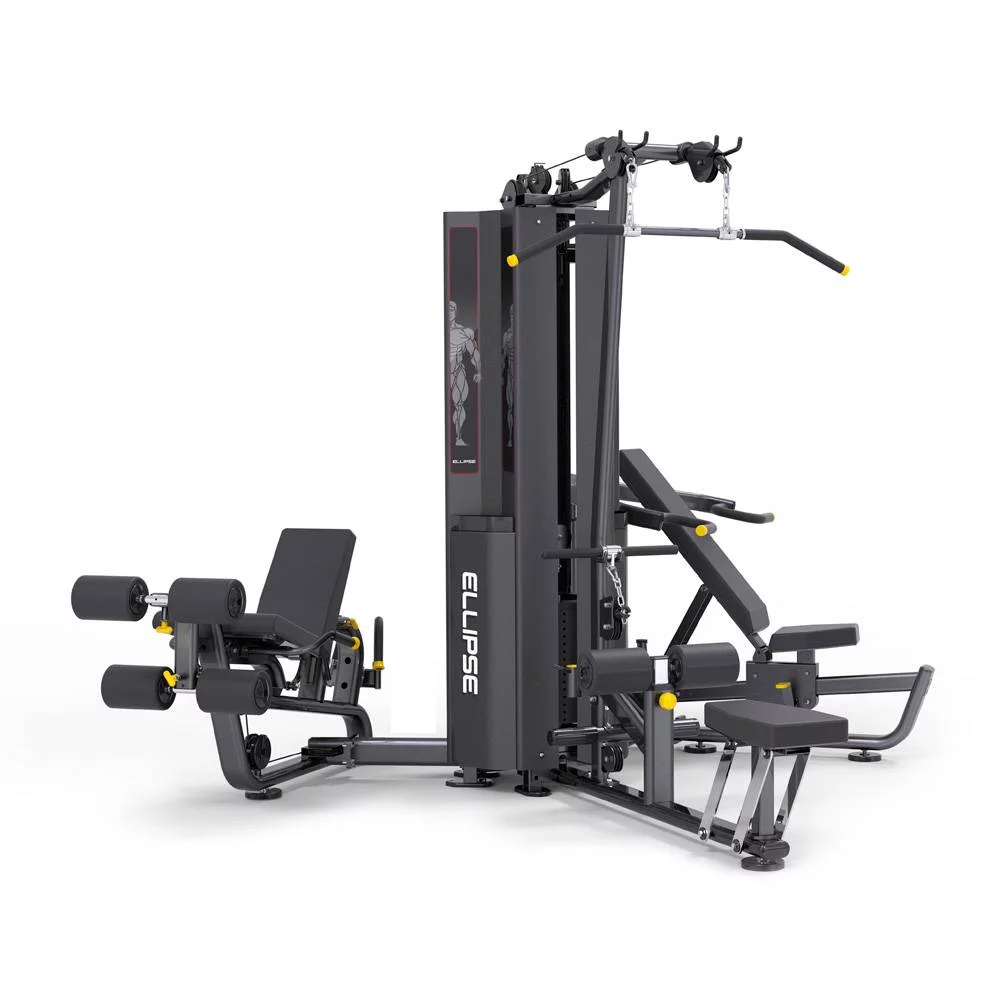
Professional buyers rarely ask for the best exercise. They ask which machine covers the widest range of movements per square metre. Floor space is the scarcest resource in a commercial gym, a hotel fitness room, a corporate facility or a club. Judged on that criterion, the most complete single piece of strength equipment is the professional multi station gym.
Why a multi station gym is the most complete single unit
A multi station combines several work posts on one frame: high and low pulleys, a chest press station, a lat pulldown, a leg developer, a pull up bar and, depending on the configuration, a squat area and a bench position. One structure therefore trains chest, back, shoulders, biceps, triceps, glutes, quadriceps, hamstrings, calves, abdominals and the lumbar chain. Nothing else in a strength range covers that many muscle groups from a single anchoring point.
The commercial argument follows the technical one. Because the stations share a frame and, in most configurations, the same weight stacks, the installed footprint is far smaller than the sum of the equivalent single stations. For a small floor that has to serve a mixed membership, that ratio of exercises to square metres is usually the deciding factor. Our range is listed under multi station gyms.
What complete actually has to mean in a commercial setting
Completeness on a professional floor is not only a count of exercises. Four requirements come with it.
Guided load. Selectorised stacks let a member change resistance in seconds, with no plate handling and no spotter. On a busy floor that is what keeps circulation moving and keeps supervision workload low.
Adjustability. Seat height, back pad, pulley height and starting position have to cover a wide range of body sizes, because a commercial user base is far more varied than a single household. A station that only fits one morphology is not complete, whatever the exercise list says.
Standards. Indoor equipment installed in a facility open to users must be built to EN ISO 20957-1 class S, the class intended for professional and supervised use. This is a compliance requirement for the operator, not a marketing label, and it also governs guards, pinch points and stack enclosures.
Serviceability. Cables, bearings and upholstery are wear parts. A complete machine is one whose parts are still available years after installation, which is a question to put to the supplier before the order, not after.
What a multi station does not replace
A multi station is the most complete single unit, not a complete gym. Two families sit alongside it.
Free weight work still needs a bench and a rack: incline, decline and flat pressing, dumbbell work and loaded carries are not reproduced on a pulley frame. Our weight benches are designed to sit next to a station rather than compete with it.
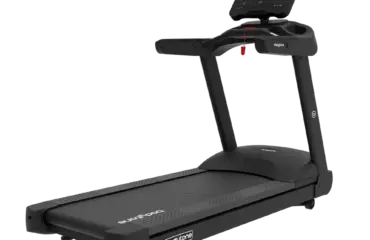
Endurance work needs its own zone. Treadmills, rowers, indoor bikes, cross trainers and stair climbers cover cardiovascular conditioning and calorie expenditure, which no strength frame does. The full selection is in cardio equipment.
Choosing according to the type of venue
A hotel or a residential facility with a small dedicated room usually takes one compact multi station and a short cardio line: it gives guests a full body option without supervision and without a large plate inventory. A commercial club with a larger floor tends to use a multi station as the entry point for new members and beginners, then adds single stations and plate loaded machines for the members who progress. A corporate fitness room, where sessions are short and unsupervised, is the clearest case for a multi station: guided load, no loose plates, minimal risk, minimal induction time. A CrossFit box or a performance gym works the other way round and builds on rigs and free weights, with a station only as a complement.
Frequently asked questions
Is one multi station enough for a whole facility?
For a small hotel or corporate room used by a limited number of people at a time, usually yes. For a club with simultaneous peak attendance, one station becomes a bottleneck: capacity, not exercise coverage, is what sets the number of units.
How much floor space should be planned?
The footprint depends on the configuration ordered, and every station also needs a clear working perimeter for the user and for maintenance access. We size that perimeter on your actual room plan rather than on a catalogue figure.
Can a multi station be used by beginners without supervision?
That is precisely what guided load is for. Movement paths are constrained, the load cannot fall free, and the pin selection is intuitive. Clear station signage and an induction session remain good operating practice.
Is a multi station suitable for rehabilitation work?
Low starting loads and fine increments make guided stations a common choice in rehabilitation settings, but the prescription itself belongs to the clinical team. Specify the increment size you need before ordering.
Specifying your station
The most complete machine is the one that matches your floor, your attendance and your user profile. Send us your room dimensions, the type of venue and the number of simultaneous users, and we will propose a configuration and a layout: request a quote.