High Pulley Lat Pulldown Machine: Specification and Use in Commercial Gyms
La poulie haute permet le tirage vertical, alternative guidée à la traction pour les publics ne la maîtrisant pas encore. Elle cible le grand dorsal, avec une contribution du biceps variable selon la prise. Le réglage du cale-cuisses conditionne la stabilité du bassin pendant le mouvement.

The high pulley, better known internationally as the lat pulldown, is the station that makes vertical pulling accessible to every member of a facility. It reproduces the pulling pattern of a pull-up under a controlled, adjustable load, which is precisely why it belongs in almost every commercial specification, from a city-centre club to a hotel fitness room, a university sports hall or a rehabilitation unit.
What a high pulley station is
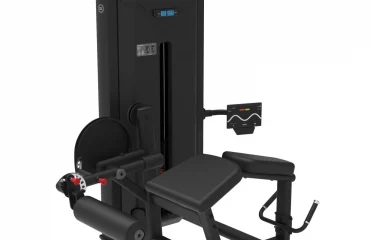
The machine consists of an overhead pulley, a selectorised or plate-loaded resistance, a seat and a thigh pad that holds the user down against the pull. The user pulls a bar or handle down towards the chest and controls its return. The primary target is the latissimus dorsi, with the rear shoulder, the mid-back and the biceps contributing to a degree that depends on the grip used.
Compared with a fixed pull-up bar, the load is set by the operator rather than by body weight. A member who cannot yet perform a single pull-up can train the same movement pattern from day one, and a strong member can load beyond body weight. That range is what makes the station so productive per square metre of floor.
Why operators install one
- Builds the back, rear shoulders and arms with a load you can scale to any user
- Supports posture work, which matters for the sedentary member base most clubs serve
- Increases upper-body pulling strength, balancing the pushing stations on the floor
- Lowers the injury exposure associated with unassisted pull-ups attempted by untrained users
- Offers grip and attachment variations, so one frame covers several exercises
Coaching the movement correctly
Technique is what separates a productive station from a source of shoulder complaints. The points worth putting on your induction card:
- Keep the shoulders drawn back and down so the movement does not migrate into the upper traps
- Initiate the pull by bringing the shoulder blades together, then let the arms follow
- Control the return phase rather than letting the stack pull the arms up
- Vary between a wide and a narrow grip to shift emphasis across the back musculature
- Exhale during the pull, inhale on the return
Set the thigh pad before the first repetition: it must hold the pelvis down firmly without pinching, otherwise the user lifts off the seat and the movement loses its target. Three to four sets of eight to twelve repetitions is the usual prescription for a general training goal.
Precautions to build into your supervision
- Warm up before the first working set
- Load progressively and stay within a controllable range
- Have a member of staff set the seat and thigh pad to the user on their first session
- Avoid accumulating excessive pulling volume in a single session
- Stop the set if pain or discomfort appears, and refer the member to a qualified professional
Specifying a high pulley for a commercial site
Indoor strength equipment installed in a facility open to users is built to EN ISO 20957-1 class S, the professional class. Ask for the declaration in writing. Beyond compliance, the details that decide how the station ages are the pulley bearings, the cable specification and its swaging, the guarding around the weight stack, the adjustment range of the seat and thigh pad, and whether the pads can be reupholstered rather than replaced whole.
Selectorised units suit high-throughput floors because the load changes in a second. Plate-loaded high pulleys give a different feel and a lower cost per station in strength-focused rooms. Iso-lateral versions let each side travel independently, which is useful where strength asymmetries are common. You will find both formats in our cable stations range and among the selectorised machines, including the Etenon R8202 iso-lateral lat pulldown.
On the floor plan, allow overhead clearance for the bar travel and enough space behind the seat for the user to sit down and stand up without crossing an adjacent station. Grouping the high pulley with the seated row and the other pulling stations shortens circuits and simplifies supervision.
Frequently asked questions
Which muscles does the high pulley train?
Mainly the back, with the rear shoulders and the arms contributing. The grip determines how much of the work the biceps take.
How many sets and repetitions should be programmed?
Three to four sets of eight to twelve repetitions is the standard range for a general strength and conditioning goal.
Is the station suitable for beginners?
Yes. It is one of the few pulling stations a complete beginner can use productively from the first session, provided the load starts light and the technique is taught.
Can it be used for assisted pull-up work?
Some machines allow the resistance to be set so that the movement pattern is trained before a member can perform an unassisted pull-up. Check the configuration of the specific model.
High pulley or pull-up bar?
Both are effective. The high pulley adds adjustable load and a wider choice of grips, which is why it serves a mixed member base better; a pull-up bar costs less and takes almost no floor area. Most commercial floors carry both.
Equipping your facility
Whether you are fitting out a new floor or replacing an ageing station, the specification questions are the same: class, load format, adjustment range and spare-part availability. Send us your floor plan and your user profile through our quotation request page and we will return a configuration with a costed proposal.
Réalisations documentées
- Cage street workout ultime, Carcassonne – armée française
- Cage street workout ultime, Tahiti – armée française, Polynésie
- Cage SP Max, centre EPIDE de Combrée – établissement public d’insertion
- Cage SP Max, lycée Saint-Bénigne de Dijon – établissement scolaire