The Shoulder Press Machine: The Complete Guide
La presse à épaules guide la poussée verticale et sollicite le deltoide antérieur et moyen ainsi que le triceps. Le réglage de la hauteur d'assise conditionne l'alignement de l'épaule et la sécurité articulaire. La trajectoire guidée la rend utilisable sans pareur, y compris par des débutants.

Introduction
Welcome to this complete guide to the shoulder press machine. Below we go through what the station does, the muscles it loads, the exercise variations it supports, how to programme it, and what to look for when you are specifying one for a commercial floor. Whether you are a member starting out on shoulder work or an operator deciding which press belongs in the circuit, everything you need is here.
What a shoulder press machine is
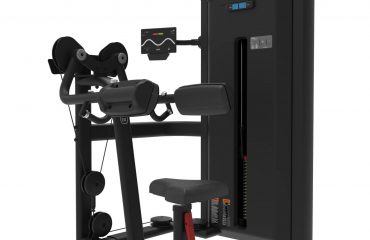
The shoulder press machine is one of the standard stations for building and strengthening the shoulders. It guides a vertical pressing path so the user can load the movement without having to stabilise a free barbell overhead, which is precisely why it appears in almost every commercial circuit: it is one of the few ways to train overhead pressing safely with no coach standing beside the user.
Which muscles it works
The station loads the deltoid, the muscle that caps the shoulder and has three heads: anterior at the front, lateral at the side and posterior at the rear. A seated vertical press loads mainly the anterior and lateral heads. The triceps extend the elbow through the same movement and take a substantial share of the work, and the upper trapezius and serratus stabilise the shoulder blade as the arms move overhead. The posterior deltoid is barely involved in a press, which is why a shoulder area also needs a reverse fly or rear delt station to stay balanced.
Why put one on the floor
- Targeted strengthening of the shoulder musculature.
- Improved shoulder stability and control through a guided path.
- Development of upper-body strength and pressing power.
- Reduced injury risk compared with unsupported overhead work, because the machine handles the stabilisation the user cannot yet provide.
- Accessibility: a member who cannot yet press a barbell overhead can still train the pattern from the first session.
Variations on the shoulder press
The same pattern can be trained several ways, and a well-built shoulder area offers more than one.
- Seated press. The standard on a machine. The back is supported, the path is guided, and the emphasis sits on the anterior and lateral deltoid.
- Standing press. Performed with free weights rather than on the machine, this version recruits far more trunk and hip stabilisation alongside the shoulder. It belongs in the free-weight area, not in the machine circuit.
- Unilateral press. Pressing one arm at a time exposes and corrects side-to-side imbalances and improves shoulder symmetry. Machines with independent arms allow this without changing station.
- Grip variations. Neutral, pronated and converging grips change the loading slightly and let members with shoulder discomfort find a path that works for them. Machines with a triple grip are worth the extra outlay in a mixed-ability room.
Programming the station
- Include the shoulder press in shoulder training at least once a week.
- Vary the exercise variations so different heads of the deltoid are trained rather than the same one repeatedly.
- Maintain correct technique: back in contact with the pad, no lumbar arch, controlled descent. Technique protects the shoulder more than any load reduction does.
- Balance pressing with pulling. A shoulder area that only presses produces the rounded, forward posture that shoulder problems come from.
Choosing a shoulder press machine for a facility
Two families cover almost all commercial needs.
Selectorised machines change load with a pin, which suits a mixed membership because a member moves from station to station without handling plates. They are the default in a general fitness circuit; see the range of selectorised strength machines.
Plate-loaded machines cost less per station, take heavier loads and suit strength-focused clubs where members are used to handling plates. Browse the plate-loaded machines range.
Whichever family you choose, check four things before ordering: the seat adjustment range, because a fixed seat excludes shorter and taller members; the start position, because a press that begins too high forces an awkward entry; the load increment, because ten-kilo jumps are useless to a beginner; and the footprint, because these machines are deeper than they look. The Power Line shoulder press is a good reference point for a general commercial circuit.
Frequently asked questions
Which muscles does the shoulder press machine work?
Mainly the anterior and lateral heads of the deltoid, with substantial involvement of the triceps and stabilising work from the upper back and shoulder blade muscles.
How often should the machine be used?
Including the shoulder press in shoulder training at least once a week is the usual recommendation for consistent results.
Can a beginner use it?
Yes. The guided path makes it one of the more beginner-friendly pressing stations. Start light and hold good technique before adding load.
Seated or standing: which is more effective?
Both work. The standing version recruits considerably more stabilising musculature, which is useful for coordination and trunk strength, while the seated machine allows heavier, safer loading of the shoulder itself.
Can dumbbells replace the machine?
Yes, dumbbells perform a similar movement and add variety and stabilisation demand. In a commercial room the answer is usually both: the machine for unsupervised members, free weights for those who know what they are doing.
What is the point of unilateral pressing?
It corrects muscular imbalances, improves shoulder symmetry and strengthens the stabilisers, because the trunk has to resist rotation while one arm presses.
Conclusion
The shoulder press machine is a versatile, effective station for strengthening and developing the shoulders. Programmed properly, it builds strength, stability and control while keeping the risk of overhead work manageable for members training without supervision. Vary the variations according to the objective and hold the technique, and the station earns its floor space.
If you are specifying rather than training, tell us the circuit you are building, the membership profile and the space available, and we will match the press to the rest of the room. Request a quote for a costed proposal.