The Lower Back Bench: An Essential Station for Strengthening the Lumbar Region
Le banc de musculation lombaire renforce les extenseurs du rachis, dont la faiblesse est associée aux lombalgies communes. Il permet un travail progressif, avec ou sans charge additionnelle, sur une amplitude contrôlée. C'est un poste peu encombrant et souvent sous-représenté dans les plateaux de salle.

The lower back bench is probably the most underrated piece of equipment on a gym floor. Yet it plays a decisive part in preventing back pain and improving posture, and it takes up very little space. This article looks at what the bench is, what it does for the people using it, how it should be used, and why it deserves a proper place on your equipment plan rather than a corner behind the free weights.
The lower back bench strengthens the spinal erectors, and weakness in those muscles is associated with common low back pain. It allows progressive work, with or without added load, over a controlled range of motion. It is a compact station and one that is consistently under-represented on commercial gym floors.
What is a lower back bench?
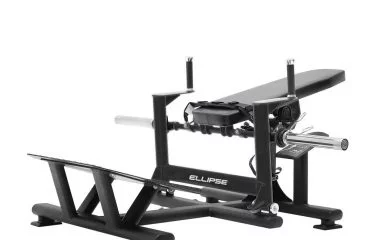
A lower back bench, often called a hyperextension bench, is designed specifically to work the lumbar muscles and the abdominals. It allows targeted exercises that strengthen not only the lower back but the whole posterior chain.
These benches are generally built on a robust steel frame that gives high stability and safety during training. Some models are height adjustable so they suit different body sizes and stay comfortable through the full movement.
The benefits of the lower back bench
Building strength
Regular use of a lower back bench significantly strengthens the muscles of the lower back. Those muscles are central to supporting the spine and holding good posture.
Working them consistently also reduces the risk of injury during everyday activity and during other strength exercises. The hyperextensions performed on this bench load the spinal erectors and the glutes effectively.
Preventing pain
Weak musculature in the lumbar region is often behind chronic back pain. The lower back bench addresses that weakness by strengthening the stabilising muscles of the trunk, which helps prevent back pain from developing.
Regular, correctly performed work on the bench also corrects certain postural problems that cause pain and discomfort day to day.
How to use a lower back bench
To get the best from the bench, the technique has to be right. These are the practical points to brief users on.
- Adjustment: make sure the bench is set to the user’s height. The hips should be aligned with the support pad so the movement has its full range.
- Position: lie on the bench with the feet under the ankle supports. Keep the trunk stable and the hands crossed on the chest or behind the head.
- Execution: around 20 to 30 repetitions per set is enough for effective work. Lower slowly until the body forms an angle of 90 degrees, then come back up with the lumbar muscles under tension.
Choosing the right lower back bench
Several criteria matter when you select a lower back bench, and the market offers a range of equipment with different features and designs.
Stability and materials
A good bench has to be genuinely stable. A steel structure normally means robustness and durability. Check that the bench has non-slip feet so it cannot move during use.
Choose a model with thick, comfortable pads to keep pressure points to a minimum during the exercise. On a commercial floor, upholstery quality is what decides how the station looks after two years of continuous use.
Features
Some features make a real difference to the training experience.
- A compact or space-saving frame is particularly useful when floor area is tight, which is often the case in hotel and residential fitness rooms.
- Height-adjustable arm supports allow further personalisation and better targeting of the intended muscles.
- The ability to adjust the angle of inclination opens up different difficulty levels and exercise variations on the same station.
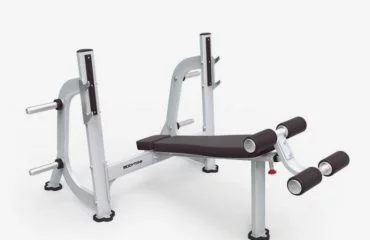
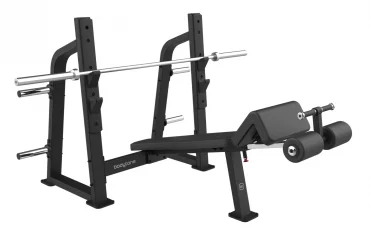
Our weight benches range covers hyperextension stations alongside flat, incline and decline benches, and the full strength training machines catalogue lets you build the back and core area around them.
Fitting the bench into a training routine
Whether the user is an experienced athlete or a complete beginner, the lower back bench slots into almost any routine. The best results come from combining it with other back exercises for a complete, coherent programme.
Here is an example of a weekly routine that includes this work.
- Monday: full upper-body session, including hyperextensions.
- Wednesday: session focused on legs and glutes.
- Friday: lower back and abdominal work on the bench.
Frequently asked questions
Which muscles does a lower back bench work?
The bench works mainly the spinal erectors in the lower back. Depending on the exercise variation, it also engages the glutes, the hamstrings and the abdominals.
How often should the bench be used?
For the best results, programme sessions on the lower back bench at least two to three times a week. Leave enough recovery time between sessions to avoid overloading the muscles.
Does it work in a small fitness room?
Yes, and that is one of its strengths. The station has a small footprint, which is why it suits hotel fitness rooms, residential gyms and rehabilitation rooms where floor area is limited. Choose a model that is stable and adjustable enough for the range of users you serve.
What matters most when choosing one?
Check the overall stability of the equipment, the quality of the materials, ideally a steel structure, and the adjustments available. A well-designed bench is durable, comfortable and adaptable to different body sizes. For a commercial installation, specify equipment declared to EN ISO 20957-1 class S.
Specifying your back and core area
The lower back bench is a small investment that answers one of the most common complaints your members will bring you. Combined with the rest of a back and core area, it turns a general-purpose floor into one that actually addresses posture and prevention.
Tell us the size of your room and the profile of your users, and we will propose the right bench and the stations to go with it. Request a quote and our team will come back with a costed proposal.