Hydration and recovery: what actually works, and how to equip for it
Quatre postes structurent l'équipement d'un sportif : le matériel d'entraînement, la nutrition, l'hydratation et la récupération. Chacun se compare sur des critères objectifs : durabilité, composition, teneur en électrolytes, effet documenté. Cet article contient un lien sponsorisé vers un partenaire nutrition.
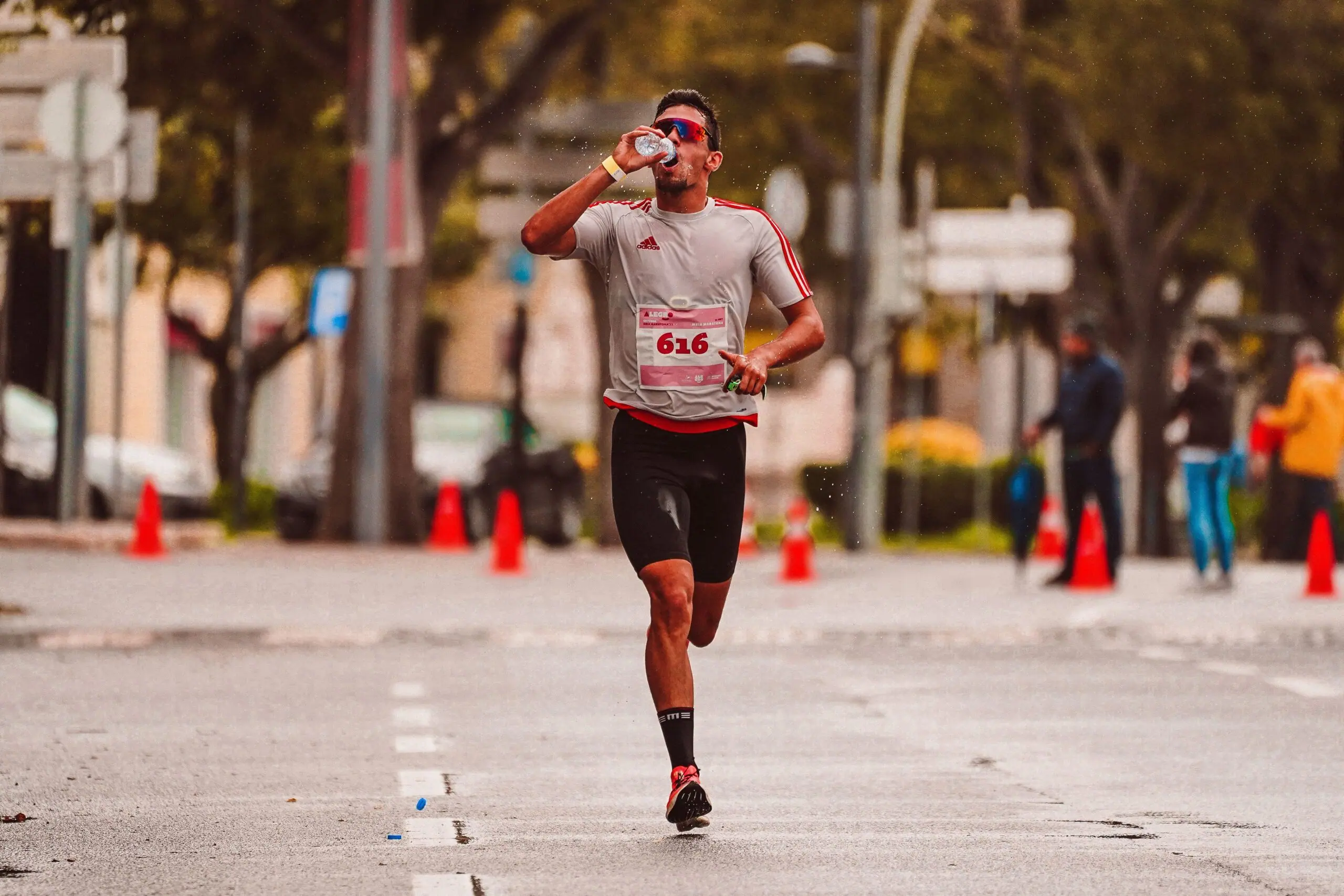
Hydration and recovery are the two areas where members waste the most money and clubs get the most questions. The short answers: for sessions under 60 minutes, water is sufficient; beyond that, or in heat, sodium matters more than carbohydrate; and for recovery, sleep and protein intake outperform every device on the market. Everything else — isotonic drinks, electrolyte tablets, cold immersion, compression, massage tools — sits somewhere between mildly useful and pleasant. This guide gives the thresholds, the arithmetic and the facility decisions that make recovery a service rather than a slogan.
Work out the sweat rate before choosing any drink
Fluid needs vary by a factor of four between individuals. Rather than guess, measure once:
- Weigh, minimally clothed, before the session.
- Train for one hour, recording any fluid consumed.
- Towel dry and weigh again.
- Sweat rate = (weight lost in kg + fluid drunk in litres) per hour. 1 kg lost equals approximately 1 litre of sweat.
Repeat in cool and hot conditions. A typical result is 0.5 to 1.2 L/h indoors and 1.5 to 2.5 L/h in heat or in intense sessions. Aim to replace 100 to 150% of losses over the hours following, and to limit in-session losses to under about 2% of body mass, the point at which performance and thermoregulation begin to degrade measurably.
Water, isotonic or electrolytes: the decision table
| Session | Recommended fluid | Reason |
|---|---|---|
| Under 60 minutes, indoors | Water | Glycogen and electrolyte losses are not limiting |
| 60 to 90 minutes, moderate | Water, plus food afterwards | Carbohydrate during is unnecessary at this duration |
| Over 90 minutes, or high intensity | Isotonic drink, 4 to 8% carbohydrate | Sustains blood glucose and empties from the stomach at a similar rate to water |
| Heat, heavy sweater, or cramping history | Electrolyte solution, sodium-led | Sodium drives fluid retention and replaces the dominant sweat electrolyte |
| Over 3 hours, endurance | Isotonic plus additional sodium and solid food | Water alone over this duration risks dilutional hyponatraemia |
| Post-session rehydration | Fluid with sodium, or a meal plus water | Plain water alone increases urine output and slows net rehydration |
Practical benchmarks: sports drinks intended for prolonged exercise typically carry 460 to 1,150 mg of sodium per litre, and carbohydrate at 4 to 8 g per 100 ml. Concentrations above 8% slow gastric emptying and commonly cause gastrointestinal problems. Drinking large volumes of plain water during very long events, without sodium, is the classic route to hyponatraemia — a genuine medical emergency, not a theoretical risk.
Recovery: what the evidence supports, ranked
| Intervention | Strength of evidence | Practical note |
|---|---|---|
| Sleep, 7 to 9 hours | Strong | The largest single lever, and the one nobody sells |
| Total daily protein, 1.6 to 2.2 g per kg body mass | Strong | Daily total matters far more than post-session timing |
| Total energy intake matching training load | Strong | Under-eating is the commonest cause of stalled recovery |
| Rehydration with sodium | Strong | Especially between two sessions in one day |
| Active recovery, 10 to 20 minutes easy | Moderate | Helps perceived recovery; cheap and easy to programme |
| Compression garments post-session | Moderate | Reduces perceived soreness at 24 and 48 hours |
| Foam rolling and self-massage | Moderate for perceived soreness and range of motion | Short-term effect; excellent value per euro |
| Cold water immersion | Mixed | Helps between same-day competitions; may blunt strength adaptation if used routinely after resistance training |
| Stretching immediately post-session | Weak for soreness | Useful for mobility goals, not as a recovery tool |
Protein: dose, timing and food versus powder
- Daily total is the variable that matters: 1.6 to 2.2 g per kg of body mass for anyone training seriously. For an 80 kg trainee, 128 to 176 g per day.
- Distribution beats timing: roughly 0.3 to 0.4 g per kg per meal, three to five times a day, is more effective than concentrating intake around the session.
- Powder is a convenience, not a category: whey, casein and blended plant proteins all work when the daily total and leucine content are adequate. Plant sources generally need a slightly higher dose or a blend to match the amino acid profile.
- Food first: dairy, eggs, fish, meat, legumes and tofu deliver the same amino acids with additional micronutrients, usually at lower cost per gram of protein.
Designing a recovery zone that gets used
Recovery zones fail for predictable reasons: they are put in the leftover corner, they have no equipment storage, and nobody explains what to do. Fix those three and utilisation follows.
| Element | Specification | Price excluding VAT |
|---|---|---|
| Exercise mat, 120 x 60 x 1.5 cm | One per 2 members using the zone at peak | 36.00 EUR |
| Compact mat, 40 x 60 x 3 cm | Kneeling and joint protection | 12.00 EUR |
| Myofascial roller | 2 to 4 per zone, varied densities | 41.00 EUR |
| Wall-mounted mat storage | Prevents the mats-on-the-floor problem | 29.00 EUR |
| Floor-standing mat rack | For zones with more than 10 mats | 309.00 EUR |
| Mat rack, 20-piece capacity | Studio-scale storage | 345.00 EUR |
| Zone flooring | 7 to 15 mm rubber or puzzle tile | from 17.00 EUR per m2 |
Four design rules: put the zone where members already end their session, not by the entrance; provide 4 to 6 m2 per simultaneous user; put storage within arm’s reach of the mats; and display a simple protocol card so nobody has to ask what to do. A water point within 10 metres does more for hydration compliance than any poster.
A hydration policy a facility can actually run
Individual advice does not scale; environment does. Five decisions cover almost every case in a commercial setting:
- Water points every 25 metres of floor, or one per training zone. Compliance falls sharply when a member has to leave the zone to drink, and it falls to nearly zero in a class format.
- Bottle-filling taps rather than fountains. Filling a bottle takes seconds and lets members drink during the session; a drinking fountain only works between sets.
- A written policy for classes above 60 minutes — a scheduled drink break rather than an instruction to drink when thirsty. Thirst lags fluid loss.
- Sodium available, not just water, for hot studios and long-format sessions. Electrolyte sachets behind reception cost little and prevent the cramping complaints that generate refund requests.
- Staff briefed on hyponatraemia. Anyone drinking very large volumes of plain water during a long event, and reporting nausea, headache or confusion, needs medical attention rather than more water. Put this in the induction, not in a poster.
Frequently asked questions
Do I need a sports drink for a one-hour gym session?
No. For sessions under 60 minutes, water is sufficient; carbohydrate and electrolyte replacement are not limiting factors at that duration. Isotonic drinks become useful beyond about 90 minutes or in hot conditions.
How do I calculate my sweat rate?
Weigh yourself before and after one hour of training, minimally clothed and towel dried, and add any fluid consumed. Weight lost in kilograms plus fluid drunk in litres equals sweat rate per hour. Typical values are 0.5 to 1.2 L/h indoors and up to 2.5 L/h in heat.
How much sodium should a sports drink contain?
Drinks designed for prolonged exercise typically contain 460 to 1,150 mg of sodium per litre, with carbohydrate at 4 to 8 g per 100 ml. Higher carbohydrate concentrations slow gastric emptying and commonly cause gastrointestinal discomfort.
Does cold water immersion improve recovery?
The evidence is mixed and context-dependent. It is useful between two competitions on the same day, when the priority is restoring performance quickly. Used routinely after resistance training it may blunt some of the adaptations you are training for, so it should not be a default.
Is whey better than food protein?
No, it is more convenient. What matters is the daily total, 1.6 to 2.2 g per kg body mass, distributed across three to five meals at roughly 0.3 to 0.4 g per kg each. Powder helps people reach that total when appetite or logistics get in the way; it has no unique property that food lacks.
Planning a recovery zone? Send us your floor plan and your peak attendance. Light In Fitness returns a costed recovery layout — flooring, mats, rollers, storage, circulation — with prices excluding VAT within 24 working hours, alongside the rest of the facility if you are refurbishing. See also our guides to sports compression garments and rubber sports flooring.
Related guides: what actually works for abdominal fat.
Réalisations documentées
- Dalles et sols sportifs : livraisons documentées – plusieurs chantiers
- Sol sportif extérieur, square Georges-Vallerey – Taverny (95)
Sources et références
- Code du sport, articles R322-4 à R322-43 – garanties d’hygiène et de sécurité applicables aux établissements d’activités physiques et sportives (Légifrance)