Sports compression garments: support, performance and recovery
Les vêtements de compression améliorent la sensation de maintien et réduisent les courbatures perçues, avec un effet limité sur la performance mesurée. Le bénéfice documenté porte principalement sur le confort et la récupération ressentie. Le niveau de compression, exprimé en mmHg, doit correspondre à l'usage visé.
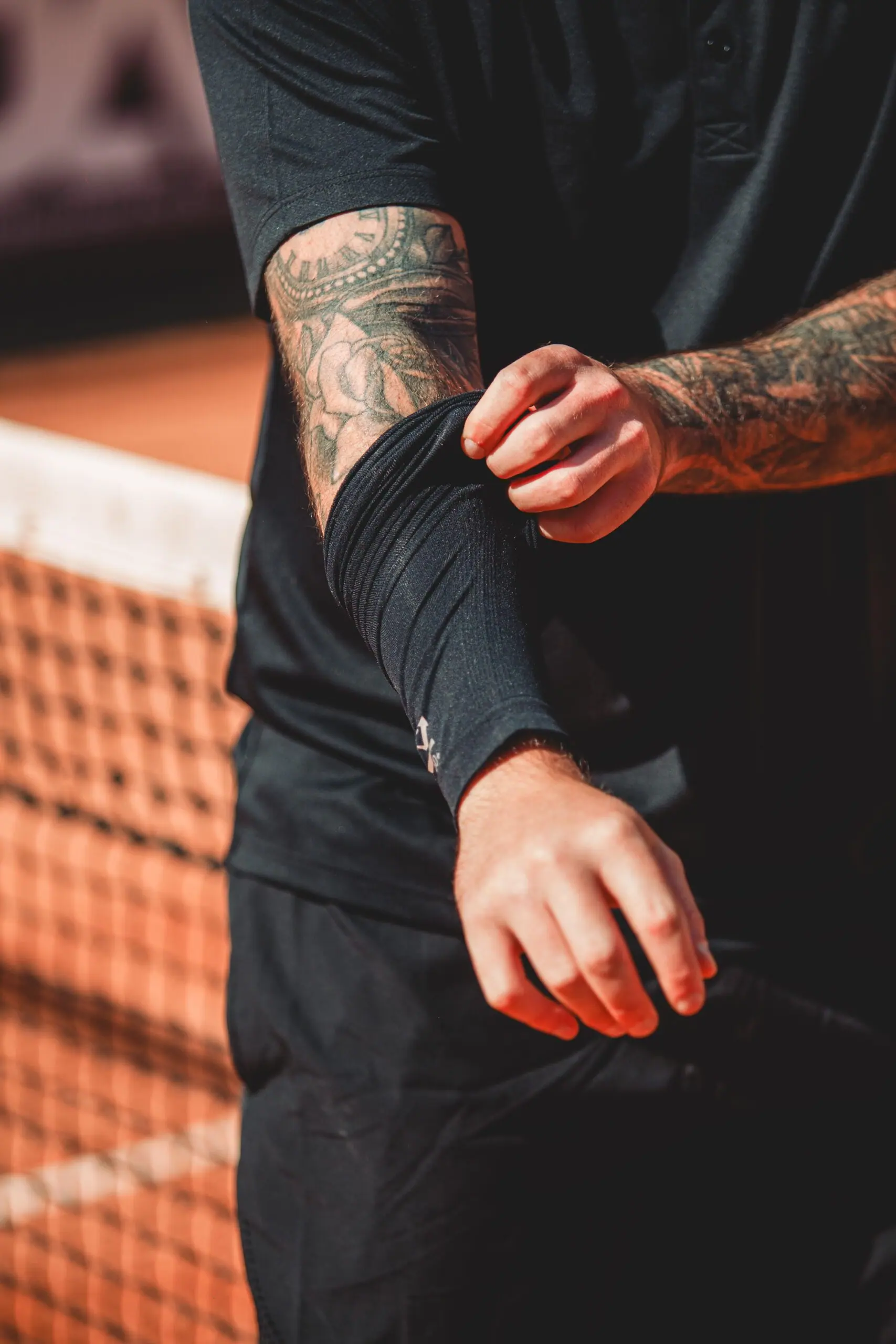
Compression garments work primarily through graduated external pressure — highest at the extremity, decreasing proximally — which supports venous return, limits muscle oscillation under impact and reduces perceived soreness after hard sessions. The evidence is strongest for recovery and perceived comfort, weaker and less consistent for acute performance gain. For a club, studio or hotel gym, that distinction matters: compression sells well as a recovery and comfort product, and overselling it as a performance product damages credibility. Here is what the pressure figures mean, which garment suits which discipline, and how to run a retail corner that actually turns over.
How sports compression works
- Venous return. External pressure narrows superficial veins, increasing flow velocity and assisting the calf muscle pump. This is the mechanism borrowed from medical compression therapy and the best-supported one.
- Reduced muscle oscillation. Every foot strike sends a shock wave through soft tissue. Limiting that vibration reduces micro-damage and is the most plausible route to lower post-exercise soreness.
- Proprioception. Skin pressure improves joint position awareness, which is why athletes frequently report feeling more stable rather than faster.
- Thermoregulation. Technical knits move moisture away from the skin, which matters as much for skin health as for comfort.
What compression does not do: it does not increase VO2max, it does not clear lactate faster in any meaningful sense, and it does not substitute for sleep or food.
Pressure classes: the numbers behind the marketing
| Category | Pressure at ankle | Typical use |
|---|---|---|
| Sports compression | 15 to 25 mmHg | Training, competition, travel, post-session recovery |
| Medical class I | 18 to 21 mmHg | Mild venous insufficiency, prescribed |
| Medical class II | 23 to 32 mmHg | Marked venous insufficiency, prescribed |
| Medical class III | 34 to 46 mmHg | Severe conditions, prescribed |
| Medical class IV | Above 49 mmHg | Specialist prescription only |
Two practical consequences. First, a sports sleeve is not a medical device and should never be presented as treatment for a diagnosed venous condition. Second, pressure only exists if the size is right: a garment sized up for comfort delivers a fraction of its stated pressure, and a garment sized down can restrict rather than assist. Measure the calf circumference, not the shoe size.
Which garment for which discipline
| Discipline | Priority garment | Why |
|---|---|---|
| Road and trail running | Calf sleeves or full socks | Highest impact loading on the calf and Achilles; oscillation control matters most |
| Trail and ultra-distance | Full socks plus quad support | Descents load the quadriceps eccentrically for hours |
| Triathlon | Trisuit plus calf sleeves | Continuity across three disciplines with no kit change |
| Cycling | Recovery tights, worn after the ride | On the bike the position already assists return; the value is post-session |
| Team sports | Shorts and calf sleeves | Repeated sprint and change of direction; proprioceptive benefit |
| Functional training and race formats | Knee-length socks | Also protects the shin during rope climbs, box jumps and sled work |
| Strength training | Not a priority | Low impact loading; spend the budget on footwear and belts |
| Long-haul travel to competition | Full socks | The best-evidenced non-athletic use case |
When to wear it: during, or after?
- During training and competition — the main reported benefits are comfort, reduced oscillation and proprioception. Expect no measurable performance gain; expect legs that feel fresher at the end.
- Immediately after, for 2 to 4 hours — this is where the evidence is strongest. Reduced perceived soreness at 24 and 48 hours is a consistent finding.
- Overnight — only with garments designed for it, at the lower pressure range. Do not sleep in a competition-tension garment.
- During travel — seated immobility is the classic indication for graduated compression, and it is the least contested use of all.
Contraindications matter: peripheral arterial disease, decompensated cardiac failure, severe peripheral neuropathy and acute skin infection are all reasons to refer to a doctor rather than sell a garment. Staff should know this list.
The reference brands and what to look for
Compressport is the Swiss brand that grew out of triathlon and remains a reference in endurance sport across Europe. Whatever brand you stock, judge it on four verifiable points rather than on marketing:
- Stated pressure profile in mmHg, with the gradient described — not just the word “graduated”.
- A size chart based on limb circumference, not on garment size alone.
- Seam construction — flat or seamless at the friction points, because a seam under a compression garment is a blister waiting to happen.
- Wash durability — elastane degrades. Ask for the manufacturer’s stated number of wash cycles before pressure loss, and pass it on to the customer.
Running a textile corner that actually turns over
For a club, studio or hotel gym, compression is one of the few textile categories that sells without a fashion cycle. Three rules make the difference:
| Decision | Recommendation | Reason |
|---|---|---|
| Range depth | 2 products, full size range | Missing sizes kill more sales than missing models |
| Placement | At the recovery or stretching area, not at reception | The purchase decision follows a hard session, not an arrival |
| Staff training | 30 minutes on measurement and contraindications | Wrong sizing produces returns and lost trust |
| Positioning | Recovery and comfort, never performance guarantee | Overclaiming is the fastest way to lose credibility with a serious membership |
| Bundle | Pair with the recovery offer, not with membership | Ties the product to a service the club already delivers |
The wider point is coherence: a textile corner works when the rest of the facility is credible. A recovery zone with foam rollers, mats and a properly specified floor makes a compression display make sense; a rail of garments beside a broken treadmill does not.
Sizing and care: the two variables that decide satisfaction
Almost every complaint that a compression garment “does nothing” comes down to sizing or to wear. Both are controllable.
- Measure the limb, not the person. Calf circumference at its widest point determines the size. Height and shoe size do not. A garment one size too large delivers a fraction of its stated pressure.
- Check the gradient direction. Pressure must be highest at the ankle and decrease upward. A garment that grips hardest at the knee is working against venous return.
- Fit test in store. A correctly sized garment is firm but leaves no indentation ridge after five minutes, and does not roll at the top band.
- Wash cool, never tumble dry. Heat is what destroys elastane. Ask the manufacturer for a stated number of wash cycles before meaningful pressure loss and pass it to the customer at the point of sale.
- Replace on schedule. A garment that has lost its gradient is a normal sock with a technical price. For a regular user, plan replacement rather than waiting for visible wear.
Frequently asked questions
Do compression garments improve performance?
The evidence for acute performance improvement is weak and inconsistent. The reliable benefits are reduced perceived soreness after exercise, less muscle oscillation under impact, better proprioception and greater comfort. Present them on that basis.
What pressure should a sports compression garment have?
Sports compression generally sits between 15 and 25 mmHg at the ankle, decreasing up the limb. Medical compression starts at class I, 18 to 21 mmHg, and is prescribed. A sports garment is not a medical device and should not be sold as treatment for a diagnosed venous condition.
Should compression be worn during or after training?
Both work for different reasons, but the strongest evidence is for wearing it after: two to four hours immediately post-session reduces perceived soreness at 24 and 48 hours. During exercise, expect comfort and stability rather than measurable speed.
How do you choose the right size?
By limb circumference, measured at the widest point of the calf, not by shoe or clothing size. A garment one size too large delivers a fraction of its stated pressure; one size too small can restrict circulation. This is the single most common cause of a compression product being judged ineffective.
How long does a compression garment last?
Elastane degrades with washing and heat. Ask the manufacturer for a stated number of wash cycles before meaningful pressure loss, wash cool, and never tumble dry. A garment that has lost its gradient is a normal sock.
Building a recovery zone? Compression is a retail product; the recovery experience around it is a facility decision. Light In Fitness has equipped more than 2,500 customers across Europe since 2013 with cardio, strength, mats, rollers, storage and technical flooring. Send us your floor plan and we will return a costed recovery-zone layout with prices excluding VAT within 24 working hours. See also our guide to rubber sports flooring.
Related guides: hydration and recovery and athlete skin care.
Réalisations documentées
- Dalles et sols sportifs : livraisons documentées – plusieurs chantiers
- Sol sportif extérieur, square Georges-Vallerey – Taverny (95)