How to use strength training machines: an eight-step guide
Using strength training machines properly is the step that decides whether a gym floor produces results or produces injuries. For an operator it is also a retention issue: members who feel competent on the equipment come back, and members who do not, quietly stop coming. Light In Fitness supplies professional strength equipment to gyms, clubs, hotels, schools and local authorities, and this is the guide we hand to the people who run those floors and to the members who train on them.
1. Warm the body up
Every session starts with a proper warm-up. Cardio equipment such as treadmills and cross trainers prepares the muscles and the joints for load. Warming up also reduces injury risk by activating the muscles and raising blood flow. On a floor plan this is why the cardio equipment usually sits on the route in from reception: people warm up on the way to the strength area rather than skipping it.
2. Choose the right machine
Different machines target different muscle groups: chest, back, and legs including quadriceps, glutes and calves.
- A bench press station works the upper body and the chest. A weight bench also supports other movements, from deadlift work to pull-ups on a bar.
- Each machine is designed to be adjusted easily to the user, whether that user is training for the first time or has been lifting for years.
For the operator, the question behind this step is coverage. A floor that offers three chest stations and nothing for the posterior chain will queue in one place and stand empty in another. The full range is in the strength training machines category.
3. Learn the adjustments
Before loading any weight, the machine has to be set to the height and the build of the person using it.
- Professional machines carry intuitive adjustments so that body alignment is correct, which is what makes the muscular work effective and keeps injury risk down.
This step is the one most often skipped, and it is the cheapest one to fix. A short induction that covers seat height, pad position and range of movement on the five most used machines does more for safety than any sign on the wall.
4. Use good form
Technique comes before load on every exercise.
- On an abdominal machine or an incline bench for crunches, the spine has to stay properly aligned. On a squat machine, the knees should not travel too far past the toes, which protects the joints.
- For members starting out, the support of a coach is worth arranging, so that the equipment is used correctly from the first session rather than corrected later.
5. Execute each repetition properly
Every exercise should be performed at a controlled tempo.
- Professional machines are built for smooth movement, which lets the user concentrate on contracting the target muscle. On triceps or biceps extensions, avoid jerky movements and favour slow repetitions.
Smoothness is not a comfort feature, it is a specification. It comes from the quality of the bearings, the cables and the guide rails, and it is one of the differences that a member feels immediately between commercial equipment and equipment that was never built for continuous use.
6. Mix the machines
Combining different machines is what covers the whole body.
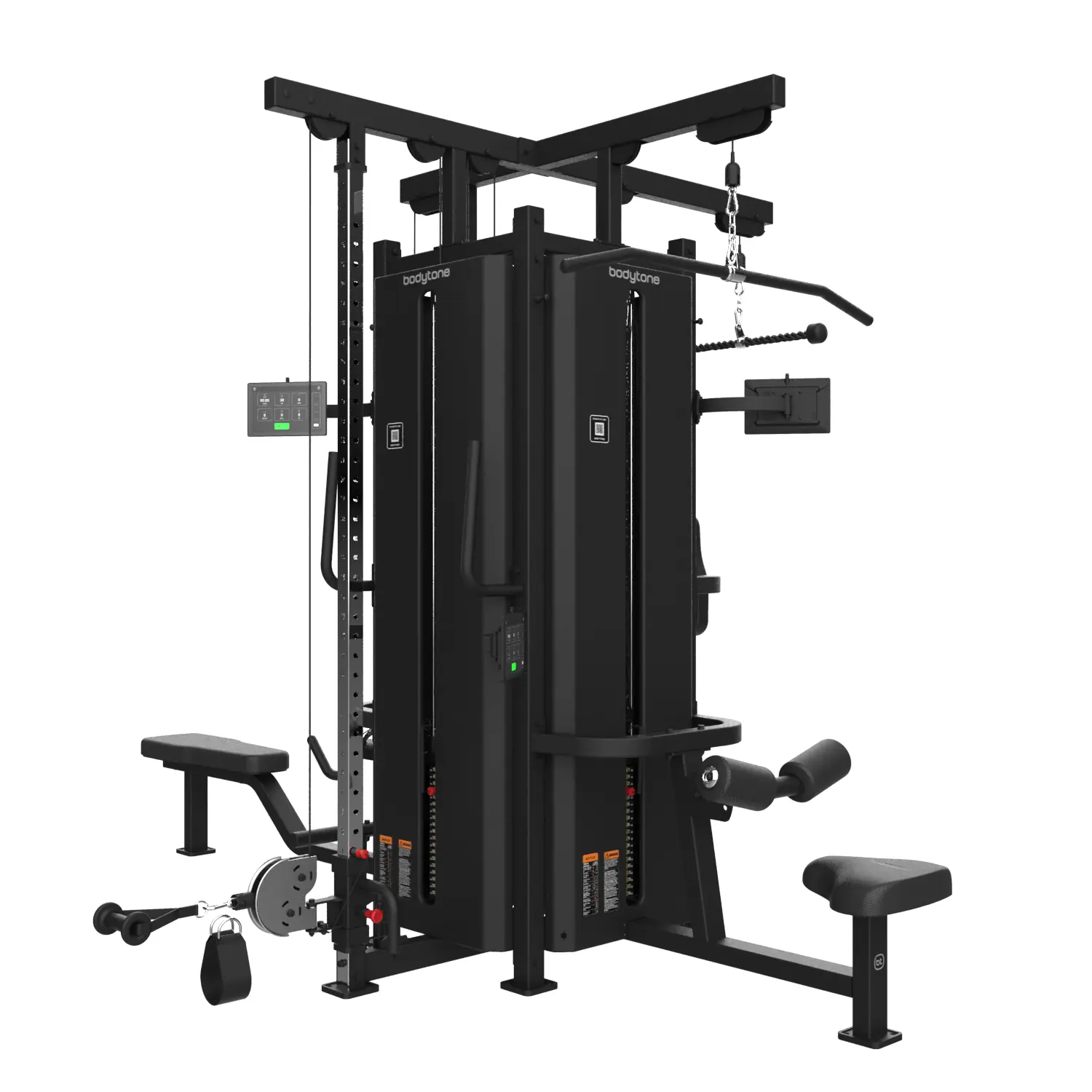
- Cable machines and multi-station units offer a wide variety of exercises from a small footprint. Alternate rowing movements for the back, deadlift-type work for glutes and thighs, and extensions for the triceps. See cable stations and multi-station gyms.
Multi-station units matter most where floor area is the binding constraint: hotels, residential schemes and corporate gyms, where one frame has to cover what a full commercial floor spreads across ten machines.
7. Respect recovery time
Adequate recovery between sets is essential.
- Respecting rest periods lets the muscles recover and limits soreness, particularly when heavier loads are being lifted to build muscle mass.
On a busy floor, rest periods and station occupancy are the same problem seen from two sides. Members resting between sets are the reason a popular station appears occupied for far longer than the exercise itself takes, and it is why the number of duplicate stations matters at peak times.
8. Track progress
Once the machines are part of a routine, progress is worth recording.
- Note the loads lifted, the number of repetitions and the muscle groups worked, so that the training can be adjusted and progression continues. Precise, repeatable adjustments and consistent ergonomics are what make that tracking meaningful: if the seat is in a different position each week, the numbers do not compare.
What professional equipment means here
Everything above assumes machines built for continuous use by many different people. Indoor equipment for a commercial facility is specified to EN ISO 20957-1 class S, the studio class, which covers frame strength, stability and the durability of moving parts under repeated, unsupervised load. It is the specification to ask for on any quotation, and it is what allows a machine to hold its adjustment and its smoothness after years of use rather than months.
Frequently asked questions
Should members warm up on cardio before using the machines?
Yes. A short cardio warm-up raises blood flow and prepares the joints, which lowers injury risk and improves the quality of the first working set.
How much adjustment does a machine need between users?
Seat height and pad position, at minimum. Both should take seconds. If setting up a machine takes a member several minutes, the queue behind them is an operating problem as much as a comfort one.
Do beginners need a coach?
For the first sessions it helps considerably. Guided machines are designed to be safe without supervision, but a short induction covering alignment and tempo prevents habits that are hard to undo later.
How long should the rest between sets be?
Long enough for the next set to be performed with the same technique, which depends on the load and the person. Cutting rest to save time usually costs form first and results second.
Equipping the floor
Good technique starts with equipment that adjusts properly and moves smoothly. Send the floor plan, the surface area and the profile of your members, and the machine list is built around how the room is actually used. Request a quote for a proposal with the class, the dimensions and the warranty stated item by item.