Power tower: the technical specifications that matter in a gym

The power tower, also known as the roman chair, is one of the most space-efficient strength stations a facility can install. A single frame covers pull-ups, dips, hanging leg raises and back extensions, which is why it appears in commercial gym floors, hotel training rooms, club facilities and functional zones alike. This article sets out the technical characteristics that actually matter when you specify one for a professional site.
Frame and structural strength
A power tower is a bodyweight station, so the whole specification rests on the frame. Commercial units are built from steel, and what separates them is section size, wall thickness, weld quality and the geometry of the base. Those four things determine whether the unit stays rigid when a user swings under load rather than moving through a controlled range.
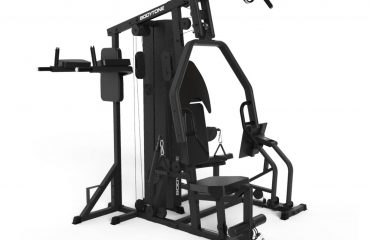
For any site open to third parties, the certification is the first thing to check. Indoor training equipment is classified under EN ISO 20957-1, and equipment for supervised commercial use falls under class S. That classification covers stability, structural strength, entrapment prevention and endurance testing, and it is what makes a station suitable for unsupervised use in a staffed facility. A station such as the Bodytone FBC15 power tower is built to that commercial specification level.
Stability also depends on installation. Check the footprint of the base, whether the manufacturer requires floor fixing, and what clearance is needed around the pull-up bar so that a tall user does not reach a ceiling fitting or a neighbouring machine at the top of the movement.
Adjustability
Several models allow the height or inclination of the pads and supports to be adjusted. In a commercial context this is not a comfort option: it is what lets users of very different heights adopt correct positioning on the same station. Poor positioning on a dip or a back extension is the most common source of shoulder and lower back complaints, and a station that fits only one body size will be used by a fraction of your members.
Look at the adjustment mechanism itself as well. Pop-pin adjustments that can be operated without tools, with clearly marked positions, are what make a station usable between sets. Adjustments that require a spanner will simply never be changed.
Versatility: what the station actually trains
The strength of a power tower is the number of movements it covers on one footprint:
- Pull-ups and chin-ups on the top bar, working the back, the lats and the biceps, usually with several grip positions.
- Dips on the parallel bars, for triceps, chest and anterior shoulder.
- Hanging or supported leg raises on the vertical knee-raise station, for the abdominals and hip flexors.
- Back extensions and, on some models, push-up handles at the base.
Ergonomic grips matter more here than on most equipment, because every movement on the station is loaded through the hands or the forearms. Knurling or textured rubber, grip diameter and the angle of the neutral handles all affect how long a user can hold position. Some models add parallel bars or strap attachments to extend the exercise range further.
One clarification worth making, because the point is often blurred in general fitness content: a power tower is a bodyweight strength station. It does not replace lower-body equipment such as squat racks and leg presses, and it is not a cardio machine. Specify it for what it does well, and cover those other functions elsewhere in the layout.
Comfort and ergonomics
For sustained use in a commercial facility, padding is a durability question as much as a comfort one. Check the density of the foam on the back pad and the forearm pads, and the quality of the upholstery covering, which is the part exposed to sweat and cleaning products several times a day. Pads that flatten within a season change the geometry of the movement and are a recurring replacement cost.
Well-designed stations position the pads so that the shoulder is not forced into an extreme position and the lower back keeps its natural curve during dynamic movements. That is what makes the station safe to leave in an unsupervised area.
Combining the station within a strength area
A power tower rarely stands alone. Assisted models, such as the Power Line assisted pull-up and dip machine, use a counterweight system so that users who cannot yet complete a repetition at full bodyweight can still train the movement – which in a mixed-membership facility is most people. Installing an assisted unit alongside a standard tower widens the population that uses both.
Around them, adjustable weight benches and the wider range of strength training machines complete the area, so that a member can move from a guided machine to bodyweight work without leaving the zone.
Frequently asked questions
Can a power tower be installed in an unsupervised area?
Yes, provided it is certified to the professional class of EN ISO 20957-1 for that use, correctly installed with the clearances the manufacturer specifies, and fitted with legible on-station instructions. Those are the conditions that make unsupervised use acceptable.
Does the station need to be fixed to the floor?
It depends on the model. Some commercial units are stable free-standing thanks to base geometry and mass; others require fixing. The requirement is stated in the manufacturer technical file and should be followed exactly, since it is part of the certified configuration.
How much clearance should be allowed around it?
Clearance depends on the model dimensions and on the ceiling height available, so it has to come from the technical drawing rather than from a rule of thumb. Send us your floor plan and ceiling height and we will confirm the layout with real dimensions.
Is one station enough for a commercial gym?
For a small hotel or corporate room, often yes. On a busy commercial floor, a standard tower plus an assisted unit avoids the queue that forms at peak hours on the only bodyweight station in the room.
Specifying the right station for your facility
A power tower is a simple piece of equipment, which is exactly why the details decide its working life: steel section and welds, certified usage class, adjustment range, grip quality, padding density and the clearances the installation needs. Get those right and it becomes one of the highest-use stations per square metre on the floor.
Light In Fitness has supplied professional fitness equipment since 2013 to gyms, hotels, sports clubs, local authorities, schools and rehabilitation centres. Send us your project and we will propose the right station and its position in the layout. Request a quote.