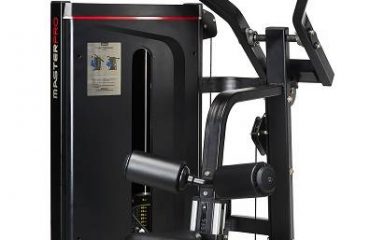
Adductor Machine: A Training Guide for Gym Floors
La machine à adducteurs sollicite les muscles internes de la cuisse sur une amplitude guidée, en complément du travail des chaînes principales. Elle ne fait pas perdre de graisse localement : son rôle est le renforcement d'un groupe musculaire peu sollicité par les mouvements polyarticulaires. Son encombrement réduit la rend fréquente en plateau de salle.

The adductor machine works the inner thigh muscles through a guided range of motion, as a complement to the main movement chains. It does not produce localised fat loss: its role is to strengthen a muscle group that compound movements barely reach. Its small footprint is why it appears on so many gym floors.
That last point is the operator argument. The adductor station occupies little space, needs almost no instruction, and covers a gap that squats, presses and lunges leave open. This guide sets out what the adductors actually do, how to use the machine correctly, how to programme it, and how the station fits into a professional equipment list.
Why the adductors matter
The adductors sit on the inner thigh and stabilise the pelvis. They keep the leg tracking under the body during walking, running and any change of direction, which is why they are so often implicated when a footballer, sprinter or racket player picks up a groin problem. Strong adductors are part of what makes movement both smooth and powerful.
They also contribute to alignment. Pelvic stability is what allows the trunk to stay upright under load, so weakness here shows up further along the chain rather than locally. That is the honest case for training them, and it is a better one than the promises usually attached to this machine.
What the adductor machine does not do is worth stating plainly. Training a muscle does not remove fat from the area above it, and no amount of inner thigh work reshapes the region on its own. Body composition changes come from total training volume, cardiovascular work and nutrition. The machine strengthens a specific group; that is its job and it does it well.
How to use the adductor machine
Setting up
Sit fully back in the seat with the back against the pad and the feet flat on the supports. Adjust the machine so the starting position gives a comfortable but genuine range of motion, without forcing the hips into a stretch the user cannot control. Range comes before load: this is not a station where the heaviest setting wins anything.
Technique
Bring the thighs together slowly, under control, and return just as deliberately. Keep the back flat against the backrest throughout. Breathe steadily rather than holding the breath. The most common error is treating the machine as a crushing contest, which loads the joint rather than the muscle.
Mistakes to avoid
- Swinging the legs. Momentum removes the load from the muscle and puts it into the hip and the adductor tendons.
- Loading too heavily from the start. Strength here builds gradually. A load that shortens the range is a load that is too heavy.
- Slouching in the seat. Posture drives which muscles take the work. A collapsed trunk turns a controlled adduction into a lumbar problem.
Fitting the machine into a programme
Placement matters more than most users assume. The adductor station works well after squats, when the hips and legs are already warm and the stabilisers have been recruited. Pairing it with lunges and lateral leg raises builds a leg session that covers the frontal plane as well as the sagittal one, which is exactly what a squat-only programme misses.
For frequency, two to three sessions per week suits most levels and goals, with recovery time between them. As with any single-joint station, the adductor machine supports a programme rather than replacing one.
Where the station belongs on a professional floor
From an operator point of view, the adductor machine is one of the easiest stations to justify and one of the easiest to specify badly. Three points decide it.
Footprint against usage. The station is compact, which is why it survives on floors where larger machines cannot. In a small hotel or corporate gym it is often the only dedicated lower-body isolation station, so it earns its space. In a large club it belongs in the leg zone alongside the leg press and leg curl rather than isolated at the end of a row.
Adductor, abductor, or both. Many ranges offer the inner thigh and outer thigh movements as separate machines, some as a single combined unit. The combined unit saves floor area and costs less; two machines avoid the queue at peak hours and allow different loads to stay set. The choice follows attendance, not preference.
Equipment class. Any machine used by multiple unknown users in a supervised commercial facility should be built to EN ISO 20957-1 class S, the class for professional installations. On this station in particular, check the pad adjustment range and the starting position setting, since these are what make the machine usable by members of very different sizes.
Our Gold Line selectorised machines and the wider range of selectorised strength machines include the lower-body isolation stations that go alongside a leg press and leg curl to make a complete leg zone.
Frequently asked questions
How many sessions per week?
Two to three sessions per week suit most users, with rest between them. Beyond that, the added volume mostly produces soreness rather than adaptation.
Does the adductor machine slim the thighs?
No. Strengthening a muscle does not remove fat from the area above it. Changes in body composition come from overall training and nutrition; the machine builds strength in a group that compound movements barely reach.
Is it suitable for beginners?
Yes. The movement is guided, the load is easy to set and the technique takes a minute to explain. Start with a light load and a comfortable range.
Adductor or abductor machine: which should a facility buy first?
If only one station fits, most operators start with the combined adductor and abductor unit, since it covers both movements in one footprint. Clubs with a strong group exercise or rehabilitation offer more often justify two separate stations.
Specifying your leg zone
The adductor machine is a small, well-used station that fills a real gap in lower-body training, provided it is specified for the members who will actually use it and placed where it belongs in the session. Tell us the size of the leg area, the membership and how the floor is supervised, and we will propose the configuration around it. Request a quote and our team will come back with a layout, a specification and a price.