How to choose the right sports equipment for a school
Are you the person responsible for equipping a school for physical education? It looks straightforward until you start listing how different the needs of a five-year-old and a sixteen-year-old really are. On top of that, the available budget has to be reconciled with the demands placed on equipment that a whole year group will use, week after week.
The criteria that matter when buying school sports equipment
When someone buys training equipment for personal use, the decision turns on the intensity they are after and the muscle groups they care about. Buying for a school is a different exercise altogether.
First, a child needs all-round physical development, so the equipment must not be limited to the accessories of one single discipline. A school inventory has to support running, jumping, throwing, gymnastics, balance and team play.
Second, children have genuinely inventive ideas about what a piece of equipment is for, and some of them are wild. Safety therefore drives every choice. For the same reason, school equipment must resist wear far better than anything used by a single owner: it is handled by dozens of pupils a day, often without much care.
Outdoor sports equipment
Physical education is instinctively associated with the sports hall, but in practice a large share of the lessons happens outside. Athletics is the obvious example, and it is often unfairly pushed aside in favour of football, volleyball or basketball.
When you specify athletics equipment, start with running. Starting blocks are the most basic item and the most frequently forgotten. Hurdles come next, in steel or aluminium, ideally height-adjustable so that one set serves several year groups. Relay batons are inexpensive and immediately useful.
Running is not the whole story. A school that wants to broaden its programme should look at high jump stands and crossbars, and at the equipment needed for javelin, shot put or hammer throw, always matched to the age of the pupils and to the safety rules that throwing events require, including a dedicated area kept clear for that purpose.
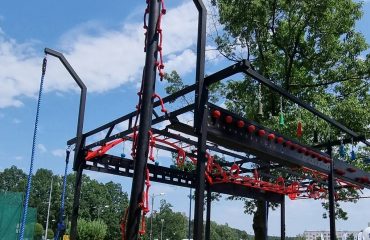
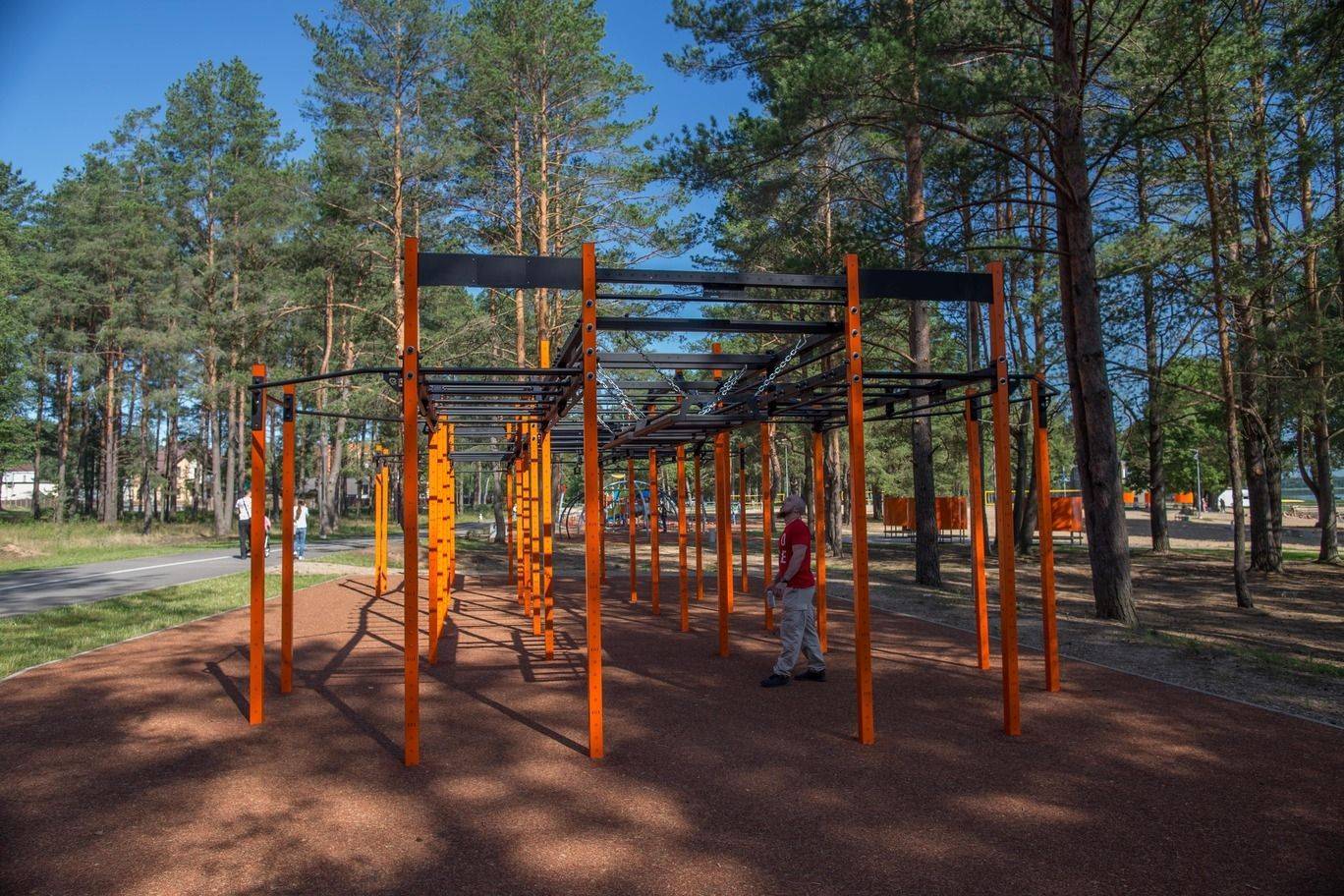
The same outdoor logic applies to the permanent installations on the school grounds. Outdoor fitness equipment for children and playground equipment extend the usable space and keep pupils active during breaks, not only during lessons.
Equipment for the indoor sports hall
Outdoor lessons depend on the weather; the sports hall is used for practically the whole school year, and in some schools during the holidays too for extracurricular activities. It has to be properly equipped.
What is the most characteristic piece of apparatus in a school hall? Wall bars. They are routinely underestimated, yet they support an enormous number of exercises: climbing, hanging, foot anchorage during sit-ups, and support work when pupils try to hold a handstand. When choosing them, look hard at durability. Experience shows that saving money on wall bars ends with damaged rungs surprisingly quickly.
The hall is obviously not limited to wall bars. Mats and gymnastic apparatus matter just as much. Mats protect pupils in any exercise where a fall is possible, but they also serve exercises that build landing and cushioning skills, such as forward and backward rolls, and exercises that develop balance: even a squat performed on a mat works differently from a squat on a hard floor.
The gymnastic selection itself is simple: vaulting boxes, vaulting bucks and springboards. Here, pay attention to height adjustment, so that one item adapts to pupils of very different sizes and abilities, and to stability, because neglecting stability produces exactly the kind of incident you want to avoid during a lesson.
Some schools also invest in table tennis tables, which are excellent for reaction speed while still building general fitness. A rack of fitness accessories completes the hall for circuit work and warm-ups.
Equipment for team games
Football, handball, basketball, volleyball and floorball dominate a large part of the timetable. They deserve a separate line in the budget because, apart from floorball and handball, they are played both indoors and outdoors, which usually means two sets rather than one.
Beyond the balls themselves, which must be tough enough to survive very heavy use, the list includes a tensioned volleyball net, goals, floorball sticks and basketball hoops. Buying the cheapest ball available is a false economy in a school: replacement cycles get short enough to cost more than the initial saving.
Equipment matched to the age of the pupils
Equipping a school means taking account of the age of the pupils, and therefore of differences in height and weight. In some cases that means buying several sizes: balls and javelins for different age groups have different lengths and weights. In other cases adjustability is enough, as with high jump stands, hurdles or trestle stands.
With the youngest pupils, crash mats deserve particular attention. As noted above, they play a protective role in a large share of the exercises a primary class will do.
Frequently asked questions
What should a school buy first with a limited budget?
Start with what every lesson uses regardless of the discipline: mats, wall bars and a solid set of balls. Specialist throwing and jumping equipment can be added in a second phase.
How do I make one set of equipment work for several age groups?
Prioritise adjustable items. Height-adjustable hurdles, high jump stands, vaulting boxes and trestle stands cover a wide range of pupils with a single purchase.
Does school equipment have to meet specific safety requirements?
Yes. Sports and play equipment installed in a school is subject to the safety and inspection requirements in force in the country where the school operates. Ask your supplier for the declarations and inspection documents that apply to your installation before ordering.
Can you help plan a full school sports facility?
Yes. Send the dimensions of the hall and the outdoor area, the age groups and the budget, and we will build the equipment list with you.
Planning your school project
Equipping a school is a compromise between durability, safety, versatility and budget, and the compromise is easier to make with a supplier who knows how hard institutional equipment gets used. Request a quote with your age groups, your available space and your budget, and we will come back with a costed proposal.