Shaping or Cutting: Choosing the Training Goal Your Room Is Built For

In brief: almost every member walks in with one of two goals, shaping and building visible muscle, or losing fat and revealing the muscle already there. The two goals ask for different equipment, different session lengths and different floor layouts. Knowing which one dominates your membership is what turns an equipment budget into a room that gets used.
Shaping: building and defining muscle
Shaping means working each muscle group deliberately so that it becomes visible and defined. On the floor it shows up as slow, controlled repetitions through a full range of motion, moderate to heavy loads and long rests between sets. Members pursuing it stay on a station for several minutes at a time.
The commitment is real, and it is worth saying so honestly in your onboarding: results come from consistency over months, not from a six-week challenge. Members who understand that from the first session are the ones who renew.
For the facility, the practical consequences are station count and dwell time. Shaping-oriented members occupy a machine longer, so a room serving them needs enough duplicated stations on the popular movements, or the queue at peak hour becomes the reason people leave. Guided-load and plate-loaded strength training machines are the backbone here, complemented by racks and cages for members working with barbells.
Cutting: losing fat and revealing muscle
Cutting is the other half of the room. The objective is to reduce body fat so that existing muscle becomes visible, and the training that supports it leans on higher-intensity cardiovascular work rather than long sets on a single station.
It suits members at any starting point, which is exactly why it is the more popular of the two goals and the one that fills group classes. It also has the shorter perceived time to first result, which makes it the entry point for most new members.
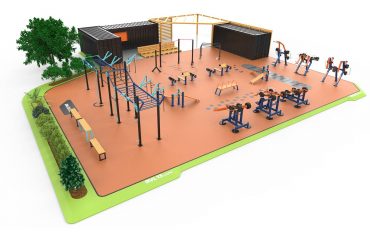
Equipment-wise it means cardio equipment in enough quantity to absorb the after-work peak, plus open floor for circuit and interval formats. A functional training rig serves this population well because it lets several people work in rotation on the same footprint.
The differences that matter when you specify equipment
Training style is the first difference. Shaping favours slow, controlled movement over a wide range of motion; cutting favours higher-intensity cardiovascular work. One asks for stations that stay occupied and adjust to the user, the other for machines that cycle quickly and take a beating.
Nutrition is the second, and it sits outside your equipment list but inside your service offer. Shaping generally calls for more protein and complex carbohydrates to support muscle growth; cutting calls for a reduced calorie intake with attention to sugar and fibre. Facilities that offer nutrition guidance alongside the training plan retain both groups better than those that treat the room as the whole product.
The third difference is time on station, and it is the one that decides your layout. A room split roughly evenly between the two goals needs its cardio and its strength zones sized separately rather than by a single ratio taken from a brochure.
Helping members choose
Three questions settle it in an induction session. What does the member want to see change? What is their current training level, honestly stated? And what does their week actually look like, including how they eat?
Answering those three is more useful than any body-type classification, and it produces a plan the member can follow. It also gives your staff the information they need to point someone at the right part of the room on day one, which is the moment most memberships are won or lost.
Frequently asked questions
Can a member pursue both goals at once?
They pull in different directions, so most people sequence them rather than combine them. The practical answer for a facility is to make both paths available and let the coach set the order.
Which goal should a new gym plan for first?
Fat loss brings in more first-time members, so most rooms open with a strong cardio and group-format offer and build out the strength area as the membership matures.
Does one goal need more floor space than the other?
Strength stations take more square metres per user; cardio takes more machines per peak hour. Which one dominates your plan depends on your membership, not on a standard ratio.
Sizing the room around your actual membership
Tell us the split you expect between the two goals, your peak-hour attendance and your available surface, and we will propose an equipment list and a layout that matches. Request a quote for a costed proposal.
À lire aussi sur le même thème
- Les 9 meilleurs exercices de bras pour la définition et la force musculaires
- 8 des meilleures alternatives de squat pour des jambes plus fortes
- Découvrez les Muscles Sollicités lors des Squats : Guide Complet pour un Entraînement Efficace
- Chin ups vs tractions : La différence, les avantages et les muscles travaillés